Merging

Lou Lim
Silverlens, Manila

About

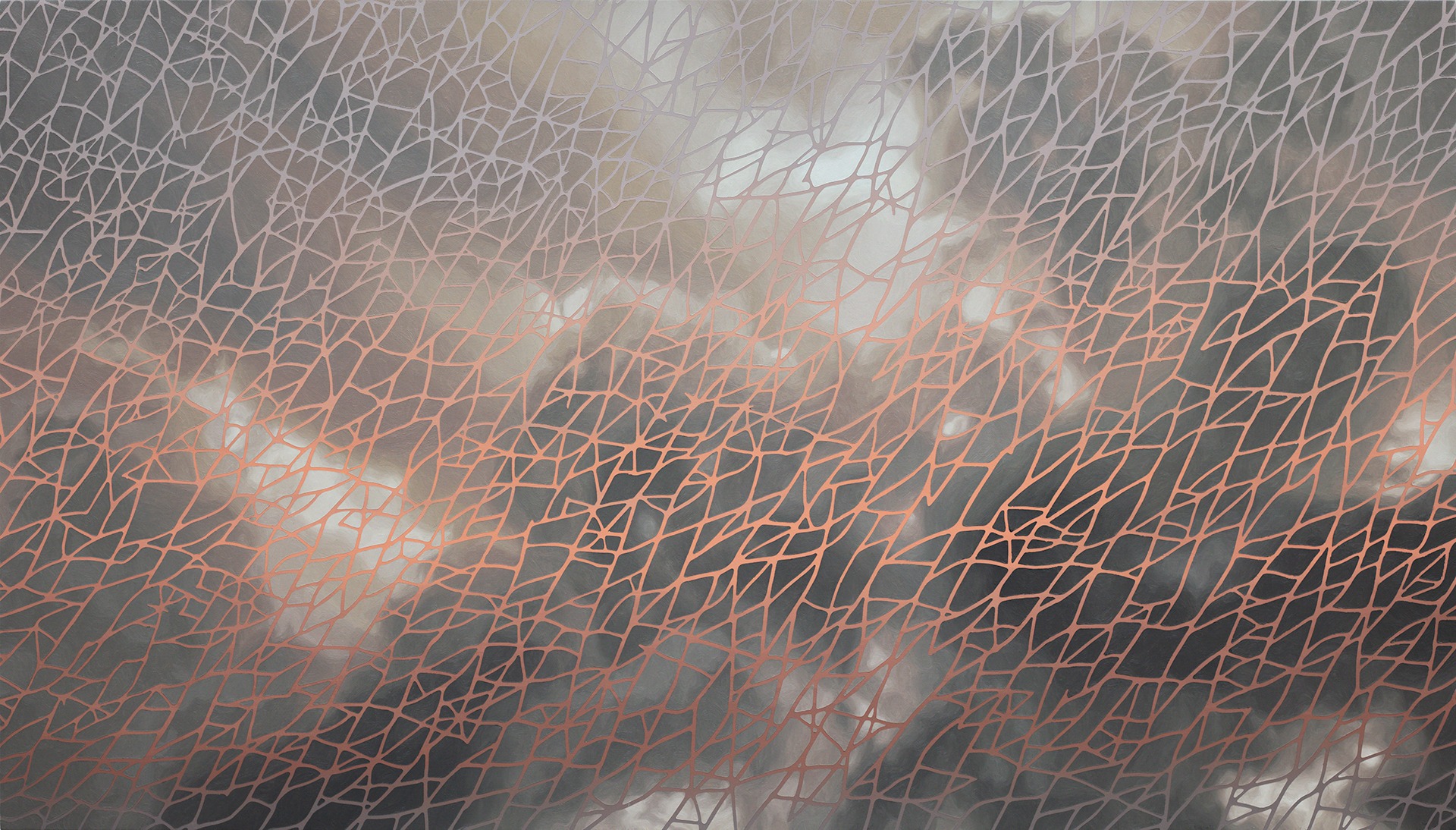
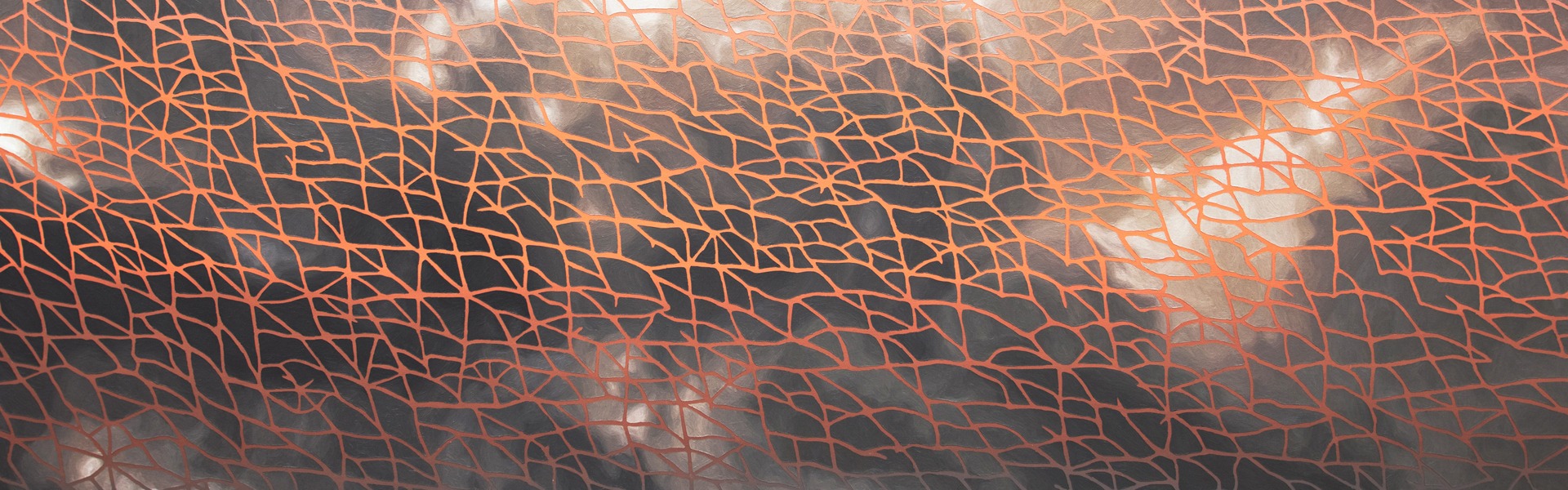
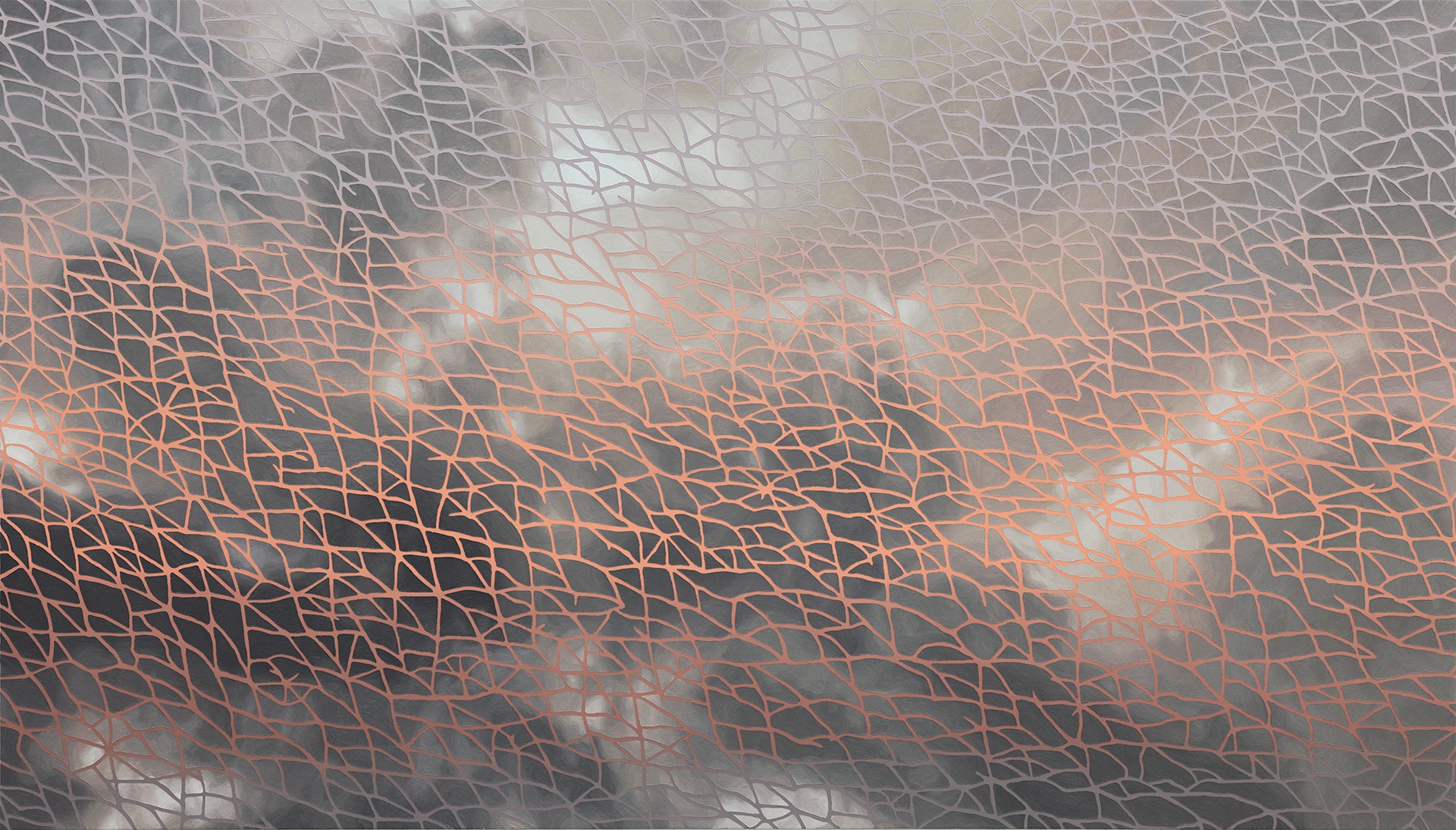
    It begins with two separate canvases; each receives an underpainting of a sunlit sky. A masking layer—here, a machine-cut vinyl sticker that traces the intersecting network of lines of human skin seen up close—is carefully laid over the underpainting, as if a kind of veil. Subsequent layers of paint, still depicting the same sunlit sky, are gradually added to the stencil’s pliant surface until the paint itself gains enough body. Later, another image, now a much darker sky, is painted across the entire canvas, covering both the stencil and the brightness underneath, like a conjured sunset. Once dried, the stencils are peeled off, the built-up layers of paint removed and merged together, forming a third piece of artwork, while the two canvases now carry traces of both bright and dark skies. 

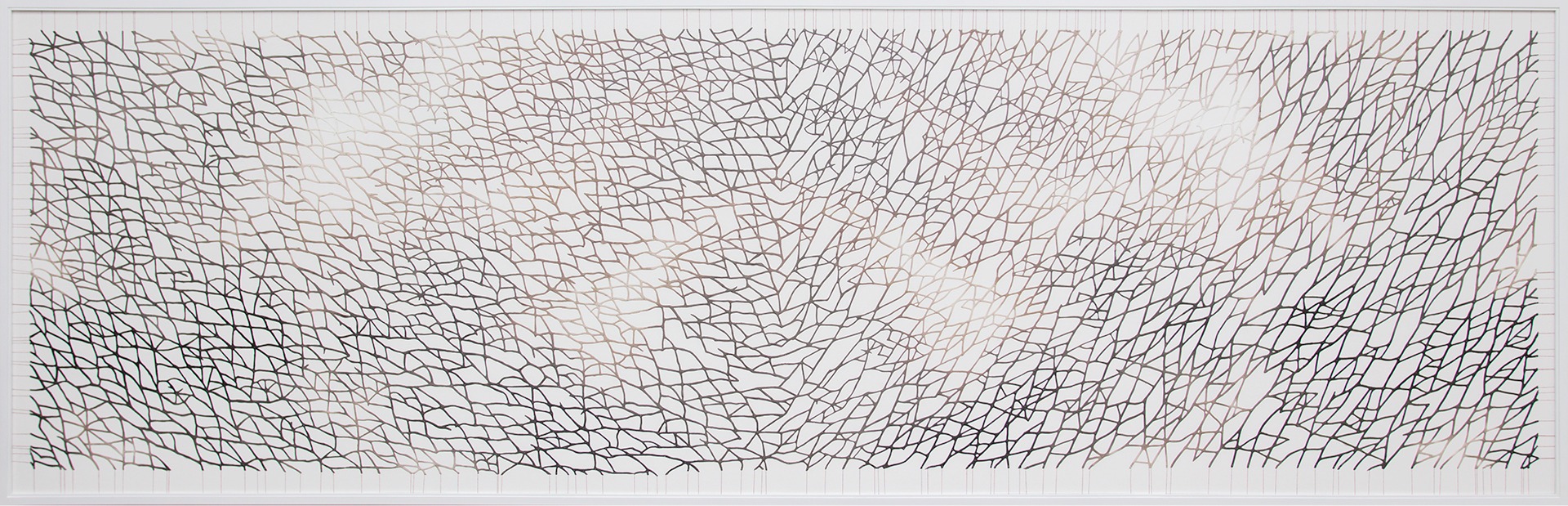
    The resulting “peels”, now conjoined, form a single, continuous latticework that has grown beyond the paintings from which they were taken. Laid flat and held in place with pins against a white canvas, it takes on a sweeping presence. Visually, it approximates an expansive mesh terrain map, like a delicate net draped over a body to encode its topography. 

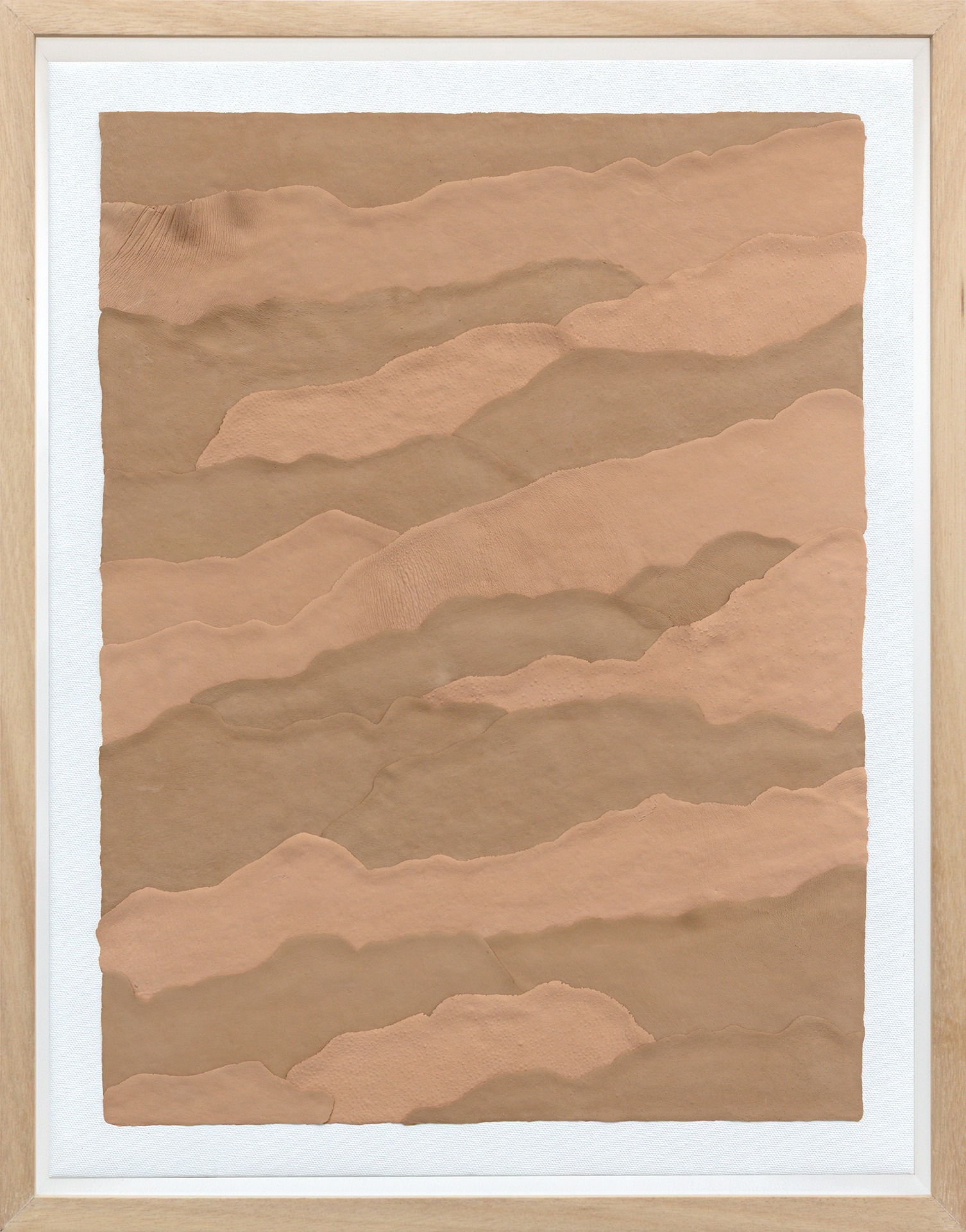
    In a smaller, more intimate scale, the intersection of body and landscape is rearticulated in a final piece. Made from interwoven skin castings, the work takes the form of a supple, flesh-toned sky.

    Lou Lim has been devising ways of collapsing the methodologies of sculpture and painting for some time now. For her, finishing a painting is usually not the end but just a halfway point—the moment when the  pivotal stage of the narrative begins. Never concerned with  merely creating a pretty picture, she approaches a finished canvas like a field to be mined, extracting materials and creating meaning from the very act of taking away. Her practice lives within the tension between opposing forces and elements: additive versus subtractive, positive versus negative, embedding versus extracting, painting versus sculpture, near versus far, body over landscape. With each new body of work, she labors to complicate and further nurture this tension, without favoring one side over the other. What emerges is a kind of hybrid, self-reflexive approach, anchored in process.

    To some, Lim’s strict adherence to process may appear rigid and unyielding. But this is precisely how she  ensures that the intended purpose of each step and material is protected, their meaning preserved in the resulting work. She approaches the creative act not from the position of pure experimentation, but from a more intentional stance, like a performer choreographing a critical stunt. Given her exacting manner, Lim’s projects require a great degree of planning and preparation and, due to time constraints, usually allow for only a single attempt, without repeats. It takes a special kind of courage to push forward, whether peeling off the horizon or an army of small, fiery wounds from a painting. One can imagine the anticipation as the box cutter’s blade slices through something labored over, fingernails carefully picking away at loose threads or dried paint, still unsure whether all the planning, and even the contingencies prepared, were enough to ensure that the idea will actually work.

    Perhaps what remains unarticulated is an unsung third element. Between painting and sculpture, photography has been serving as a quiet but diligent intermediary. Before they were painted, the images of the sky were captured by Lim and later used as reference photographs. Even the  close-up images of skin, unseen to the naked eye, were made visible through the lens of a camera. In this sense, photography allows Lim’s images to materialize as surface, becoming another kind of skin.

    When one comes across Lim’s works, one may notice a picture plane marked by incisions, as if a sentient surface wounded in the process and later bearing scars. Skin—near and personal—brought to  the scale of the heavens, distant, vast, and all-encompassing. 

    Words by Gary-Ross Pastrana

    Lou Lim (b. 1989) invests in the connection between the corporeal and the spiritual, between materiality and notions of permanence, between objects and visual imagery, and in what these relations articulate. Her works examine and appropriate the processes of different art forms to further investigate sculpture, creating new contexts for the familiar by exploring ideas and potentialities of surface and touch.

    Lim earned her BFA from the University of the Philippines College of Fine Arts and has been actively exhibiting work since 2011. Recent exhibitions include solo presentations “For the Land that Laments” at Silverlens Galleries and “Rest” at CCP in 2022. She was resident at Palais de Tokyo in Paris under the Pavillon Neuflize OBC 2015-2016 program. This participation resulted in a collaborative performance at the Opera Garnier and in group exhibitions at ICA Singapore and the Seoul Museum of Art in South Korea, as well as in a publication with INA [Institut National Audiovisuel]. She was a recipient of the Cultural Center of the Philippines Thirteen Artists Awards 2021.

It begins with two separate canvases; each receives an underpainting of a sunlit sky. A masking layer—here, a machine-cut vinyl sticker that traces the intersecting network of lines of human skin seen up close—is carefully laid over the underpainting, as if a kind of veil. Subsequent layers of paint, still depicting the same sunlit sky, are gradually added to the stencil’s pliant surface until the paint itself gains enough body. Later, another image, now a much darker sky, is painted across the entire canvas, covering both the stencil and the brightness underneath, like a conjured sunset. Once dried, the stencils are peeled off, the built-up layers of paint removed and merged together, forming a third piece of artwork, while the two canvases now carry traces of both bright and dark skies. 

The resulting “peels”, now conjoined, form a single, continuous latticework that has grown beyond the paintings from which they were taken. Laid flat and held in place with pins against a white canvas, it takes on a sweeping presence. Visually, it approximates an expansive mesh terrain map, like a delicate net draped over a body to encode its topography. 

In a smaller, more intimate scale, the intersection of body and landscape is rearticulated in a final piece. Made from interwoven skin castings, the work takes the form of a supple, flesh-toned sky.

Lou Lim has been devising ways of collapsing the methodologies of sculpture and painting for some time now. For her, finishing a painting is usually not the end but just a halfway point—the moment when the  pivotal stage of the narrative begins. Never concerned with  merely creating a pretty picture, she approaches a finished canvas like a field to be mined, extracting materials and creating meaning from the very act of taking away. Her practice lives within the tension between opposing forces and elements: additive versus subtractive, positive versus negative, embedding versus extracting, painting versus sculpture, near versus far, body over landscape. With each new body of work, she labors to complicate and further nurture this tension, without favoring one side over the other. What emerges is a kind of hybrid, self-reflexive approach, anchored in process.

To some, Lim’s strict adherence to process may appear rigid and unyielding. But this is precisely how she  ensures that the intended purpose of each step and material is protected, their meaning preserved in the resulting work. She approaches the creative act not from the position of pure experimentation, but from a more intentional stance, like a performer choreographing a critical stunt. Given her exacting manner, Lim’s projects require a great degree of planning and preparation and, due to time constraints, usually allow for only a single attempt, without repeats. It takes a special kind of courage to push forward, whether peeling off the horizon or an army of small, fiery wounds from a painting. One can imagine the anticipation as the box cutter’s blade slices through something labored over, fingernails carefully picking away at loose threads or dried paint, still unsure whether all the planning, and even the contingencies prepared, were enough to ensure that the idea will actually work.

Perhaps what remains unarticulated is an unsung third element. Between painting and sculpture, photography has been serving as a quiet but diligent intermediary. Before they were painted, the images of the sky were captured by Lim and later used as reference photographs. Even the  close-up images of skin, unseen to the naked eye, were made visible through the lens of a camera. In this sense, photography allows Lim’s images to materialize as surface, becoming another kind of skin.

When one comes across Lim’s works, one may notice a picture plane marked by incisions, as if a sentient surface wounded in the process and later bearing scars. Skin—near and personal—brought to  the scale of the heavens, distant, vast, and all-encompassing. 

Words by Gary-Ross Pastrana

Lou Lim (b. 1989) invests in the connection between the corporeal and the spiritual, between materiality and notions of permanence, between objects and visual imagery, and in what these relations articulate. Her works examine and appropriate the processes of different art forms to further investigate sculpture, creating new contexts for the familiar by exploring ideas and potentialities of surface and touch.

Lim earned her BFA from the University of the Philippines College of Fine Arts and has been actively exhibiting work since 2011. Recent exhibitions include solo presentations “For the Land that Laments” at Silverlens Galleries and “Rest” at CCP in 2022. She was resident at Palais de Tokyo in Paris under the Pavillon Neuflize OBC 2015-2016 program. This participation resulted in a collaborative performance at the Opera Garnier and in group exhibitions at ICA Singapore and the Seoul Museum of Art in South Korea, as well as in a publication with INA [Institut National Audiovisuel]. She was a recipient of the Cultural Center of the Philippines Thirteen Artists Awards 2021.

Installation Views

Works
Lou Lim
Mergingₐ
2025
16671
2
Oil and acrylic on canvas
43h x77w in 109.22h x 195.58w cm
-1
0.00
PHP
0
Details
Lou Lim
Merging (Rendering Sky)
2026
16674
2
Paint, tulle on canvas
16h x 20w in 40.64h x 50.8w cm
-1
0.00
PHP
0
(SPI_LLim048)
Details
Lou Lim
Mergingᵦ
2025
16672
2
Oil and acrylic on canvas
43h x77w in 109.22h x 195.58w cm
-1
0.00
PHP
0
Details
Lou Lim
Merging (Becoming Like)
2026
16673
2
Oil paint, thread, stainless steel jewelry pins on canvas
48h x 158w in 121.92h x 401.32w cm
-1
0.00
PHP
0
Details

Artist

PHA+PHN0cm9uZz5TSUxWRVJMRU5TPC9zdHJvbmc+IGlzIGNvbW1pdHRlZCB0byBwcm90ZWN0aW5nIHlvdXIgcHJpdmFjeS4gSW4gY29tcGxpYW5jZSB3aXRoIHRoZSBQaGlsaXBwaW5lIFJlcHVibGljIEFjdCwgTm8uIDEwMTczIGJldHRlciBrbm93biBhcyB0aGUgMjAxMiBEYXRhIFByaXZhY3kgQWN0LCB3ZSBjYW4gb25seSB1c2UgdGhlIGluZm9ybWF0aW9uIHRoYXQgd2Ugb2J0YWluIGFib3V0IHlvdSBsYXdmdWxseS4gV2UgbWF5IGNvbGxlY3QgcGVyc29uYWwgaW5mb3JtYXRpb24gYWJvdXQgeW91IHdoZW4geW91IHNpZ24gdXAgZm9yIG91ciBuZXdzbGV0dGVyIG9yIGNvbnRhY3QgdXMgd2l0aCBhbiBpbnF1aXJ5LjwvcD4KPHA+VGhlIHR5cGUgb2YgaW5mb3JtYXRpb24gd2UgbWF5IGNvbGxlY3QgaW5jbHVkZXMgeW91ciA8c3Ryb25nPk5hbWU8L3N0cm9uZz4sIDxzdHJvbmc+RW1haWw8L3N0cm9uZz4sIGFuZCA8c3Ryb25nPkNvbnRhY3QgTnVtYmVyPC9zdHJvbmc+LjwvcD4KPHA+V2UgbWF5IGNvbGxlY3QgcGF5bWVudCBpbmZvcm1hdGlvbiBmcm9tIHlvdSB0byBmdWxmaWxsIHRyYW5zYWN0aW9ucy4gVG8gcHJvY2VzcyBwYXltZW50cywgd2UgbWF5IGNvbGxlY3QgeW91ciBjcmVkaXQgY2FyZCBhbmQgYmFuayBhY2NvdW50IGRldGFpbHMuIFRoaXMgaW5mb3JtYXRpb24gbWF5IGJlIHNoYXJlZCB3aXRoIHRoaXJkIHBhcnR5IHBheW1lbnQgcHJvY2Vzc2luZyBzZXJ2aWNlcy48L3A+CjxwPlRvIGRlbGl2ZXIgeW91ciBwdXJjaGFzZSwgd2UgbWF5IHByb3ZpZGUgeW91ciBwZXJzb25hbCBpbmZvcm1hdGlvbiB0byB0aGlyZC1wYXJ0eSBsb2dpc3RpY3MgY29tcGFuaWVzIHdobyBhc3Npc3QgdXMgd2l0aCBvdXIgZGVsaXZlcmllcyBhbmQgc2hpcG1lbnRzLjwvcD4KPHA+VGhlIHBlcnNvbmFsIGluZm9ybWF0aW9uIHdoaWNoIHdlIGhvbGQgd2lsbCBiZSBoZWxkIHNlY3VyZWx5IGluIGFjY29yZGFuY2Ugd2l0aCBvdXIgaW50ZXJuYWwgc2VjdXJpdHkgcG9saWN5LiBXZSB3aWxsIG5ldmVyIGNvbGxlY3QgaW5mb3JtYXRpb24gYWJvdXQgeW91IHdpdGhvdXQgeW91ciBleHBsaWNpdCBjb25zZW50LjwvcD4KPHA+VGhlIGluZm9ybWF0aW9uIHdlIHN0b3JlIHdpbGwgYmUgYWNjdXJhdGUgYW5kIHVwIHRvIGRhdGUuIFlvdSBjYW4gY2hlY2sgdGhlIGluZm9ybWF0aW9uIHRoYXQgd2UgaG9sZCBhYm91dCB5b3UgYnkgZW1haWxpbmcgdXMuIElmIHlvdSBmaW5kIHRoYXQgdGhlcmUgYXJlIGFueSBpbmFjY3VyYWNpZXMsIHdlIHdpbGwgZGVsZXRlIG9yIGNvcnJlY3QgaXQgcHJvbXB0bHkuPC9wPgo8cD5XZSBtYXkgdXNlIHRlY2hub2xvZ3kgdG8gdHJhY2sgdGhlIHBhdHRlcm5zIG9mIGJlaGF2aW9yIG9mIHZpc2l0b3JzIHRvIG91ciB3ZWJzaXRlLiBUaGlzIG1heSBpbmNsdWRlIHVzaW5nIGEgImNvb2tpZSIgc3RvcmVkIG9uIHlvdXIgYnJvd3NlciB3aGljaCB5b3UgY2FuIHVzdWFsbHkgbW9kaWZ5IHRocm91Z2ggeW91ciBicm93c2VyIHRvIHByZXZlbnQgdGhpcyBmcm9tIGhhcHBlbmluZy48L3A+CjxwPldlIHdpbGwgcmV0YWluIHlvdXIgcGVyc29uYWwgaW5mb3JtYXRpb24gb25seSB3aGlsZSB3ZSBuZWVkIGl0IGZvciB0aGUgcmVhc29ucyBzdGF0ZWQgYWJvdmUgb3IgdW50aWwgeW91IHJlcXVlc3QgdGhhdCB3ZSBkZWxldGUgaXQgb24gb3VyIHJlY29yZHMuPC9wPgo8cD5JZiB5b3UgaGF2ZSBhbnkgcXVlc3Rpb25zIG9yIGNvbW1lbnRzIGFib3V0IG91ciBwcml2YWN5LCBwbGVhc2UgY29udGFjdCB1cyBhdCA8YSBocmVmPSJtYWlsdG86aW5xdWlyeUBzaWx2ZXJsZW5zZ2FsbGVyaWVzLmNvbSI+aW5xdWlyeUBzaWx2ZXJsZW5zZ2FsbGVyaWVzLmNvbTwvYT48L3A+
R2FpbiBhY2Nlc3MgdG8gZXhjbHVzaXZlIGdhbGxlcnkgaW5mb3JtYXRpb24sIGxhdGVzdCBleGhpYml0aW9ucywgPGJyIC8+CmFuZCBhcnRpc3QgdXBkYXRlcyBieSBzaWduaW5nIHVwIGZvciBvdXIgbmV3c2xldHRlciBiZWxvdy4=