S.E.A. Focus 2026

Imelda Cajipe Endaya & Nicole Coson
ART SG, Marina Bay Sands

About

    Silverlens returns to S.E.A. Focus this January with Imelda Cajipe Endaya and Nicole Coson, tracing how memory, craft, and labour are embedded within objects that traverse homes and borders.

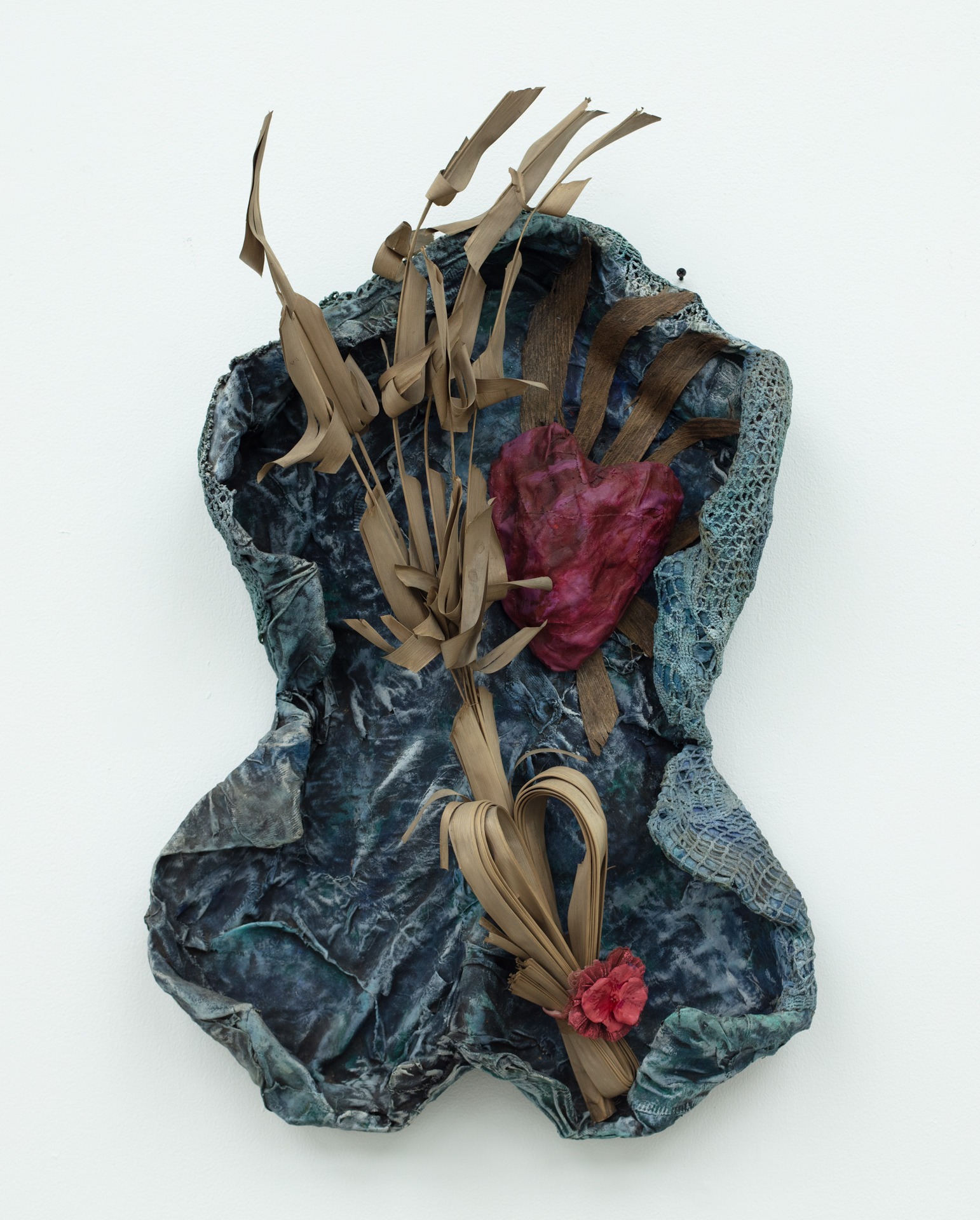
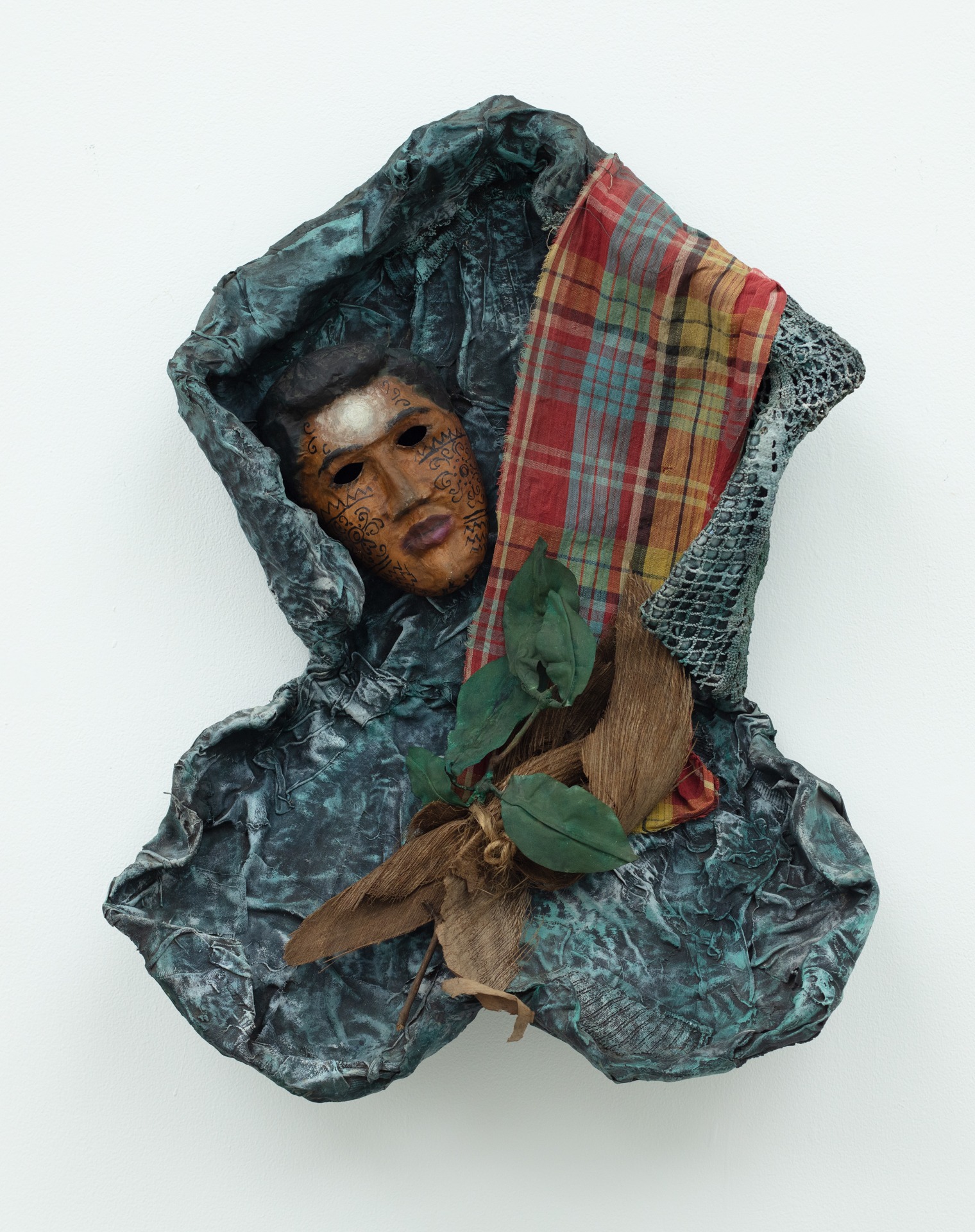
    The presentation foregrounds works by Imelda Cajipe Endaya (b. 1949, Manila; lives and works in Manila), a pioneering figure in Philippine contemporary art whose feminist practice has addressed migration, colonial histories, labour, and women’s lived experience for decades. On view are Balabal ni Lola Minggay (1995–96) and selections from the Experiences of Surviving series (1992), including Babaylan and Mater Dolorosa. Working with plaster-bonded textiles, collage, recycled materials, and paper mâché, Endaya draws on domestic memory, indigenous belief systems, and Catholic iconography to examine intergenerational care, female resilience, and the enduring contradictions imposed on women’s bodies.

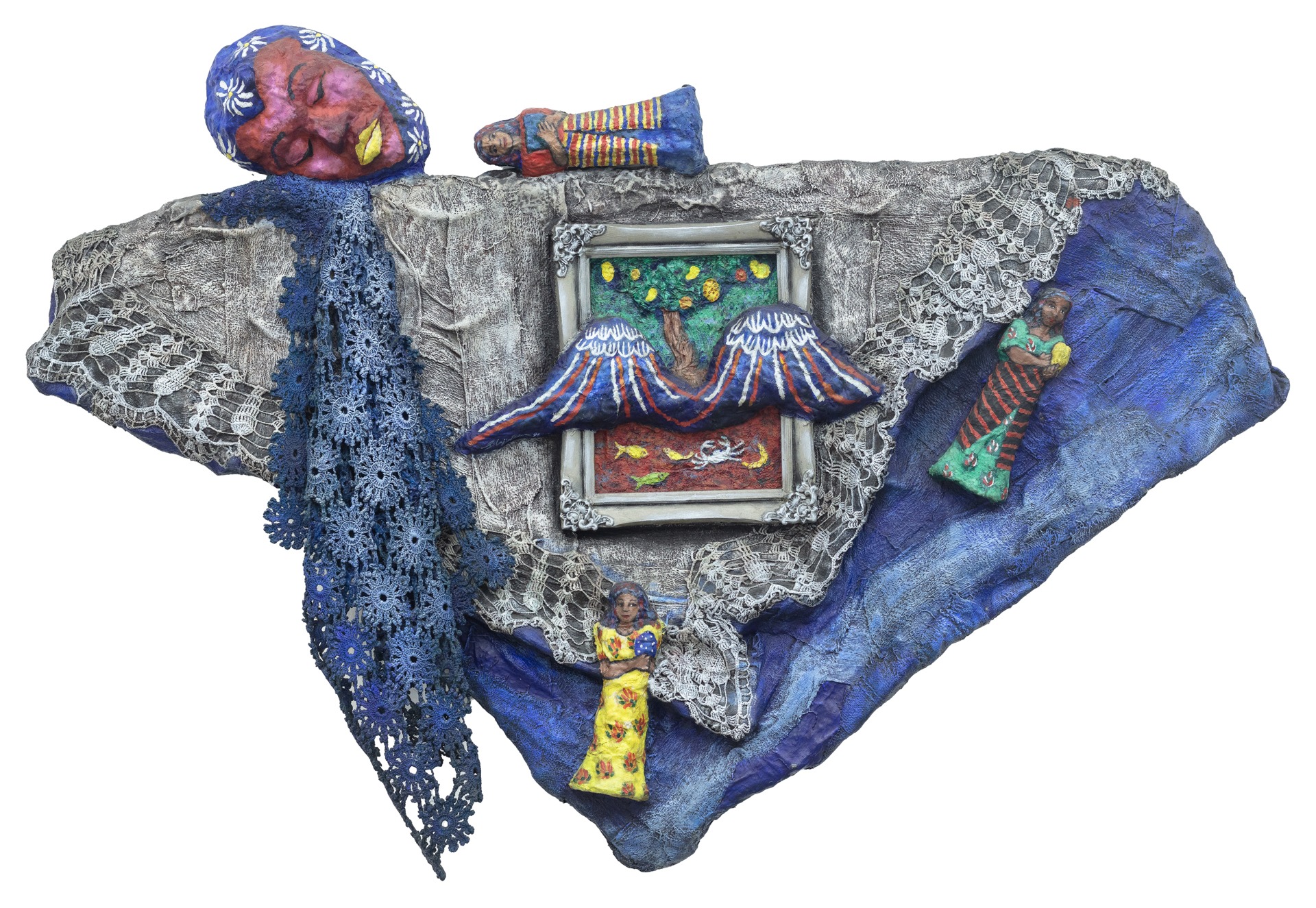
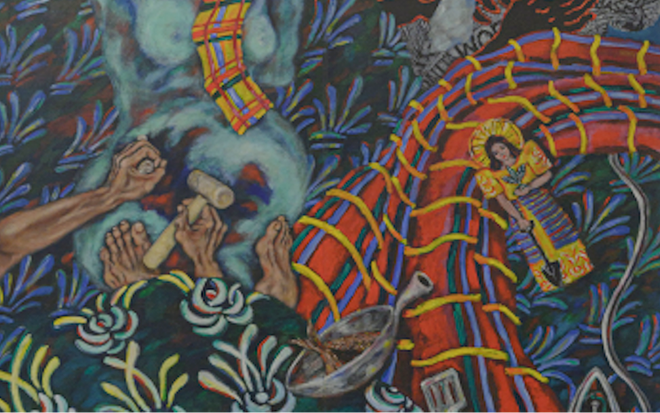
    In Balabal ni Lola Minggay, Endaya recalls the protective embrace of her grandmother’s shawl, which envelops a group of women rendered in relief. The work employs taka, a local paper-mâché technique from Laguna, and materials salvaged from previous exhibitions, reflecting both ecological consciousness and the precarity faced by women artists working in installation. Figures, flora, and marine life coexist under a red, white, and blue sky, referencing the Philippines’ colonial history while positioning domestic care and political consciousness as inseparable. The Experiences of Surviving works articulate the duality of female experience through the Babaylan, a precolonial spiritual leader, and the Mater Dolorosa, emblematic of suffering and sacrifice. Endaya traces how colonial and religious frameworks have reshaped Filipina womanhood, producing a tension between endurance and empowerment that persists today.

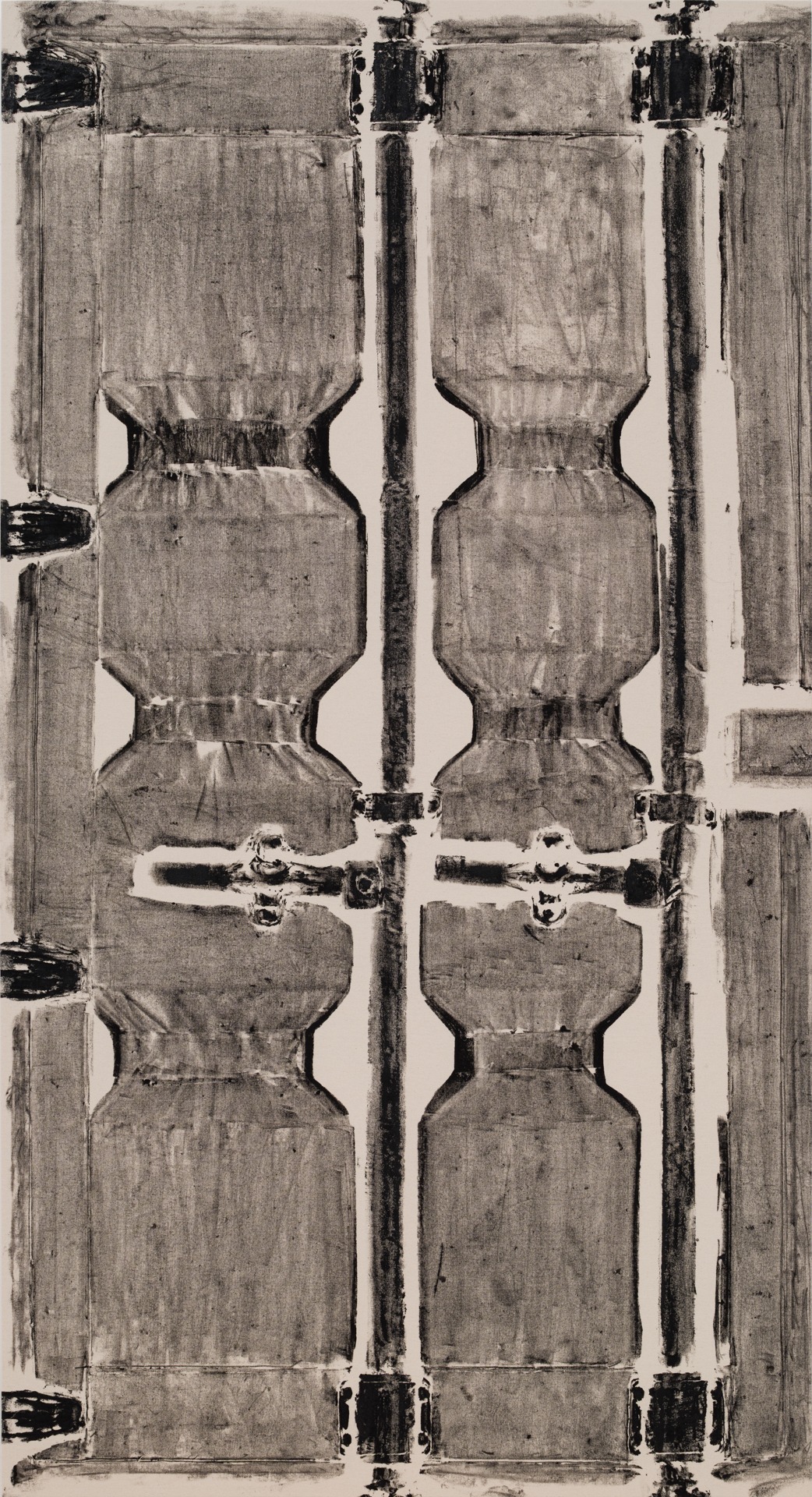
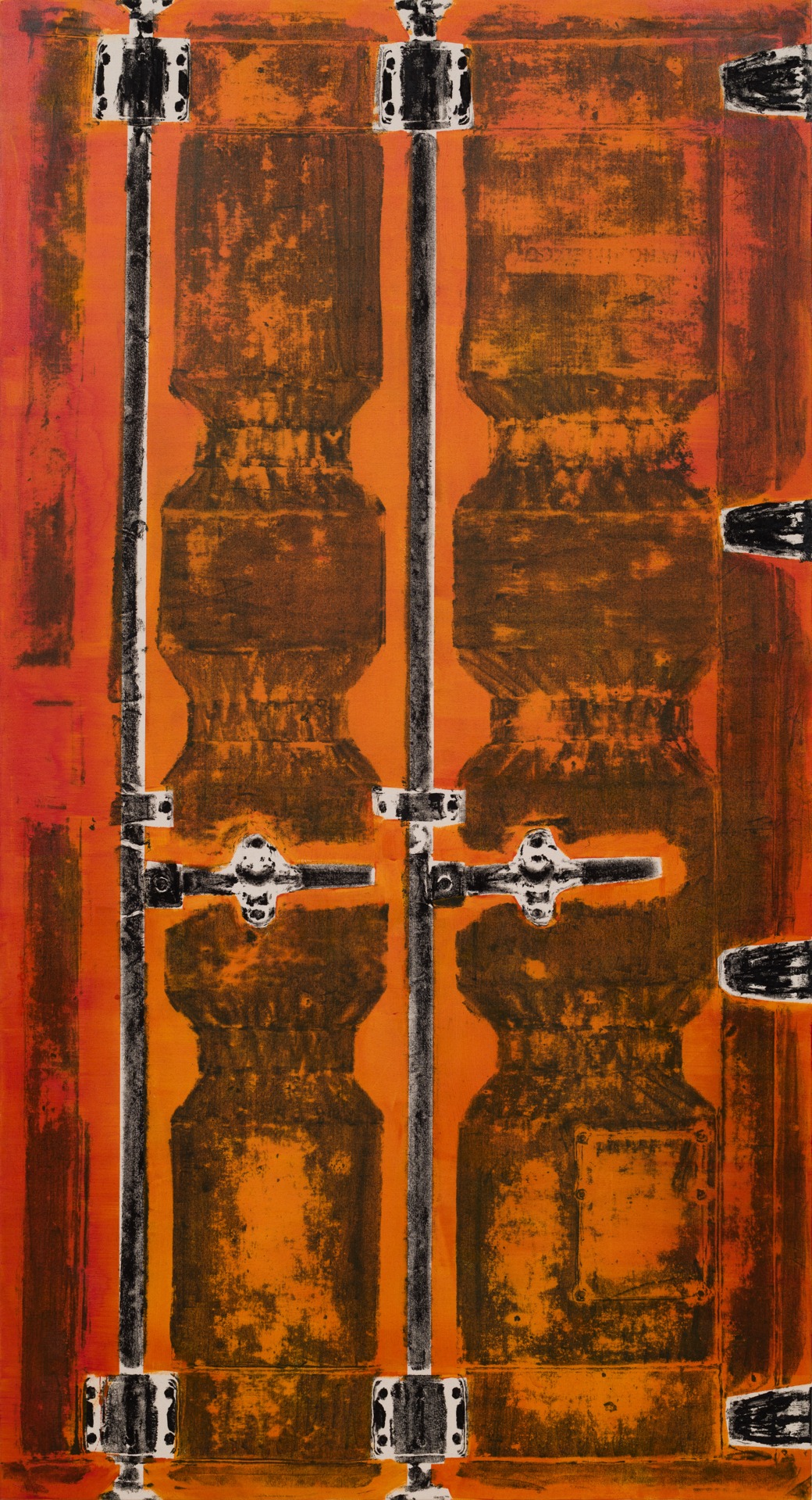
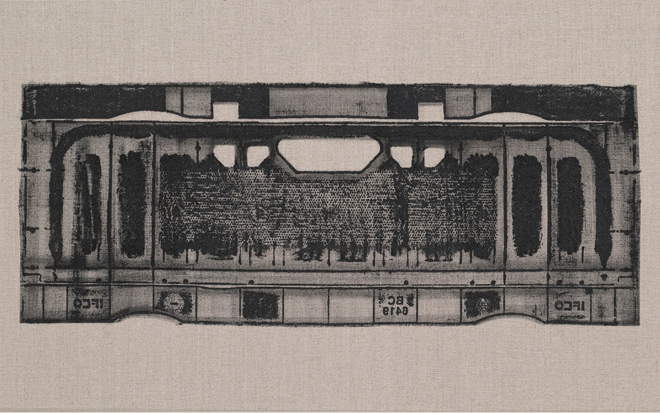
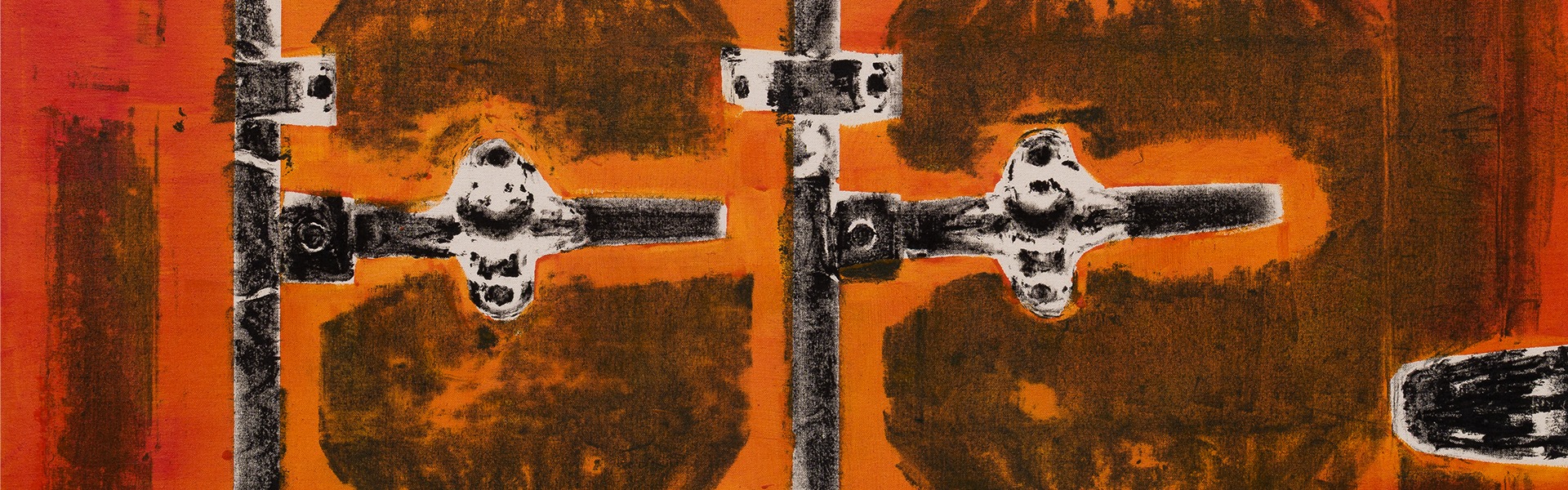
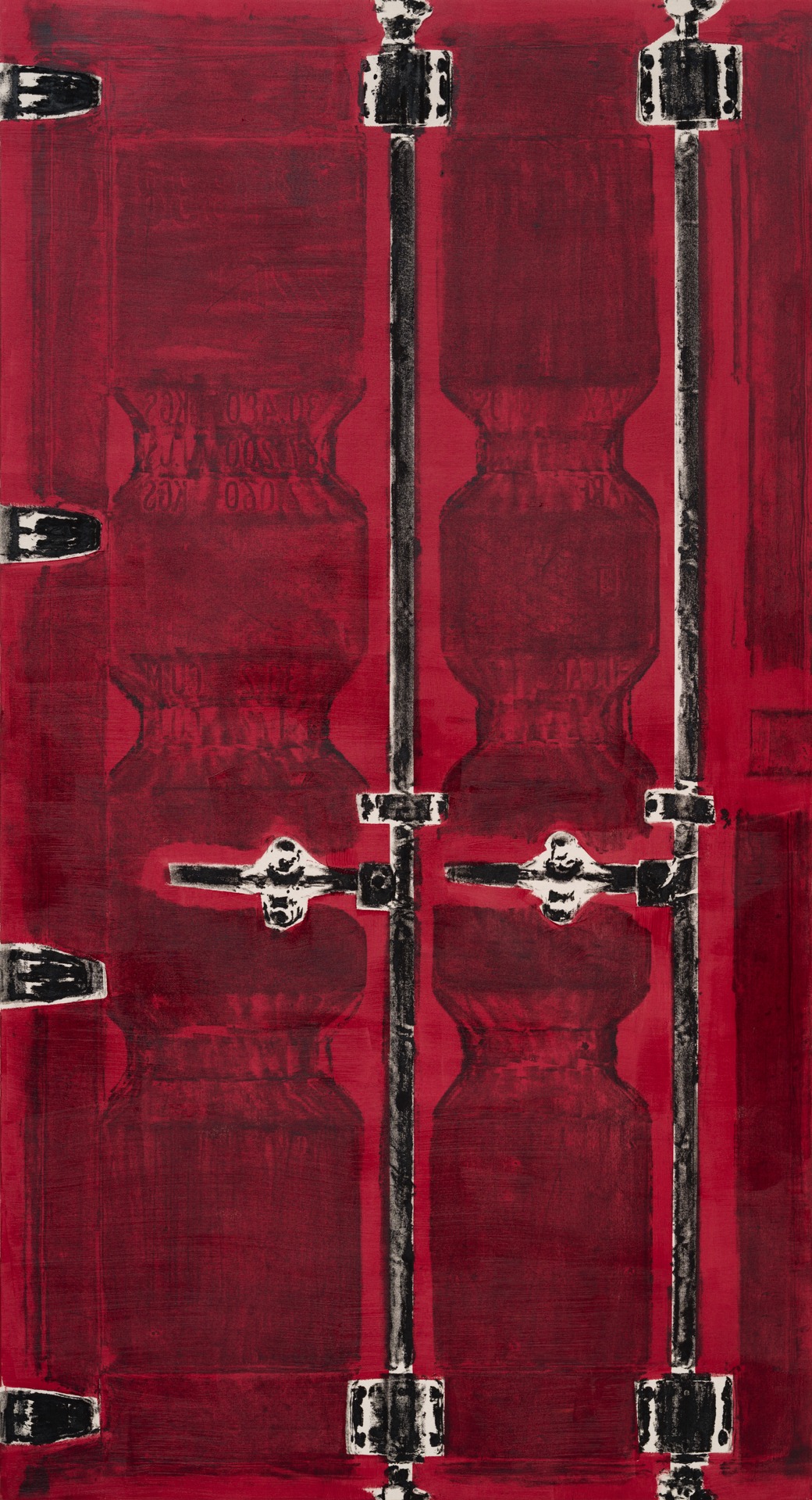
    Coson (b. 1992, Manila; lives and works in London) transforms the doors of a decommissioned shipping container into works that merge industrial form with traces of her body. Sourced online, the doors carry numbers, scratches, grime, and a Chinese shipping logo that hint at their past. In her East London studio, she coated them in black and burgundy pigment and pressed canvas onto the metal, flattening corrugations, bars, and handles into a vocabulary of zigzags, stripes, and dots. Her bodily gestures including knee prints and scrapes remain visible, revealing the physical labour behind the process. Opacity operates as a deliberate strategy, resisting the market’s demand for expressive disclosure and the fetishisation of global trade while critiquing the commodification of her identity as a young Filipino woman. The works balance depth and blankness, presence and absence, exterior and interior. Despite the traces of struggle and expression, the doors remain sealed, enigmatic, and self-contained.

    Endaya and Coson each trace the unseen journeys of objects, labour, and memory across homes, bodies, and global systems. Their works offer a subtle yet potent meditation on the persistence of care, resistance, and material histories.

    Curated by John Tung, S.E.A. Focus takes place from 23–25 January 2026 at ART SG, Marina Bay Sands, as part of Singapore Art Week. During this period, Imelda Cajipe Endaya is also featured in Fear No Power: Women Imagining Otherwise at the National Gallery Singapore, opening 21 January, and participates in an Artist Conversation on 24 January.

    In Manila, Cajipe Endaya presents A Votary’s Art within ArtFairPH/Projects at Art Fair Philippines, on view from 6–8 February 2026 at Circuit Makati. Her solo exhibition, Kahapon Muli Bukas, runs concurrently at Silverlens Gallery Manila through 14 February 2026.

    At ESEA Contemporary in Manchester, Thresholds of Becoming opens on 21 February 2026, with Nicole Coson among the artists featured. The exhibition runs through 17 May.

    Imelda Cajipe Endaya’s (b. 1949, Manila, Philippines; lives and works in Manila, Philippines) artistic career has been devoted to contemporary social issues from the viewpoint of women empowerment. In her art, she has dealt with issues such as cultural identity, human rights, migration, family, reproductive health, globalization, children’s rights, environment, and peace. Her mixed media paintings and installations are richly colored and textured with crochet, laces, textiles, window, flatiron, suitcases, papier mache craft, and found objects from home and popular culture. In so doing she developed a visual language that is distinctly womanly and Filipino.

    Endaya is also a writer, curator, and art projects organizer. She co-founded KASIBULAN, a collective of women artists, and Pananaw: Philippine Journal of Visual Arts, an initiative in contemporary art discourse. She was affiliated with the Philippine Association of Printmakers from 1970 to 1976 and the National Commission for Culture and the Arts Committee on Visual Arts from 1995 to 2001.

    Endaya’s works are in the collection of Bangko Sentral ng Pilipinas, Cultural Center of the Philippines, Philippine National Art Gallery, National Gallery of Singapore, Metropolitan Museum Manila, Okinawa Prefectural Museum, and Fukuoka Asian Art Museum. Among her awards are Ani ng Dangal from the National Commission for Culture and the Arts in 2009, Republic of the Philippines CCP Centennial Honors in 1999, Araw ng Maynila Award in 1998, and the CCP Thirteen Artists Award in 1991. An art educator in the non-formal set-up, she conducts lectures and art workshops.

    Nicole Coson (b. 1992, Manila) is a Filipino artist based in London. She holds an MFA in Painting from the Royal College of Art London. Working in printmaking, video, and sculpture, Coson’s work explores the process of image-making as it pertains to personal memory, history, and material culture. Coson’s printed canvases oscillate delicately between surface and depth: by integrating symbolically-loaded found objects into the etching press, concrete material culture transforms into analog, indexical images through their negative imprint. This imagistic oscillation between pattern, image, and object is embraced by Coson to tell stories of family, society, and coloniality, but never in straight-forward ways: rather, the artist is deeply committed to the aesthetic politics of opacity and by extension, privacy, secrecy, and intimacy. Rather than alluding to a hidden meaning behind her barrier motifs (camouflage patterns, window blinds, woven baskets, food crates), Coson invites us to study them as such—barriers—and the critical potential of visual obfuscation.

    Coson’s work on canvas is supplemented by occasional culinary and publishing projects, such as the ongoing Food Stories: The Silkroad, where food is explored as a palimpsest of migration histories—of people, spices, and recipes. Coson was featured in Bloomberg New Contemporaries in 2020, and has since held solo exhibitions at Silverlens Galleries in Manila, Philippines and Ben Hunter Gallery in London, UK.

Silverlens returns to S.E.A. Focus this January with Imelda Cajipe Endaya and Nicole Coson, tracing how memory, craft, and labour are embedded within objects that traverse homes and borders.

The presentation foregrounds works by Imelda Cajipe Endaya (b. 1949, Manila; lives and works in Manila), a pioneering figure in Philippine contemporary art whose feminist practice has addressed migration, colonial histories, labour, and women’s lived experience for decades. On view are Balabal ni Lola Minggay (1995–96) and selections from the Experiences of Surviving series (1992), including Babaylan and Mater Dolorosa. Working with plaster-bonded textiles, collage, recycled materials, and paper mâché, Endaya draws on domestic memory, indigenous belief systems, and Catholic iconography to examine intergenerational care, female resilience, and the enduring contradictions imposed on women’s bodies.

In Balabal ni Lola Minggay, Endaya recalls the protective embrace of her grandmother’s shawl, which envelops a group of women rendered in relief. The work employs taka, a local paper-mâché technique from Laguna, and materials salvaged from previous exhibitions, reflecting both ecological consciousness and the precarity faced by women artists working in installation. Figures, flora, and marine life coexist under a red, white, and blue sky, referencing the Philippines’ colonial history while positioning domestic care and political consciousness as inseparable. The Experiences of Surviving works articulate the duality of female experience through the Babaylan, a precolonial spiritual leader, and the Mater Dolorosa, emblematic of suffering and sacrifice. Endaya traces how colonial and religious frameworks have reshaped Filipina womanhood, producing a tension between endurance and empowerment that persists today.

Coson (b. 1992, Manila; lives and works in London) transforms the doors of a decommissioned shipping container into works that merge industrial form with traces of her body. Sourced online, the doors carry numbers, scratches, grime, and a Chinese shipping logo that hint at their past. In her East London studio, she coated them in black and burgundy pigment and pressed canvas onto the metal, flattening corrugations, bars, and handles into a vocabulary of zigzags, stripes, and dots. Her bodily gestures including knee prints and scrapes remain visible, revealing the physical labour behind the process. Opacity operates as a deliberate strategy, resisting the market’s demand for expressive disclosure and the fetishisation of global trade while critiquing the commodification of her identity as a young Filipino woman. The works balance depth and blankness, presence and absence, exterior and interior. Despite the traces of struggle and expression, the doors remain sealed, enigmatic, and self-contained.

Endaya and Coson each trace the unseen journeys of objects, labour, and memory across homes, bodies, and global systems. Their works offer a subtle yet potent meditation on the persistence of care, resistance, and material histories.

Curated by John Tung, S.E.A. Focus takes place from 23–25 January 2026 at ART SG, Marina Bay Sands, as part of Singapore Art Week. During this period, Imelda Cajipe Endaya is also featured in Fear No Power: Women Imagining Otherwise at the National Gallery Singapore, opening 21 January, and participates in an Artist Conversation on 24 January.

In Manila, Cajipe Endaya presents A Votary’s Art within ArtFairPH/Projects at Art Fair Philippines, on view from 6–8 February 2026 at Circuit Makati. Her solo exhibition, Kahapon Muli Bukas, runs concurrently at Silverlens Gallery Manila through 14 February 2026.

At ESEA Contemporary in Manchester, Thresholds of Becoming opens on 21 February 2026, with Nicole Coson among the artists featured. The exhibition runs through 17 May.

Imelda Cajipe Endaya’s (b. 1949, Manila, Philippines; lives and works in Manila, Philippines) artistic career has been devoted to contemporary social issues from the viewpoint of women empowerment. In her art, she has dealt with issues such as cultural identity, human rights, migration, family, reproductive health, globalization, children’s rights, environment, and peace. Her mixed media paintings and installations are richly colored and textured with crochet, laces, textiles, window, flatiron, suitcases, papier mache craft, and found objects from home and popular culture. In so doing she developed a visual language that is distinctly womanly and Filipino.

Endaya is also a writer, curator, and art projects organizer. She co-founded KASIBULAN, a collective of women artists, and Pananaw: Philippine Journal of Visual Arts, an initiative in contemporary art discourse. She was affiliated with the Philippine Association of Printmakers from 1970 to 1976 and the National Commission for Culture and the Arts Committee on Visual Arts from 1995 to 2001.

Endaya’s works are in the collection of Bangko Sentral ng Pilipinas, Cultural Center of the Philippines, Philippine National Art Gallery, National Gallery of Singapore, Metropolitan Museum Manila, Okinawa Prefectural Museum, and Fukuoka Asian Art Museum. Among her awards are Ani ng Dangal from the National Commission for Culture and the Arts in 2009, Republic of the Philippines CCP Centennial Honors in 1999, Araw ng Maynila Award in 1998, and the CCP Thirteen Artists Award in 1991. An art educator in the non-formal set-up, she conducts lectures and art workshops.

Nicole Coson (b. 1992, Manila) is a Filipino artist based in London. She holds an MFA in Painting from the Royal College of Art London. Working in printmaking, video, and sculpture, Coson’s work explores the process of image-making as it pertains to personal memory, history, and material culture. Coson’s printed canvases oscillate delicately between surface and depth: by integrating symbolically-loaded found objects into the etching press, concrete material culture transforms into analog, indexical images through their negative imprint. This imagistic oscillation between pattern, image, and object is embraced by Coson to tell stories of family, society, and coloniality, but never in straight-forward ways: rather, the artist is deeply committed to the aesthetic politics of opacity and by extension, privacy, secrecy, and intimacy. Rather than alluding to a hidden meaning behind her barrier motifs (camouflage patterns, window blinds, woven baskets, food crates), Coson invites us to study them as such—barriers—and the critical potential of visual obfuscation.

Coson’s work on canvas is supplemented by occasional culinary and publishing projects, such as the ongoing Food Stories: The Silkroad, where food is explored as a palimpsest of migration histories—of people, spices, and recipes. Coson was featured in Bloomberg New Contemporaries in 2020, and has since held solo exhibitions at Silverlens Galleries in Manila, Philippines and Ben Hunter Gallery in London, UK.

Installation Views

Works
Nicole Coson
Untitled (Single Door)
2025
16779
2
oil on linen
94.49h x 51.18w in 240h x 130w cm
-1
0.00
PHP
0
(SPI_NC234)
Details
Nicole Coson
Untitled (Single Door)
2025
16778
2
oil on linen
94.49h x 51.18w in 240h x 130w cm
-1
0.00
PHP
0
(SPI_NC236)
Details
Nicole Coson
Untitled (Single Door)
2025
16777
2
oil on linen
94.49h x 51.18w in 240h x 130w cm
-1
0.00
PHP
0
(SPI_NC235)
Details
Imelda Cajipe Endaya
Experiences of Surviving: Mater Dolorosa
1992
16776
2
collage on plaster-bonded textile
33.46h x 20.67w x 6.69d in 85h x 52.50w x 17d cm
-1
0.00
PHP
0
Details
Imelda Cajipe Endaya
Balabal ni Lola Minggay
1995-1996
16775
2
s/d lower left of mountain/breast from the center acrylic on assemblage and plaster-bonded textile
33.46h x 51.57w in 85h x 131w cm (irregular)
-1
0.00
PHP
0
Details
Imelda Cajipe Endaya
Experiences of Surviving: Babaylan
1992
16774
2
collage on plaster-bonded textile
29.13h x 20.87w x 3.54d in 74h x 53w x 9d cm
-1
0.00
PHP
0
Details
PHA+PHN0cm9uZz5TSUxWRVJMRU5TPC9zdHJvbmc+IGlzIGNvbW1pdHRlZCB0byBwcm90ZWN0aW5nIHlvdXIgcHJpdmFjeS4gSW4gY29tcGxpYW5jZSB3aXRoIHRoZSBQaGlsaXBwaW5lIFJlcHVibGljIEFjdCwgTm8uIDEwMTczIGJldHRlciBrbm93biBhcyB0aGUgMjAxMiBEYXRhIFByaXZhY3kgQWN0LCB3ZSBjYW4gb25seSB1c2UgdGhlIGluZm9ybWF0aW9uIHRoYXQgd2Ugb2J0YWluIGFib3V0IHlvdSBsYXdmdWxseS4gV2UgbWF5IGNvbGxlY3QgcGVyc29uYWwgaW5mb3JtYXRpb24gYWJvdXQgeW91IHdoZW4geW91IHNpZ24gdXAgZm9yIG91ciBuZXdzbGV0dGVyIG9yIGNvbnRhY3QgdXMgd2l0aCBhbiBpbnF1aXJ5LjwvcD4KPHA+VGhlIHR5cGUgb2YgaW5mb3JtYXRpb24gd2UgbWF5IGNvbGxlY3QgaW5jbHVkZXMgeW91ciA8c3Ryb25nPk5hbWU8L3N0cm9uZz4sIDxzdHJvbmc+RW1haWw8L3N0cm9uZz4sIGFuZCA8c3Ryb25nPkNvbnRhY3QgTnVtYmVyPC9zdHJvbmc+LjwvcD4KPHA+V2UgbWF5IGNvbGxlY3QgcGF5bWVudCBpbmZvcm1hdGlvbiBmcm9tIHlvdSB0byBmdWxmaWxsIHRyYW5zYWN0aW9ucy4gVG8gcHJvY2VzcyBwYXltZW50cywgd2UgbWF5IGNvbGxlY3QgeW91ciBjcmVkaXQgY2FyZCBhbmQgYmFuayBhY2NvdW50IGRldGFpbHMuIFRoaXMgaW5mb3JtYXRpb24gbWF5IGJlIHNoYXJlZCB3aXRoIHRoaXJkIHBhcnR5IHBheW1lbnQgcHJvY2Vzc2luZyBzZXJ2aWNlcy48L3A+CjxwPlRvIGRlbGl2ZXIgeW91ciBwdXJjaGFzZSwgd2UgbWF5IHByb3ZpZGUgeW91ciBwZXJzb25hbCBpbmZvcm1hdGlvbiB0byB0aGlyZC1wYXJ0eSBsb2dpc3RpY3MgY29tcGFuaWVzIHdobyBhc3Npc3QgdXMgd2l0aCBvdXIgZGVsaXZlcmllcyBhbmQgc2hpcG1lbnRzLjwvcD4KPHA+VGhlIHBlcnNvbmFsIGluZm9ybWF0aW9uIHdoaWNoIHdlIGhvbGQgd2lsbCBiZSBoZWxkIHNlY3VyZWx5IGluIGFjY29yZGFuY2Ugd2l0aCBvdXIgaW50ZXJuYWwgc2VjdXJpdHkgcG9saWN5LiBXZSB3aWxsIG5ldmVyIGNvbGxlY3QgaW5mb3JtYXRpb24gYWJvdXQgeW91IHdpdGhvdXQgeW91ciBleHBsaWNpdCBjb25zZW50LjwvcD4KPHA+VGhlIGluZm9ybWF0aW9uIHdlIHN0b3JlIHdpbGwgYmUgYWNjdXJhdGUgYW5kIHVwIHRvIGRhdGUuIFlvdSBjYW4gY2hlY2sgdGhlIGluZm9ybWF0aW9uIHRoYXQgd2UgaG9sZCBhYm91dCB5b3UgYnkgZW1haWxpbmcgdXMuIElmIHlvdSBmaW5kIHRoYXQgdGhlcmUgYXJlIGFueSBpbmFjY3VyYWNpZXMsIHdlIHdpbGwgZGVsZXRlIG9yIGNvcnJlY3QgaXQgcHJvbXB0bHkuPC9wPgo8cD5XZSBtYXkgdXNlIHRlY2hub2xvZ3kgdG8gdHJhY2sgdGhlIHBhdHRlcm5zIG9mIGJlaGF2aW9yIG9mIHZpc2l0b3JzIHRvIG91ciB3ZWJzaXRlLiBUaGlzIG1heSBpbmNsdWRlIHVzaW5nIGEgImNvb2tpZSIgc3RvcmVkIG9uIHlvdXIgYnJvd3NlciB3aGljaCB5b3UgY2FuIHVzdWFsbHkgbW9kaWZ5IHRocm91Z2ggeW91ciBicm93c2VyIHRvIHByZXZlbnQgdGhpcyBmcm9tIGhhcHBlbmluZy48L3A+CjxwPldlIHdpbGwgcmV0YWluIHlvdXIgcGVyc29uYWwgaW5mb3JtYXRpb24gb25seSB3aGlsZSB3ZSBuZWVkIGl0IGZvciB0aGUgcmVhc29ucyBzdGF0ZWQgYWJvdmUgb3IgdW50aWwgeW91IHJlcXVlc3QgdGhhdCB3ZSBkZWxldGUgaXQgb24gb3VyIHJlY29yZHMuPC9wPgo8cD5JZiB5b3UgaGF2ZSBhbnkgcXVlc3Rpb25zIG9yIGNvbW1lbnRzIGFib3V0IG91ciBwcml2YWN5LCBwbGVhc2UgY29udGFjdCB1cyBhdCA8YSBocmVmPSJtYWlsdG86aW5xdWlyeUBzaWx2ZXJsZW5zZ2FsbGVyaWVzLmNvbSI+aW5xdWlyeUBzaWx2ZXJsZW5zZ2FsbGVyaWVzLmNvbTwvYT48L3A+
R2FpbiBhY2Nlc3MgdG8gZXhjbHVzaXZlIGdhbGxlcnkgaW5mb3JtYXRpb24sIGxhdGVzdCBleGhpYml0aW9ucywgPGJyIC8+CmFuZCBhcnRpc3QgdXBkYXRlcyBieSBzaWduaW5nIHVwIGZvciBvdXIgbmV3c2xldHRlciBiZWxvdy4=