small vast things

Ayka Go
Silverlens, Manila

About

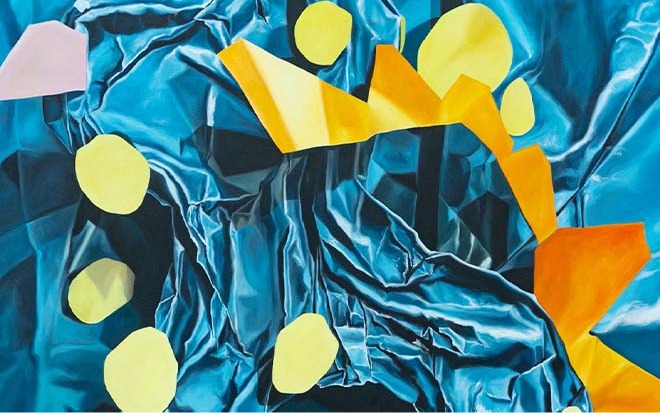
    Ayka Go undertakes a significant departure from the creased, folded and worn paper forms that have become emblematic of her practice, expanding her inquiry beyond the introspective terrain these motifs once occupied. For this new series, her attention shifts outward to the natural world, which becomes a framework through which processes of self-transformation are contemplated and understood.

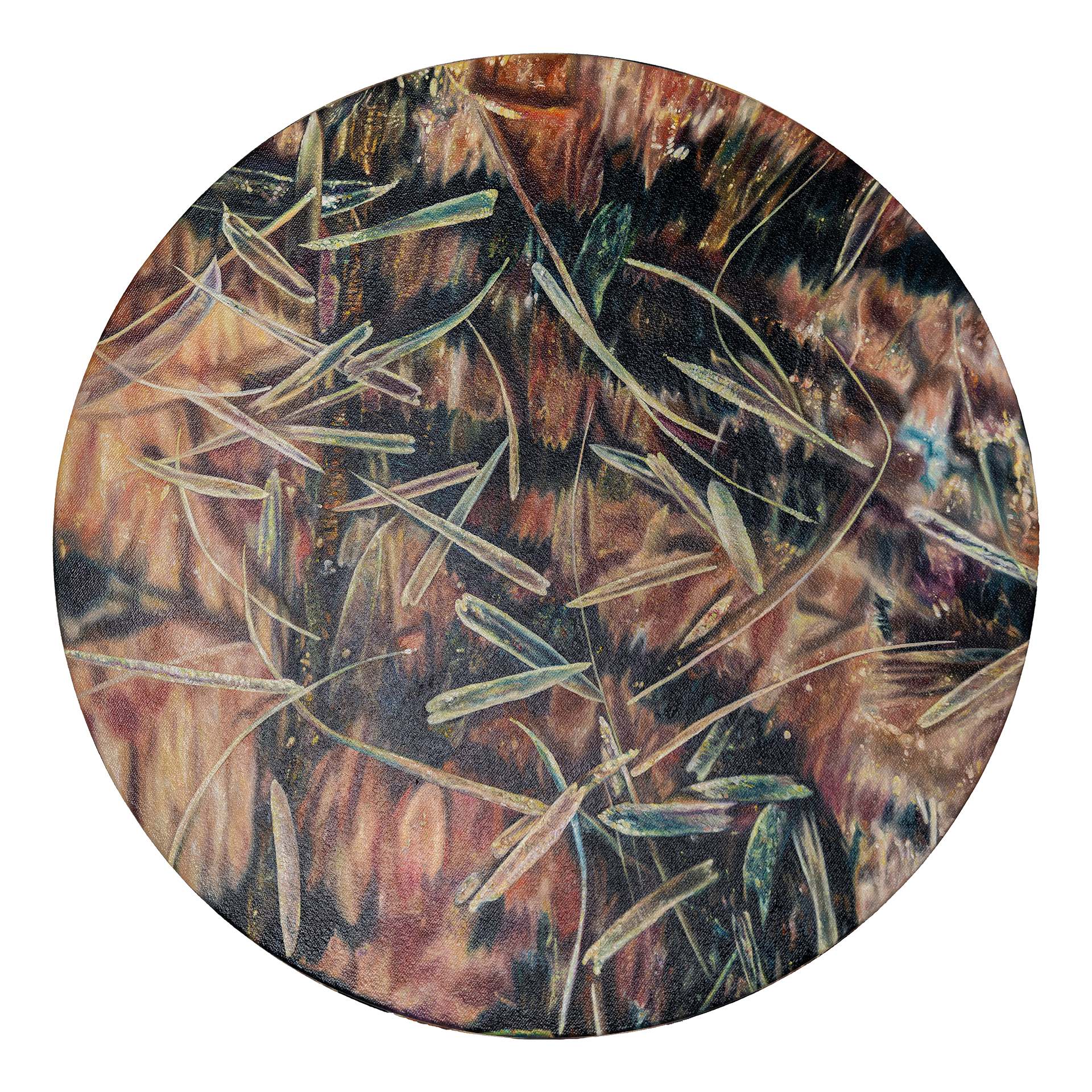
    During a period of relative quietude in 2025, Ayka devoted considerable time to cultivating a garden at her studio. What began as an attempt to grow fruit-bearing trees and flowering plants gradually developed into a small ecosystem inhabited by butterflies, caterpillars, and dragonflies. She became increasingly attentive to subtle cycles of growth, decay, and renewal, such as the falling of leaves, the emergence of insects, and the delicate traces they leave behind.

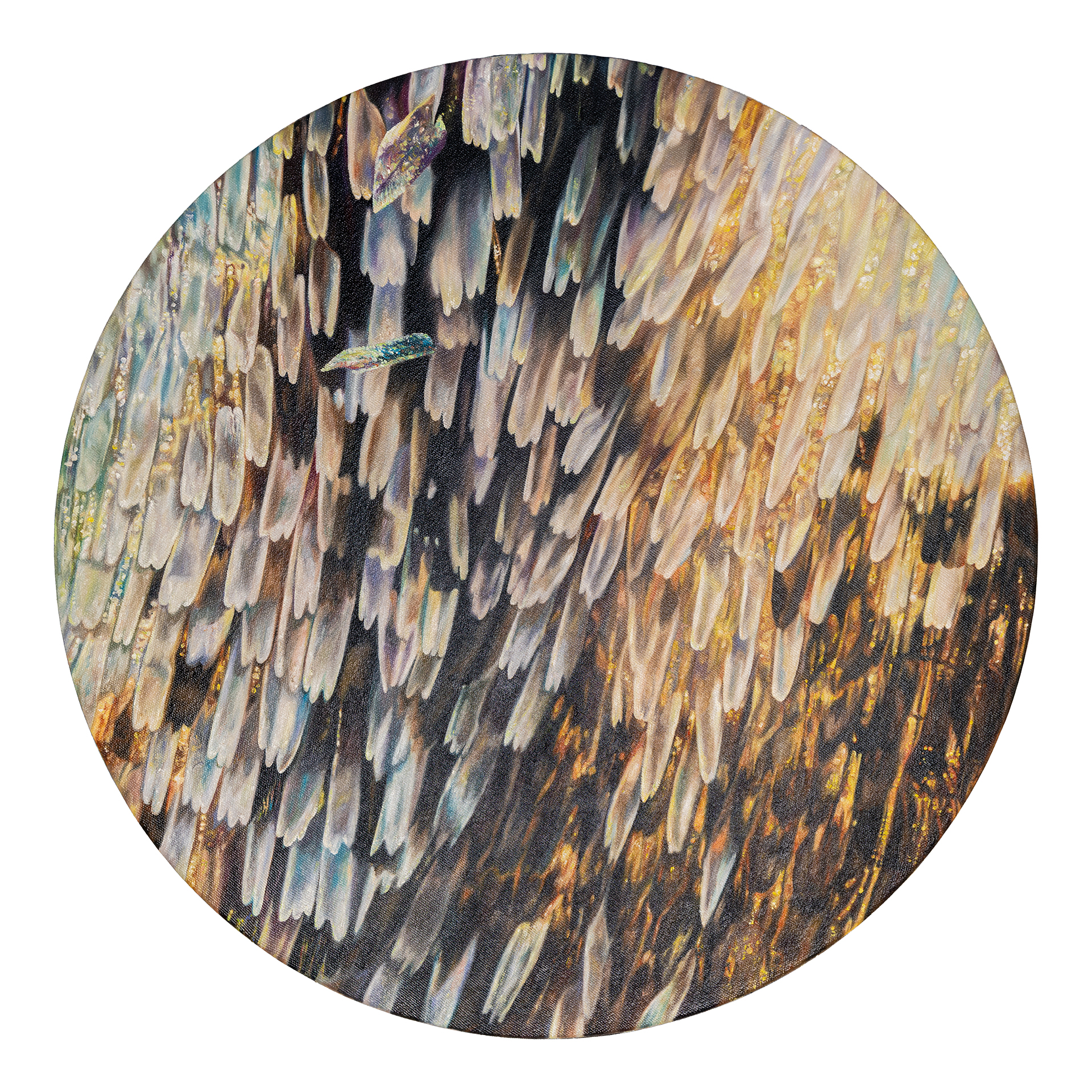
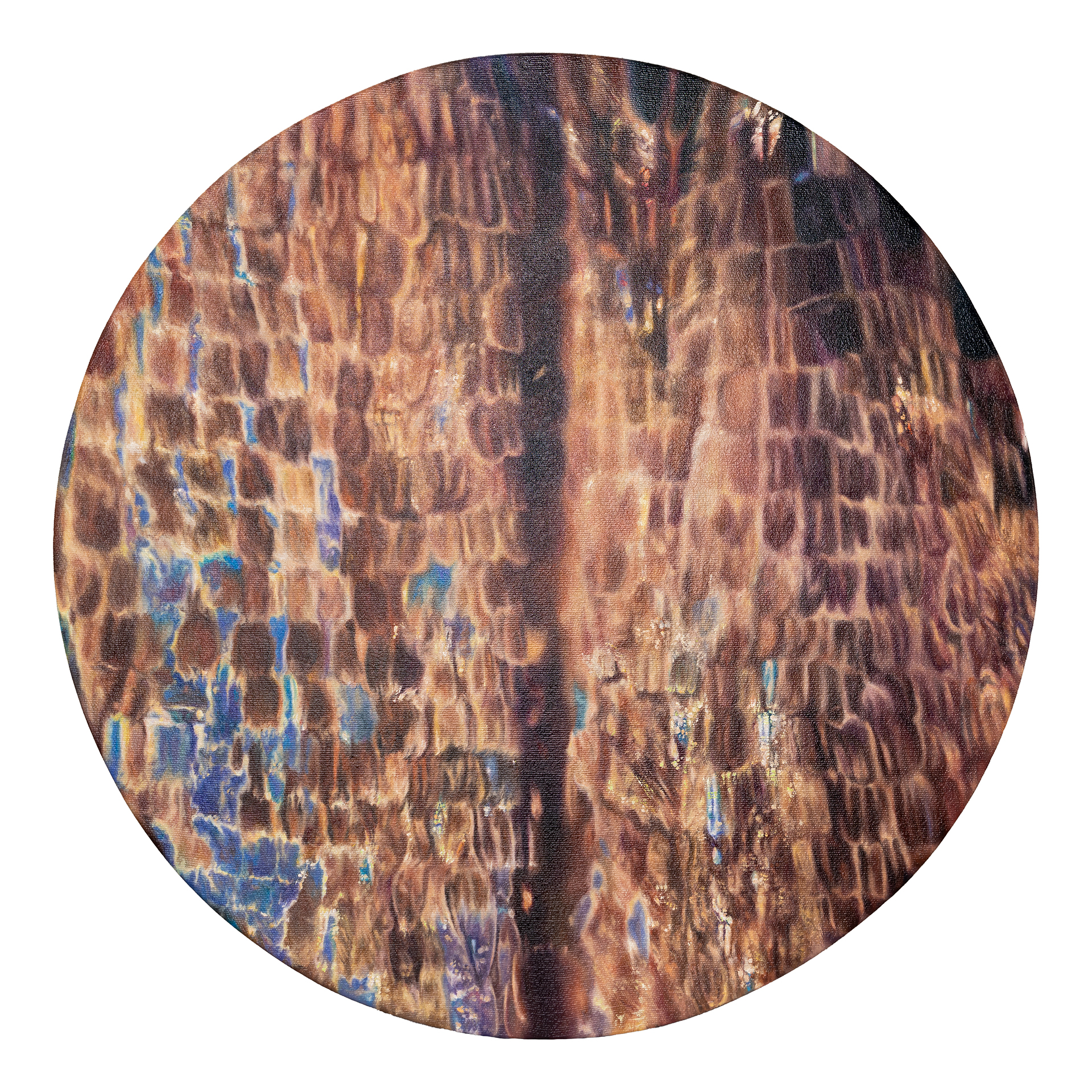
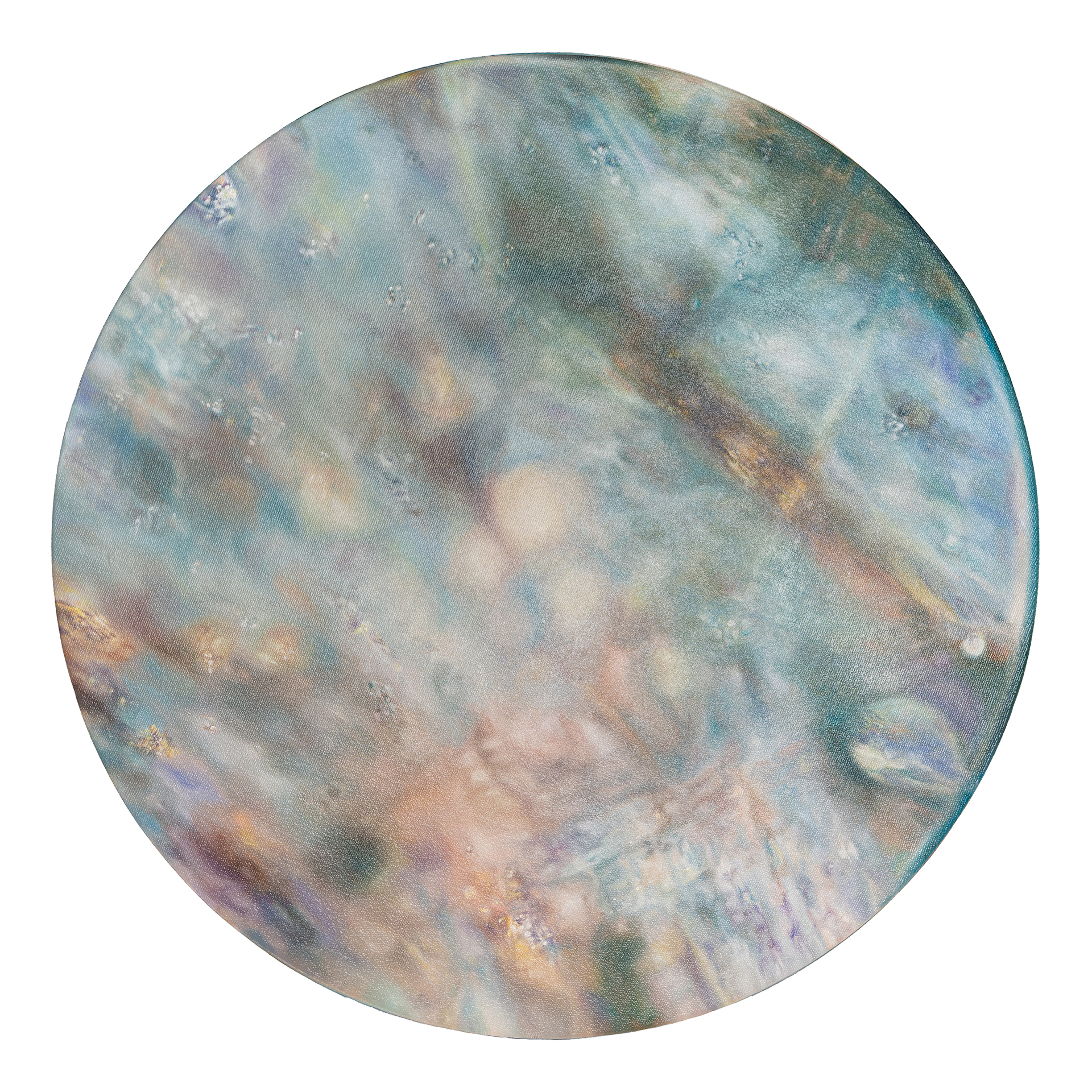
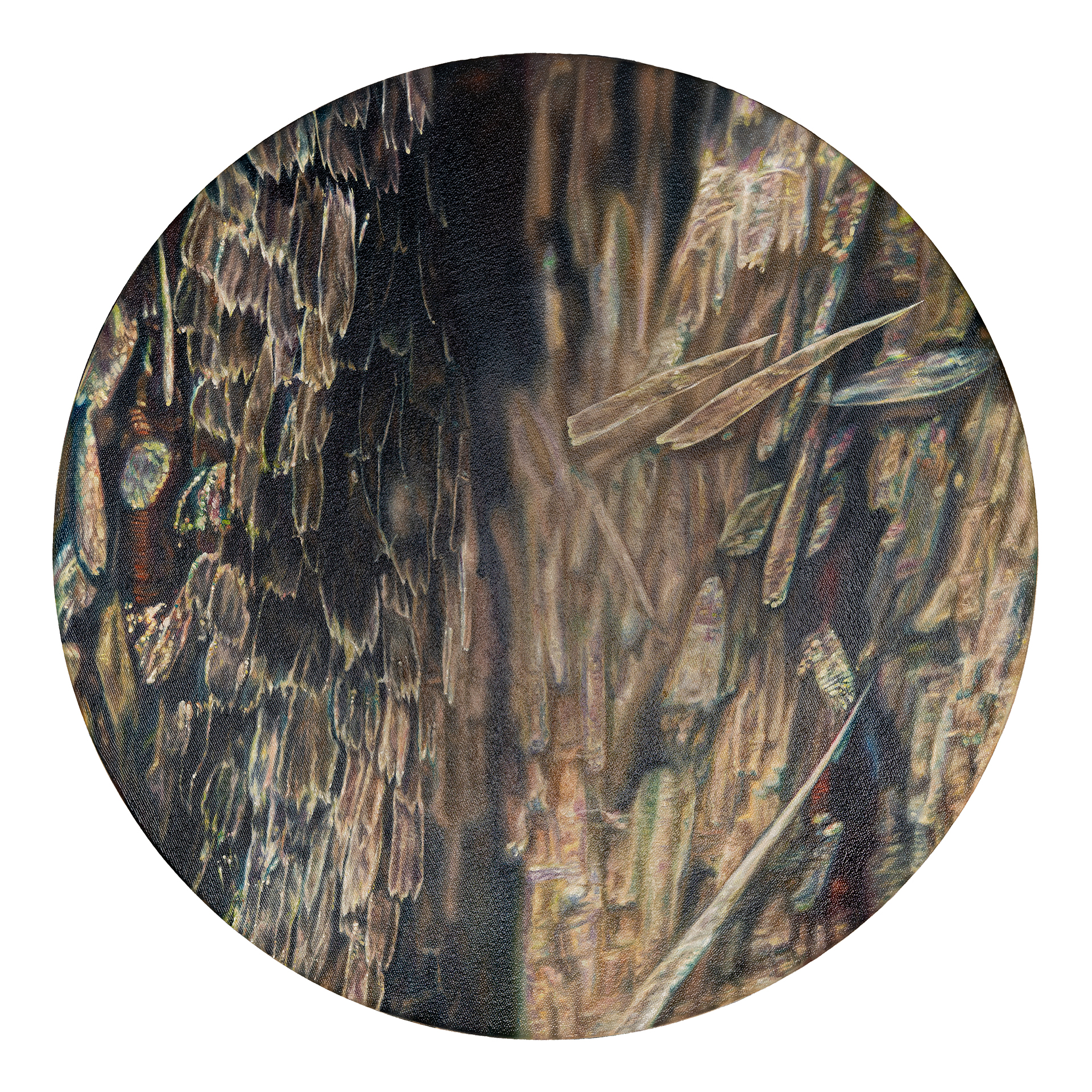
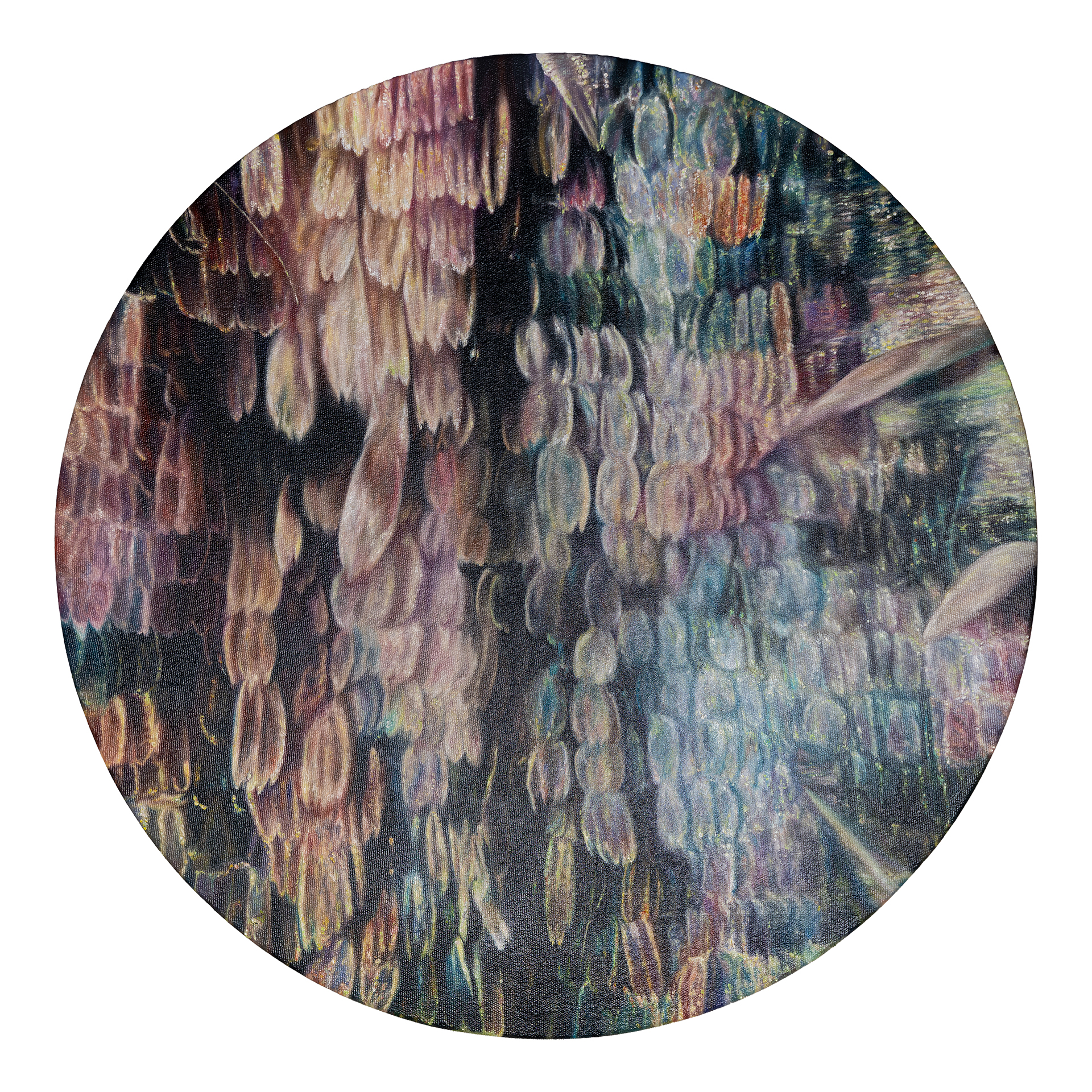
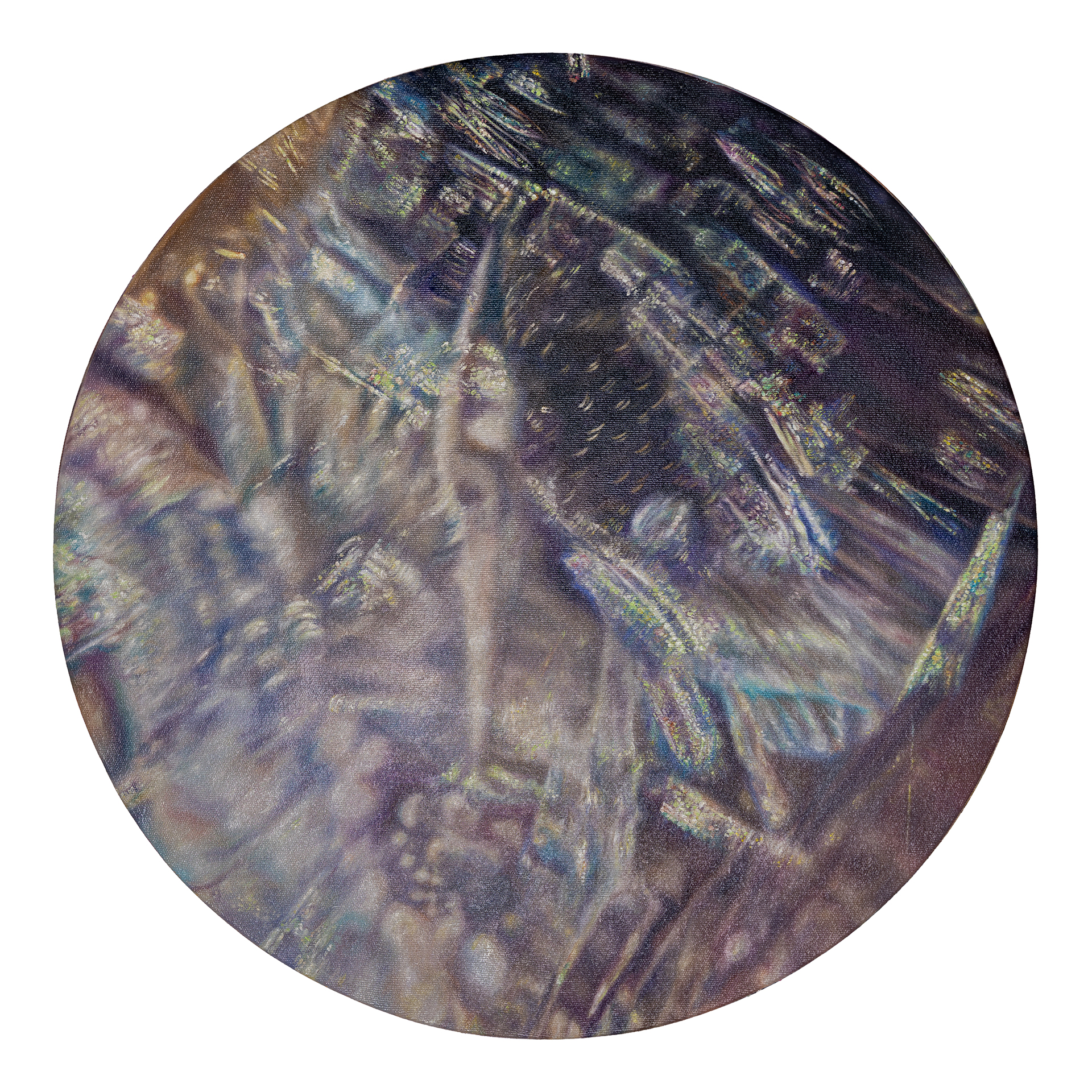
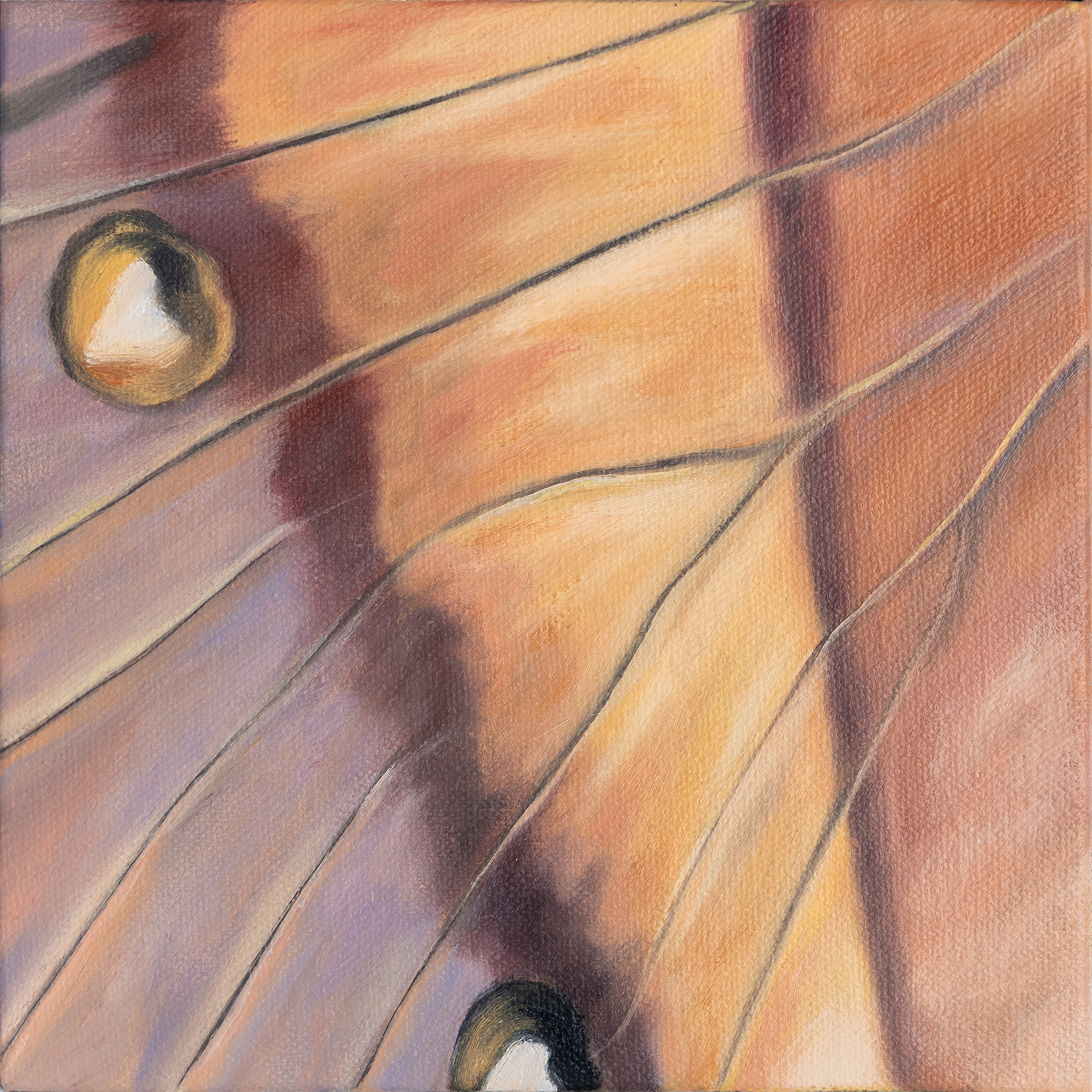
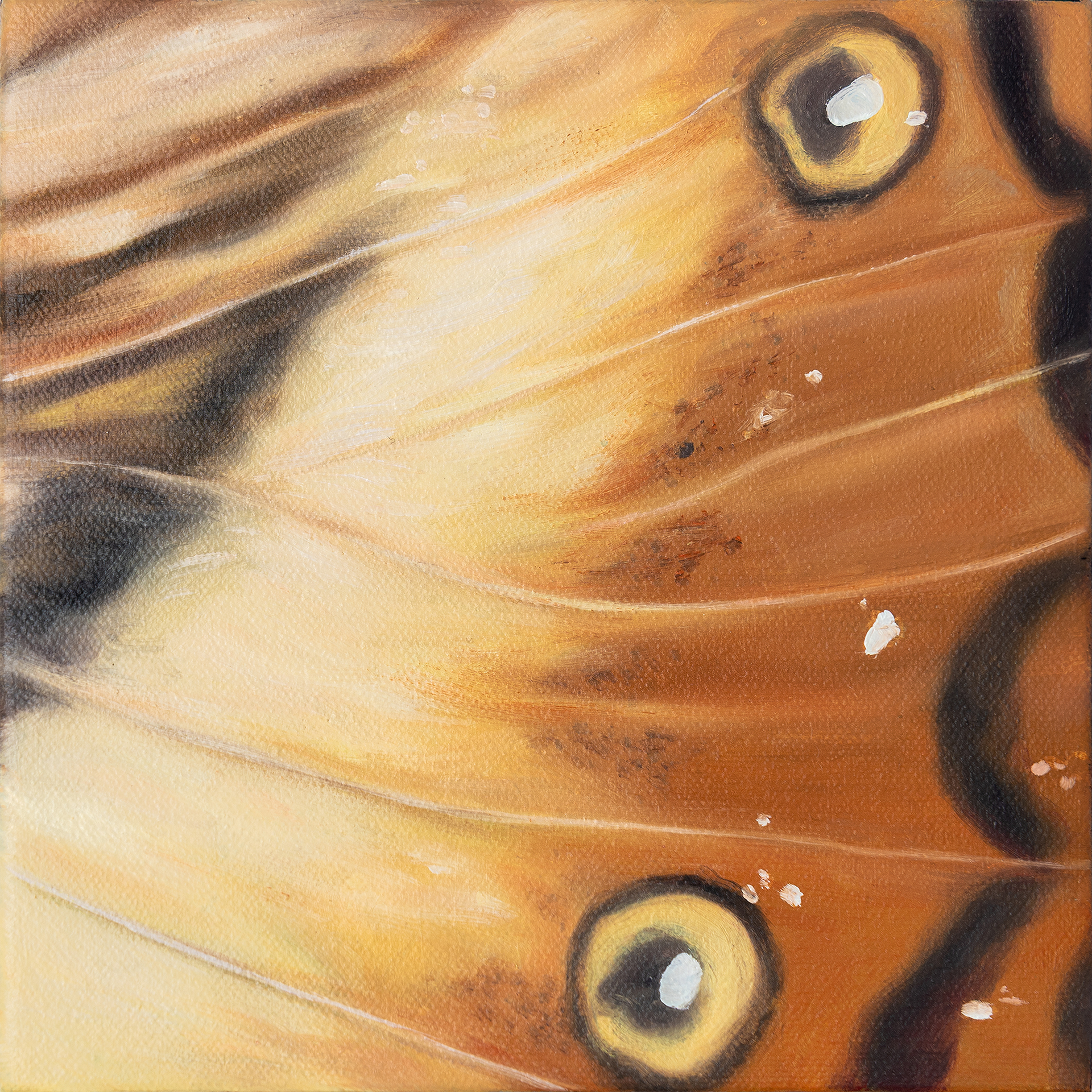
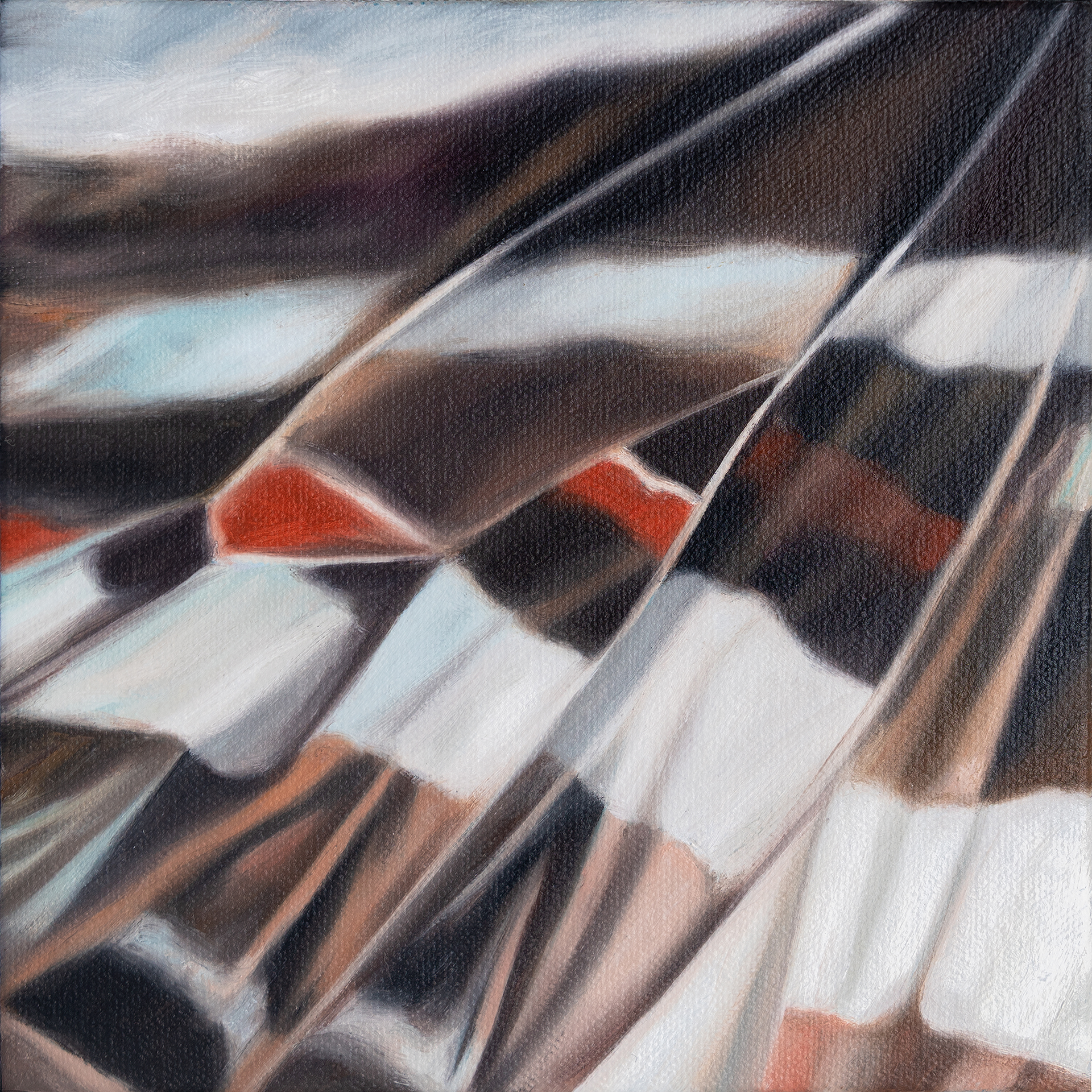
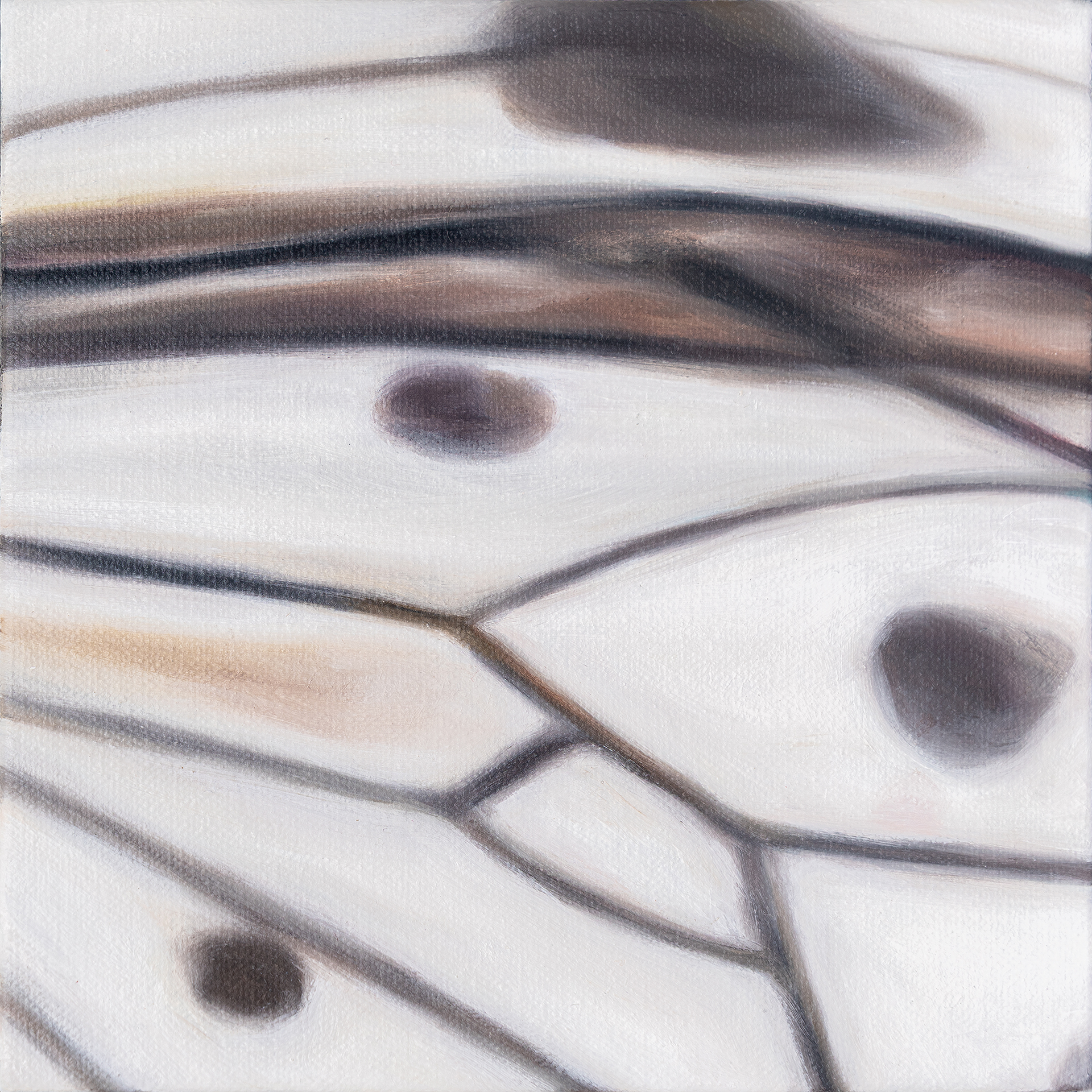
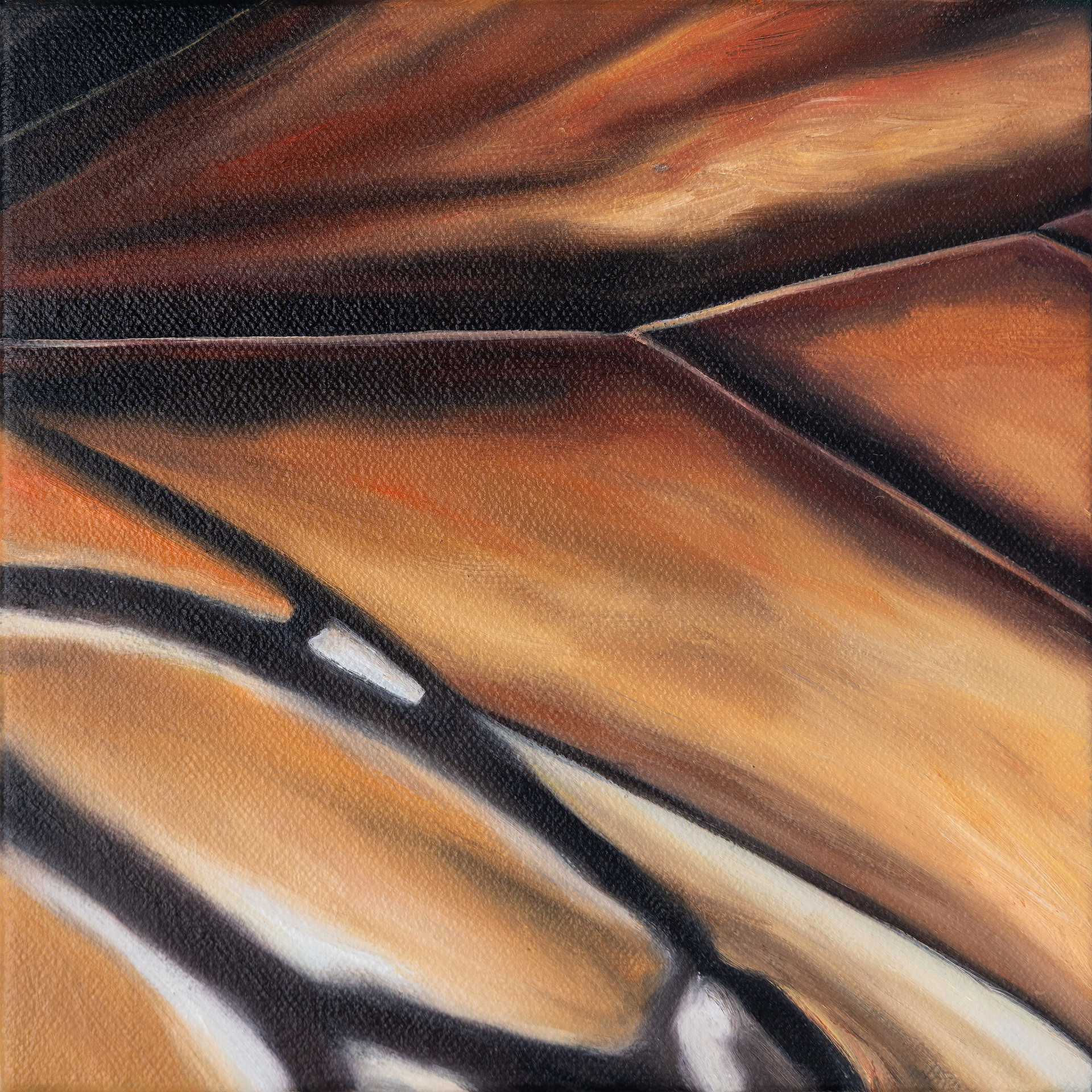
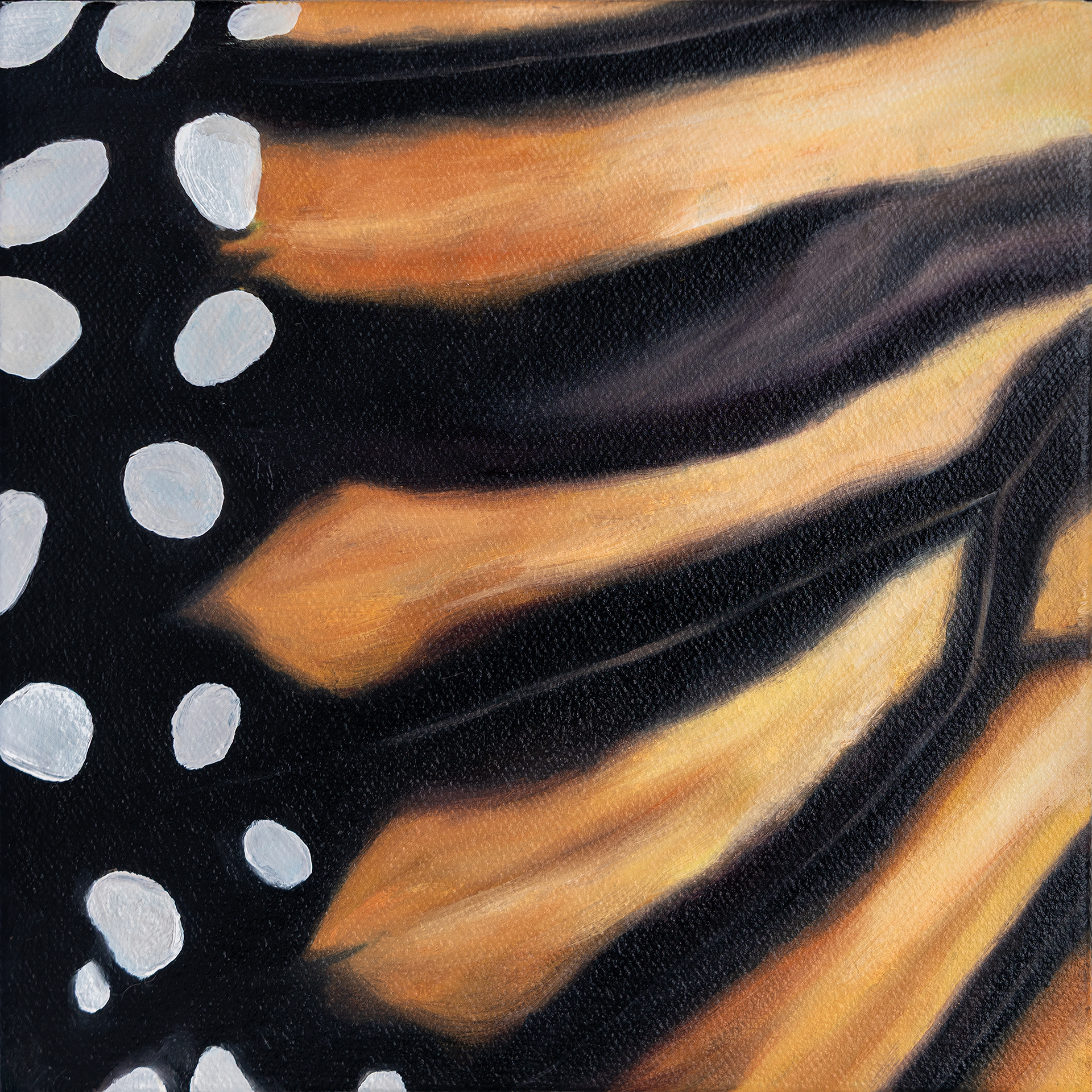
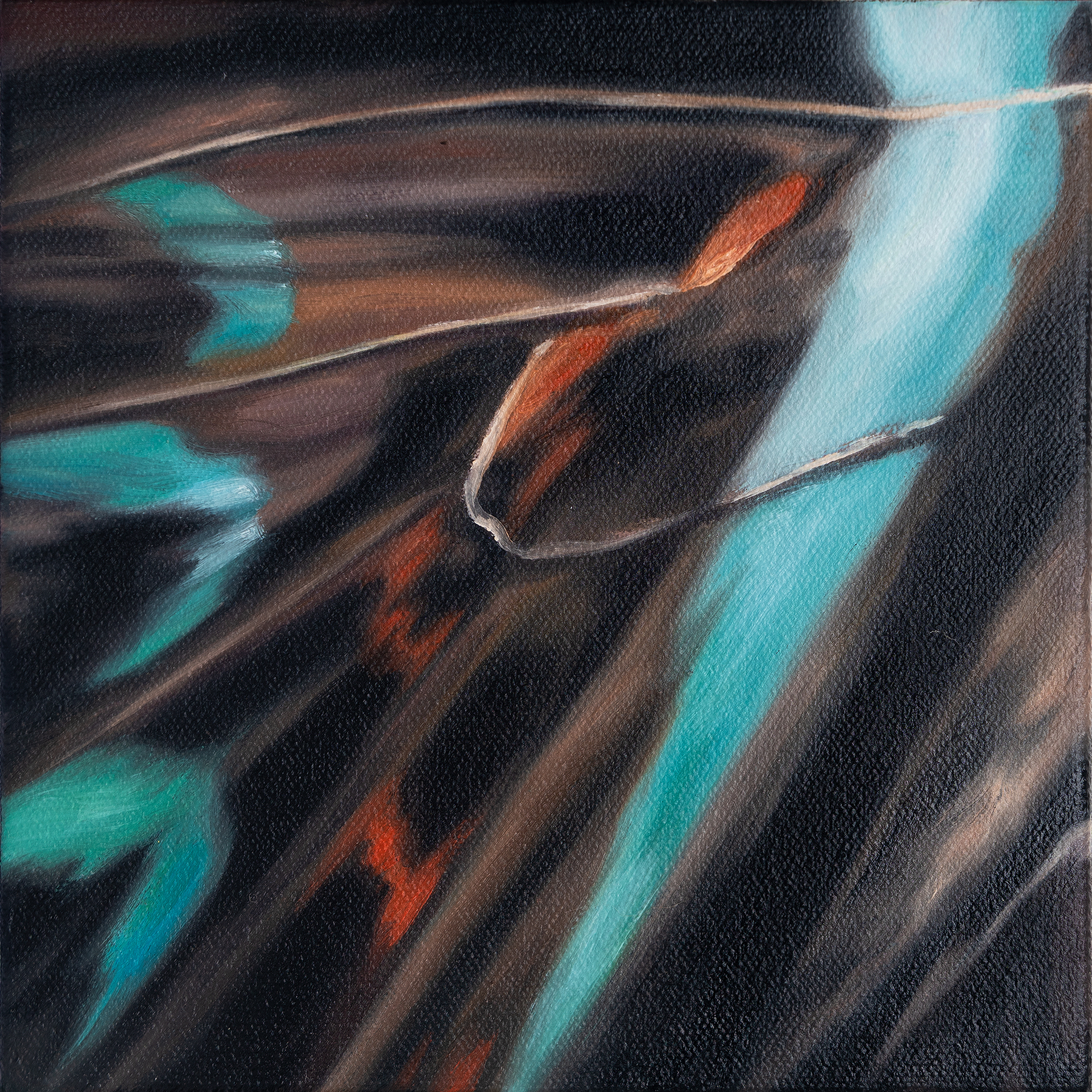
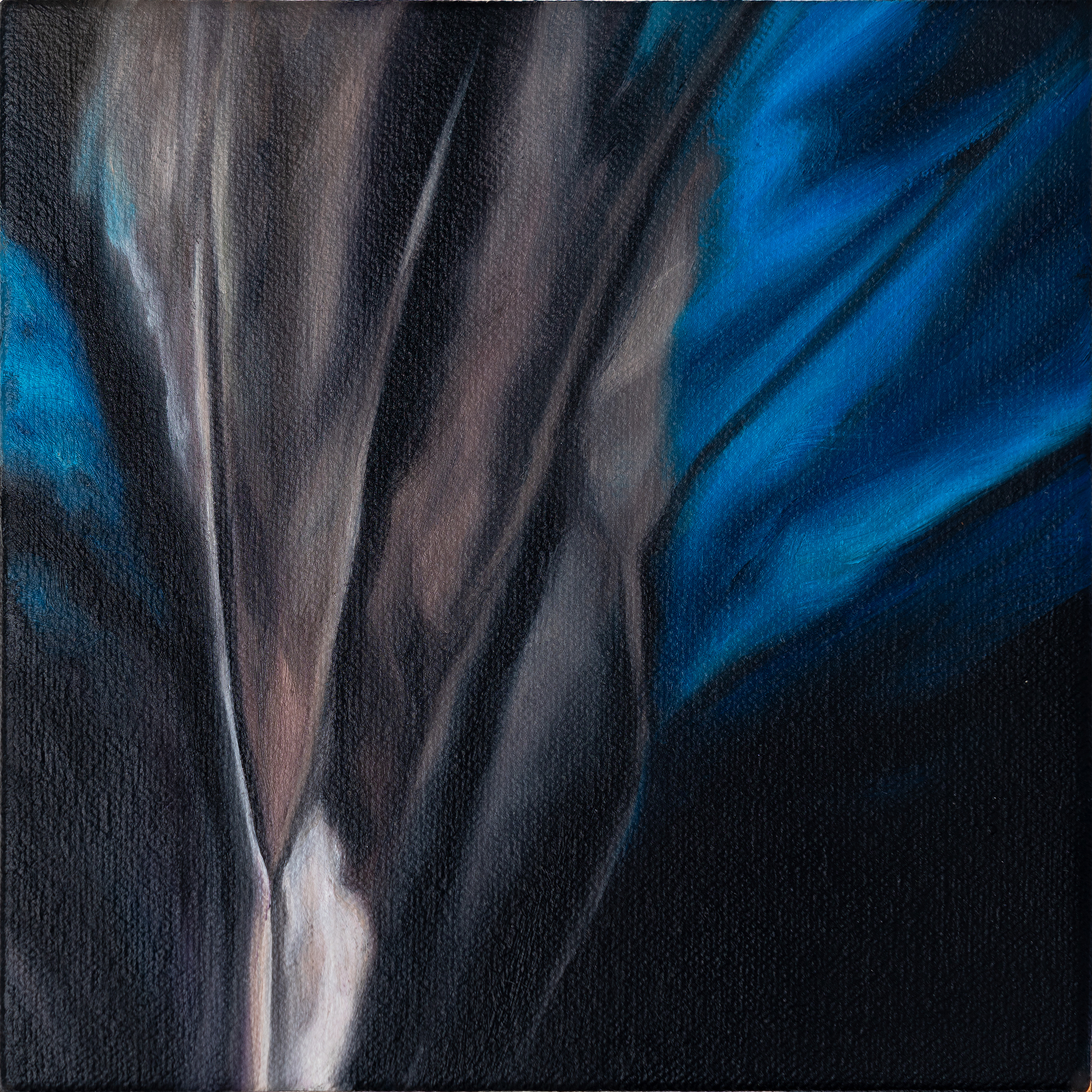
    Butterfly wings became a particular source of fascination. Examined under a microscope, their intricate structures, chromatic variations, and layered formations revealed visual complexities that resonated with the material language of painting. Viewing butterfly wings through a microscope allowed a different perspective from that of the naked eye. “Light passing through the wings revealed how their colors come to be. Under a microscope, blue wings appear in grey tones. The blueness is actually an effect of reflecting light.” This is called structural color, an optical illusion formed when light hits the microscopic scales on the wings, causing iridescent colors that shimmer with movement. “There is beauty in nature’s concealment. With painting too, the process can be unseen by the viewer. But the artist is aware of her process for building up the colors of a finished work.”

    As one of the most enduring symbols of metamorphosis, the butterfly emerged as a central figure through which Ayka could consider her own experiences of unsettling change that surfaced in her thirties, including a range of health-related issues. By observing the butterfly’s brief lifespan, (often lasting only several days or weeks depending on the species), she was struck by its capacity to contribute meaningfully to the vitality of an ecosystem despite its transience. This realization prompted a reconsideration of her own productivity and purpose. She stopped measuring value or fulfillment through conventional expectations and embraced the possibility of cultivating alternative ways to contribute through artistic practice and personal growth.

    The series is also marked by experimentation in technique. Ayka employed a different set of brushes, switching from sizes 2-6 brushes used for her large scale works, to smaller size 000 to 1 brushes, including needle brushes. “I had to strip myself of what I was used to. Instead of spreading colors and playing with them, I had to draw bit by bit.”

    She further explored new color palettes. The weathered papers she depicted in past works required neutrals and warm whites. For this show, she used cooler whites and vivid colors like cadmium greens, lemon yellows, amethyst, and other blues and violets. “I completely changed my choice of weaponry,” she asserts, comparing the process to becoming a student, deliberately relinquishing mastery in favor of discovery, and approaching painting with a fresh sense of inquiry. 

    Accompanying the paintings is a renewed engagement with her cocoon sculptures, constructed from paper. Paper was cut into stringlike strips, then knit using standard crochet tools. The resulting cocoon shapes function as potent symbols of Ayka’s latent identities and unrealized potentials. They imply an openness toward future transformations, whether artistic, personal, or familial.

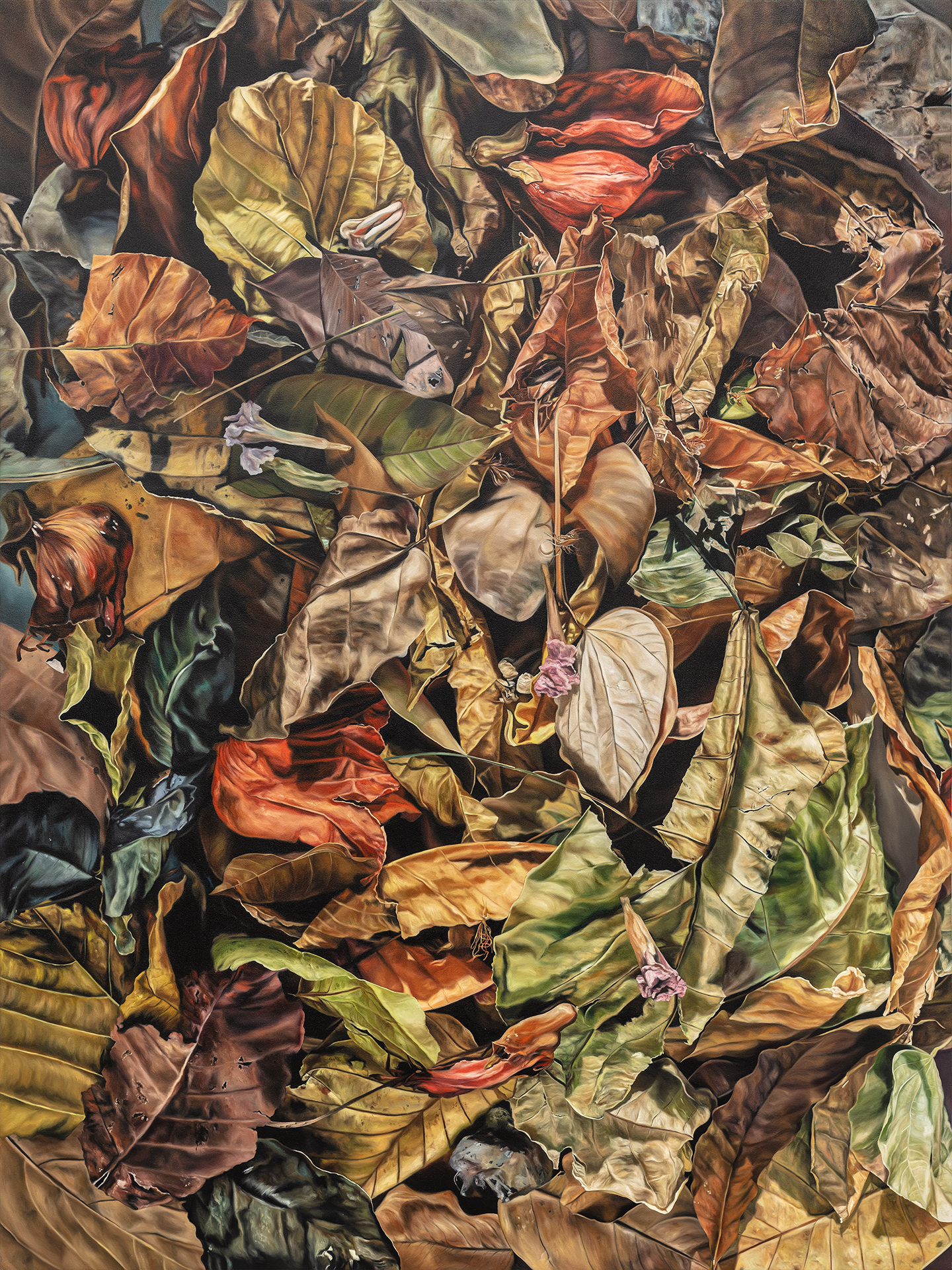
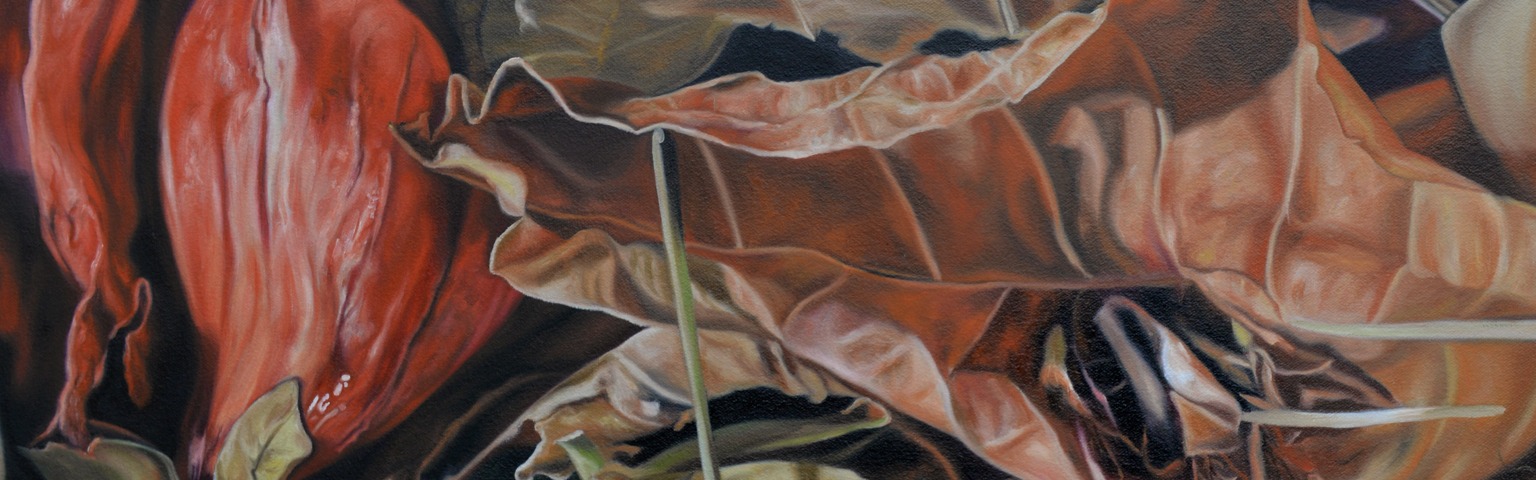
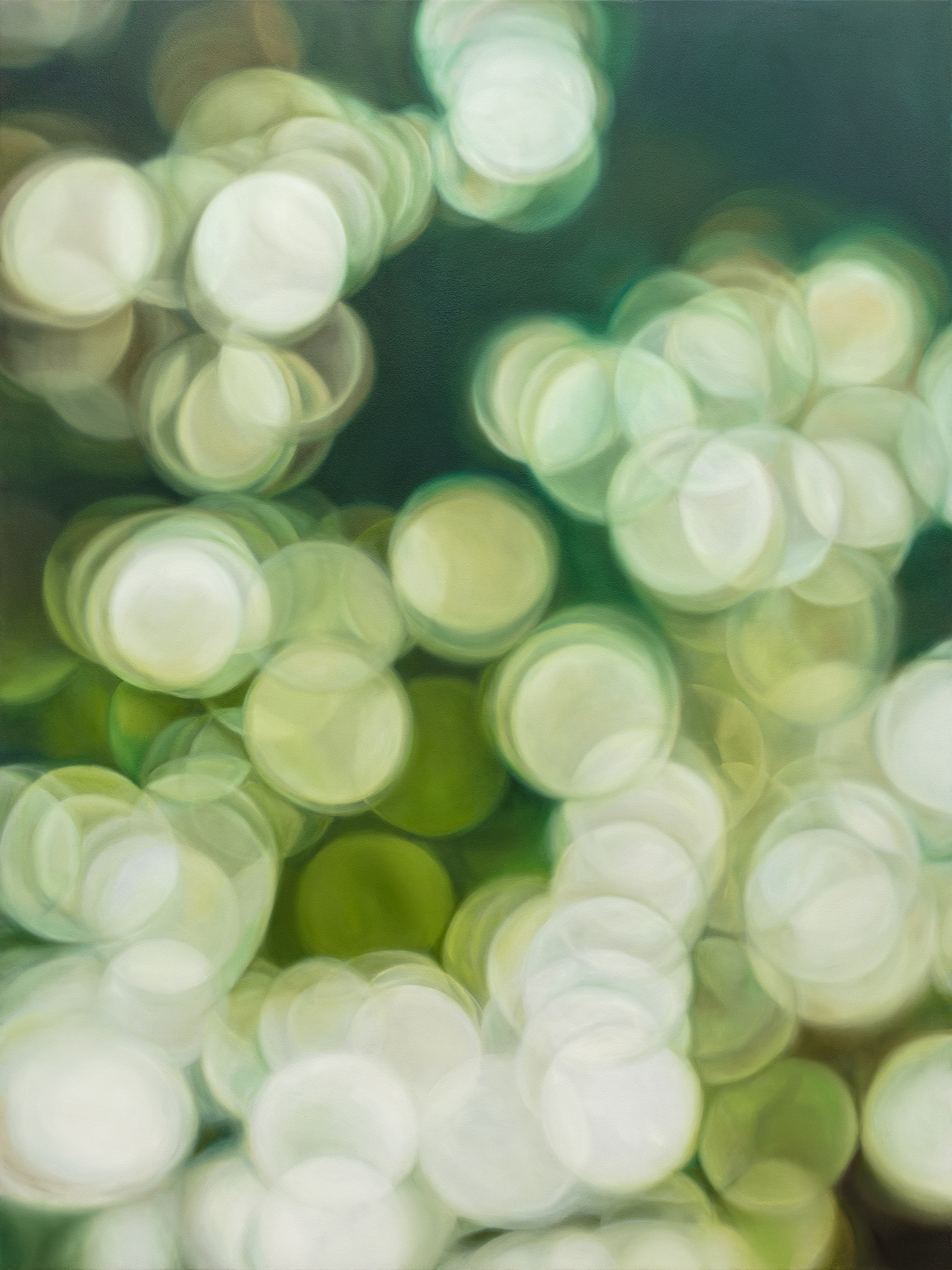
    The monumental eight-by-eight-foot paintings draw inspiration from the cyclical rhythms of Philippine climate. One canvas responds to the textures and tonalities of fallen leaves associated with the dry season (tag-araw), and a second canvas explores the visual effects of sunlight filtering through foliage during the wet season (tag-ulan). “While trying to find the correct lens view, I found beauty in the out-of-focus image. Some details and colors can only be appreciated during the blur state.” Blurred points of light dissolve into luminous orbs that appear to move subtly like droplets. Ayka thus captures in painting the fleeting nature of perception itself.

    Literature played a formative role during this year-long pause. Ayka immersed herself in works of fiction, finding in them both refuge and self-recognition. The act of reading offered a sense of structure and accomplishment, while the imaginative worlds constructed by novelists inspired new ways of understanding interconnectedness. 

    The architecture of fictional narrative bears striking parallels to the dynamics of an ecosystem. Characters, like organisms, inhabit specific environments, confront conflict and uncertainty, and adapt to evolving conditions. World-building functions much like ecological geography, providing the terrain upon which relationships and events unfold. Within both literature and nature, moments of disruption compel transformation, generating new configurations of meaning. It is through this analogy that Ayka comes to understand her own circumstances, as part of a broader process of continual becoming.

    Words by Stephanie Frondoso


    Ayka Go’s (b. 1993, Philippines) works evoke personal memories from quotidian moments, including nostalgic reveries from childhood and existential musings. Often starting out from three-dimensional paper foldings, she explores the semiotic potential of paper through paintings on canvas. This peculiar process reveals a fluidity concerned with playful translations between two media.

    In her works, the sensuous surface of a modest object, such as paper, is highlighted – its creases, folds, billows, and tears. Colourful paper wraps around large forms, creating idiosyncratic shapes or revealing underlying surfaces. At times, it takes a vastness of a landscape, and in others, the intimacy of diaristic entries. She has also introduced elements of chance into her process, utilizing Dadaist strategies as prompts for visual paper collages that are later translated into paintings.

    Go expands her scope of inquiry from previous themes of girlhood nostalgia to bolder, mature examinations on feminist theory. Of late, she has been exploring on the female form. While very personal, it is resonant to the collective experience of self-reclamation. Go has also worked across medium of video and watercolour on paper, providing warm glimpses of private impressions culled from daily life.

    Go has exhibited in Australia, Philippines, Singapore, Thailand, Taiwan, Hong Kong, China, Italy, and France. She holds a BFA in Studio Arts from the University of the Philippines Diliman, and is currently based in Manila, Philippines.

Ayka Go undertakes a significant departure from the creased, folded and worn paper forms that have become emblematic of her practice, expanding her inquiry beyond the introspective terrain these motifs once occupied. For this new series, her attention shifts outward to the natural world, which becomes a framework through which processes of self-transformation are contemplated and understood.

During a period of relative quietude in 2025, Ayka devoted considerable time to cultivating a garden at her studio. What began as an attempt to grow fruit-bearing trees and flowering plants gradually developed into a small ecosystem inhabited by butterflies, caterpillars, and dragonflies. She became increasingly attentive to subtle cycles of growth, decay, and renewal, such as the falling of leaves, the emergence of insects, and the delicate traces they leave behind.

Butterfly wings became a particular source of fascination. Examined under a microscope, their intricate structures, chromatic variations, and layered formations revealed visual complexities that resonated with the material language of painting. Viewing butterfly wings through a microscope allowed a different perspective from that of the naked eye. “Light passing through the wings revealed how their colors come to be. Under a microscope, blue wings appear in grey tones. The blueness is actually an effect of reflecting light.” This is called structural color, an optical illusion formed when light hits the microscopic scales on the wings, causing iridescent colors that shimmer with movement. “There is beauty in nature’s concealment. With painting too, the process can be unseen by the viewer. But the artist is aware of her process for building up the colors of a finished work.”

As one of the most enduring symbols of metamorphosis, the butterfly emerged as a central figure through which Ayka could consider her own experiences of unsettling change that surfaced in her thirties, including a range of health-related issues. By observing the butterfly’s brief lifespan, (often lasting only several days or weeks depending on the species), she was struck by its capacity to contribute meaningfully to the vitality of an ecosystem despite its transience. This realization prompted a reconsideration of her own productivity and purpose. She stopped measuring value or fulfillment through conventional expectations and embraced the possibility of cultivating alternative ways to contribute through artistic practice and personal growth.

The series is also marked by experimentation in technique. Ayka employed a different set of brushes, switching from sizes 2-6 brushes used for her large scale works, to smaller size 000 to 1 brushes, including needle brushes. “I had to strip myself of what I was used to. Instead of spreading colors and playing with them, I had to draw bit by bit.”

She further explored new color palettes. The weathered papers she depicted in past works required neutrals and warm whites. For this show, she used cooler whites and vivid colors like cadmium greens, lemon yellows, amethyst, and other blues and violets. “I completely changed my choice of weaponry,” she asserts, comparing the process to becoming a student, deliberately relinquishing mastery in favor of discovery, and approaching painting with a fresh sense of inquiry. 

Accompanying the paintings is a renewed engagement with her cocoon sculptures, constructed from paper. Paper was cut into stringlike strips, then knit using standard crochet tools. The resulting cocoon shapes function as potent symbols of Ayka’s latent identities and unrealized potentials. They imply an openness toward future transformations, whether artistic, personal, or familial.

The monumental eight-by-eight-foot paintings draw inspiration from the cyclical rhythms of Philippine climate. One canvas responds to the textures and tonalities of fallen leaves associated with the dry season (tag-araw), and a second canvas explores the visual effects of sunlight filtering through foliage during the wet season (tag-ulan). “While trying to find the correct lens view, I found beauty in the out-of-focus image. Some details and colors can only be appreciated during the blur state.” Blurred points of light dissolve into luminous orbs that appear to move subtly like droplets. Ayka thus captures in painting the fleeting nature of perception itself.

Literature played a formative role during this year-long pause. Ayka immersed herself in works of fiction, finding in them both refuge and self-recognition. The act of reading offered a sense of structure and accomplishment, while the imaginative worlds constructed by novelists inspired new ways of understanding interconnectedness. 

The architecture of fictional narrative bears striking parallels to the dynamics of an ecosystem. Characters, like organisms, inhabit specific environments, confront conflict and uncertainty, and adapt to evolving conditions. World-building functions much like ecological geography, providing the terrain upon which relationships and events unfold. Within both literature and nature, moments of disruption compel transformation, generating new configurations of meaning. It is through this analogy that Ayka comes to understand her own circumstances, as part of a broader process of continual becoming.

Words by Stephanie Frondoso


Ayka Go’s (b. 1993, Philippines) works evoke personal memories from quotidian moments, including nostalgic reveries from childhood and existential musings. Often starting out from three-dimensional paper foldings, she explores the semiotic potential of paper through paintings on canvas. This peculiar process reveals a fluidity concerned with playful translations between two media.

In her works, the sensuous surface of a modest object, such as paper, is highlighted – its creases, folds, billows, and tears. Colourful paper wraps around large forms, creating idiosyncratic shapes or revealing underlying surfaces. At times, it takes a vastness of a landscape, and in others, the intimacy of diaristic entries. She has also introduced elements of chance into her process, utilizing Dadaist strategies as prompts for visual paper collages that are later translated into paintings.

Go expands her scope of inquiry from previous themes of girlhood nostalgia to bolder, mature examinations on feminist theory. Of late, she has been exploring on the female form. While very personal, it is resonant to the collective experience of self-reclamation. Go has also worked across medium of video and watercolour on paper, providing warm glimpses of private impressions culled from daily life.

Go has exhibited in Australia, Philippines, Singapore, Thailand, Taiwan, Hong Kong, China, Italy, and France. She holds a BFA in Studio Arts from the University of the Philippines Diliman, and is currently based in Manila, Philippines.

Installation Views

Works
Ayka Go
the in between
2026
17726
2
oil on canvas
96h x 72w in 243.8h x 182.9w cm
-1
0.00
PHP
0
Details
Ayka Go
turning season
2026
17725
2
oil on canvas
96h x 72w in 243.8h x 182.9w cm
-1
0.00
PHP
0
Details
Ayka Go
Lepidoptera – Butterfly 1
2026
17710
2
oil on canvas
24 dia in 61 dia cm
-1
0.00
PHP
0
Details
Ayka Go
Lepidoptera – Butterfly 7
2026
17709
2
oil on canvas
24 dia in 61 dia cm
-1
0.00
PHP
0
Details
Ayka Go
Lepidoptera – Butterfly 2
2026
17708
2
oil on canvas
24 dia in 61 dia cm
-1
0.00
PHP
0
Details
Ayka Go
Lepidoptera – Butterfly 6
2026
17707
2
oil on canvas
24 dia in 61 dia cm
-1
0.00
PHP
0
Details
Ayka Go
Lepidoptera – Butterfly 4
2026
17711
2
oil on canvas
24 dia in 61 dia cm
-1
0.00
PHP
0
Details
Ayka Go
Lepidoptera – Butterfly 3
2026
17712
2
oil on canvas
24 dia in 61 dia cm
-1
0.00
PHP
0
Details
Ayka Go
Lepidoptera – Butterfly 5
2026
17713
2
oil on canvas
24 dia in 61 dia cm
-1
0.00
PHP
0
Details
Ayka Go
vindula dejone 1
2026
17716
2
oil on canvas
6h x 6w in 15.2h x 15.2w cm
-1
0.00
PHP
0
Details
Ayka Go
vindula dejone 2
2026
17714
2
oil on canvas
6h x 6w in 15.2h x 15.2w cm
-1
0.00
PHP
0
Details
Ayka Go
grahium rhesus
2026
17715
2
oil on canvas
6h x 6w in 15.2h x 15.2w cm
-1
0.00
PHP
0
Details
Ayka Go
idea leuconoe
2026
17717
2
oil on canvas
6h x 6w in 15.2h x 15.2w cm
-1
0.00
PHP
0
Details
Ayka Go
danaus genutia 2
2026
17718
2
oil on canvas
6h x 6w in 15.2h x 15.2w cm
-1
0.00
PHP
0
Details
Ayka Go
danaus genutia 1
2026
17719
2
oil on canvas
6h x 6w in 15.2h x 15.2w cm
-1
0.00
PHP
0
Details
Ayka Go
graphium milon
2026
17720
2
oil on canvas
6h x 6w in 15.2h x 15.2w cm
-1
0.00
PHP
0
Details
Ayka Go
mulciber
2026
17721
2
oil on canvas
6h x 6w in 15.2h x 15.2w cm
-1
0.00
PHP
0
Details

Artist

PHA+PHN0cm9uZz5TSUxWRVJMRU5TPC9zdHJvbmc+IGlzIGNvbW1pdHRlZCB0byBwcm90ZWN0aW5nIHlvdXIgcHJpdmFjeS4gSW4gY29tcGxpYW5jZSB3aXRoIHRoZSBQaGlsaXBwaW5lIFJlcHVibGljIEFjdCwgTm8uIDEwMTczIGJldHRlciBrbm93biBhcyB0aGUgMjAxMiBEYXRhIFByaXZhY3kgQWN0LCB3ZSBjYW4gb25seSB1c2UgdGhlIGluZm9ybWF0aW9uIHRoYXQgd2Ugb2J0YWluIGFib3V0IHlvdSBsYXdmdWxseS4gV2UgbWF5IGNvbGxlY3QgcGVyc29uYWwgaW5mb3JtYXRpb24gYWJvdXQgeW91IHdoZW4geW91IHNpZ24gdXAgZm9yIG91ciBuZXdzbGV0dGVyIG9yIGNvbnRhY3QgdXMgd2l0aCBhbiBpbnF1aXJ5LjwvcD4KPHA+VGhlIHR5cGUgb2YgaW5mb3JtYXRpb24gd2UgbWF5IGNvbGxlY3QgaW5jbHVkZXMgeW91ciA8c3Ryb25nPk5hbWU8L3N0cm9uZz4sIDxzdHJvbmc+RW1haWw8L3N0cm9uZz4sIGFuZCA8c3Ryb25nPkNvbnRhY3QgTnVtYmVyPC9zdHJvbmc+LjwvcD4KPHA+V2UgbWF5IGNvbGxlY3QgcGF5bWVudCBpbmZvcm1hdGlvbiBmcm9tIHlvdSB0byBmdWxmaWxsIHRyYW5zYWN0aW9ucy4gVG8gcHJvY2VzcyBwYXltZW50cywgd2UgbWF5IGNvbGxlY3QgeW91ciBjcmVkaXQgY2FyZCBhbmQgYmFuayBhY2NvdW50IGRldGFpbHMuIFRoaXMgaW5mb3JtYXRpb24gbWF5IGJlIHNoYXJlZCB3aXRoIHRoaXJkIHBhcnR5IHBheW1lbnQgcHJvY2Vzc2luZyBzZXJ2aWNlcy48L3A+CjxwPlRvIGRlbGl2ZXIgeW91ciBwdXJjaGFzZSwgd2UgbWF5IHByb3ZpZGUgeW91ciBwZXJzb25hbCBpbmZvcm1hdGlvbiB0byB0aGlyZC1wYXJ0eSBsb2dpc3RpY3MgY29tcGFuaWVzIHdobyBhc3Npc3QgdXMgd2l0aCBvdXIgZGVsaXZlcmllcyBhbmQgc2hpcG1lbnRzLjwvcD4KPHA+VGhlIHBlcnNvbmFsIGluZm9ybWF0aW9uIHdoaWNoIHdlIGhvbGQgd2lsbCBiZSBoZWxkIHNlY3VyZWx5IGluIGFjY29yZGFuY2Ugd2l0aCBvdXIgaW50ZXJuYWwgc2VjdXJpdHkgcG9saWN5LiBXZSB3aWxsIG5ldmVyIGNvbGxlY3QgaW5mb3JtYXRpb24gYWJvdXQgeW91IHdpdGhvdXQgeW91ciBleHBsaWNpdCBjb25zZW50LjwvcD4KPHA+VGhlIGluZm9ybWF0aW9uIHdlIHN0b3JlIHdpbGwgYmUgYWNjdXJhdGUgYW5kIHVwIHRvIGRhdGUuIFlvdSBjYW4gY2hlY2sgdGhlIGluZm9ybWF0aW9uIHRoYXQgd2UgaG9sZCBhYm91dCB5b3UgYnkgZW1haWxpbmcgdXMuIElmIHlvdSBmaW5kIHRoYXQgdGhlcmUgYXJlIGFueSBpbmFjY3VyYWNpZXMsIHdlIHdpbGwgZGVsZXRlIG9yIGNvcnJlY3QgaXQgcHJvbXB0bHkuPC9wPgo8cD5XZSBtYXkgdXNlIHRlY2hub2xvZ3kgdG8gdHJhY2sgdGhlIHBhdHRlcm5zIG9mIGJlaGF2aW9yIG9mIHZpc2l0b3JzIHRvIG91ciB3ZWJzaXRlLiBUaGlzIG1heSBpbmNsdWRlIHVzaW5nIGEgImNvb2tpZSIgc3RvcmVkIG9uIHlvdXIgYnJvd3NlciB3aGljaCB5b3UgY2FuIHVzdWFsbHkgbW9kaWZ5IHRocm91Z2ggeW91ciBicm93c2VyIHRvIHByZXZlbnQgdGhpcyBmcm9tIGhhcHBlbmluZy48L3A+CjxwPldlIHdpbGwgcmV0YWluIHlvdXIgcGVyc29uYWwgaW5mb3JtYXRpb24gb25seSB3aGlsZSB3ZSBuZWVkIGl0IGZvciB0aGUgcmVhc29ucyBzdGF0ZWQgYWJvdmUgb3IgdW50aWwgeW91IHJlcXVlc3QgdGhhdCB3ZSBkZWxldGUgaXQgb24gb3VyIHJlY29yZHMuPC9wPgo8cD5JZiB5b3UgaGF2ZSBhbnkgcXVlc3Rpb25zIG9yIGNvbW1lbnRzIGFib3V0IG91ciBwcml2YWN5LCBwbGVhc2UgY29udGFjdCB1cyBhdCA8YSBocmVmPSJtYWlsdG86aW5xdWlyeUBzaWx2ZXJsZW5zZ2FsbGVyaWVzLmNvbSI+aW5xdWlyeUBzaWx2ZXJsZW5zZ2FsbGVyaWVzLmNvbTwvYT48L3A+
R2FpbiBhY2Nlc3MgdG8gZXhjbHVzaXZlIGdhbGxlcnkgaW5mb3JtYXRpb24sIGxhdGVzdCBleGhpYml0aW9ucywgPGJyIC8+CmFuZCBhcnRpc3QgdXBkYXRlcyBieSBzaWduaW5nIHVwIGZvciBvdXIgbmV3c2xldHRlciBiZWxvdy4=