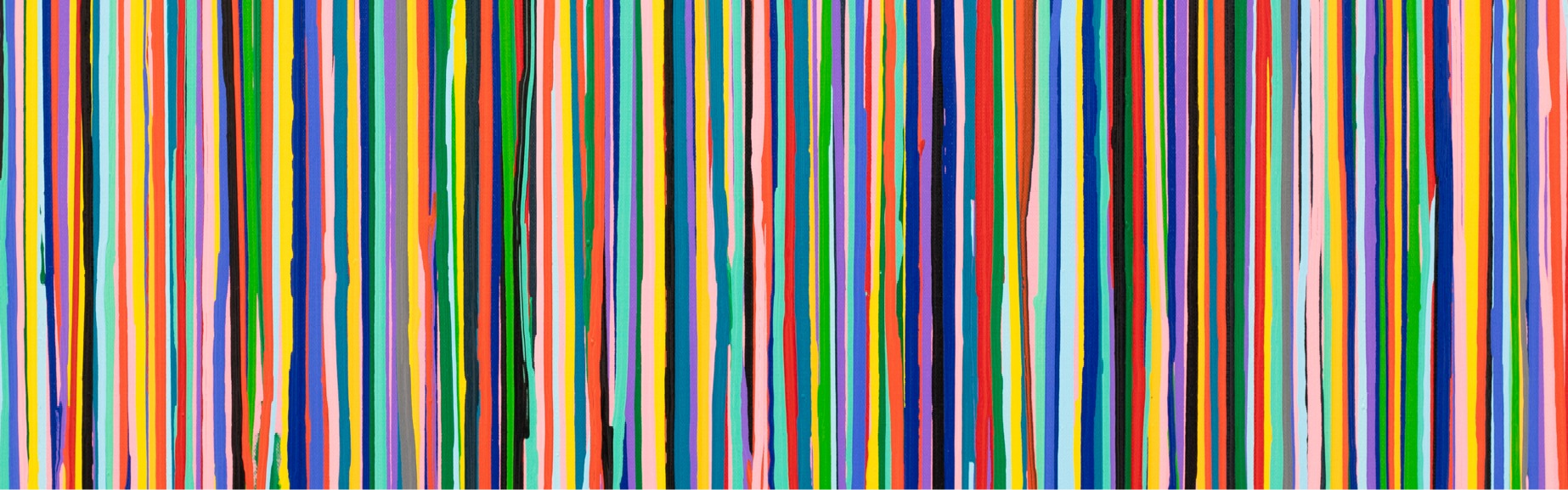
sum of its parts

MM Yu
Silverlens, Manila

About

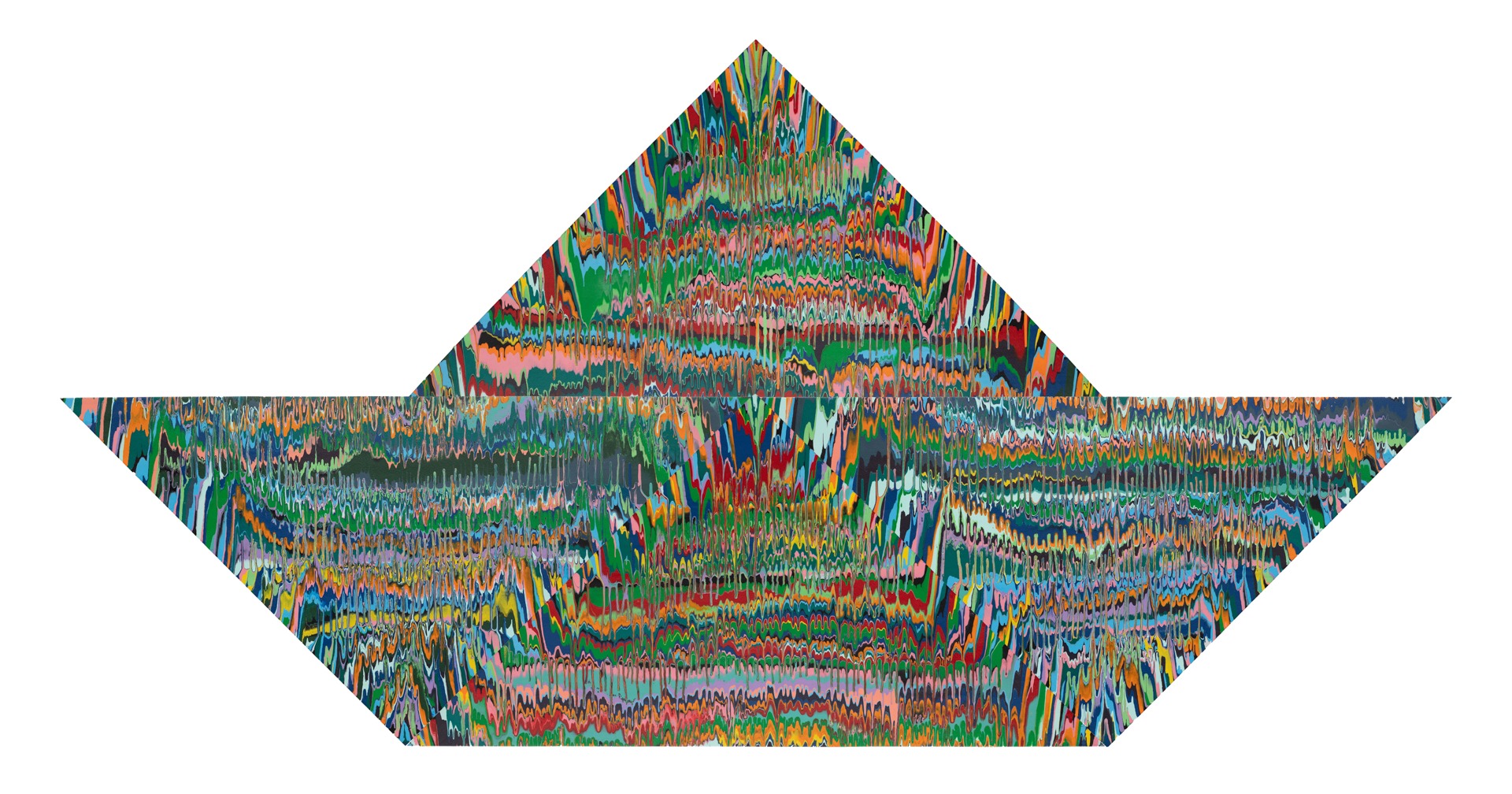
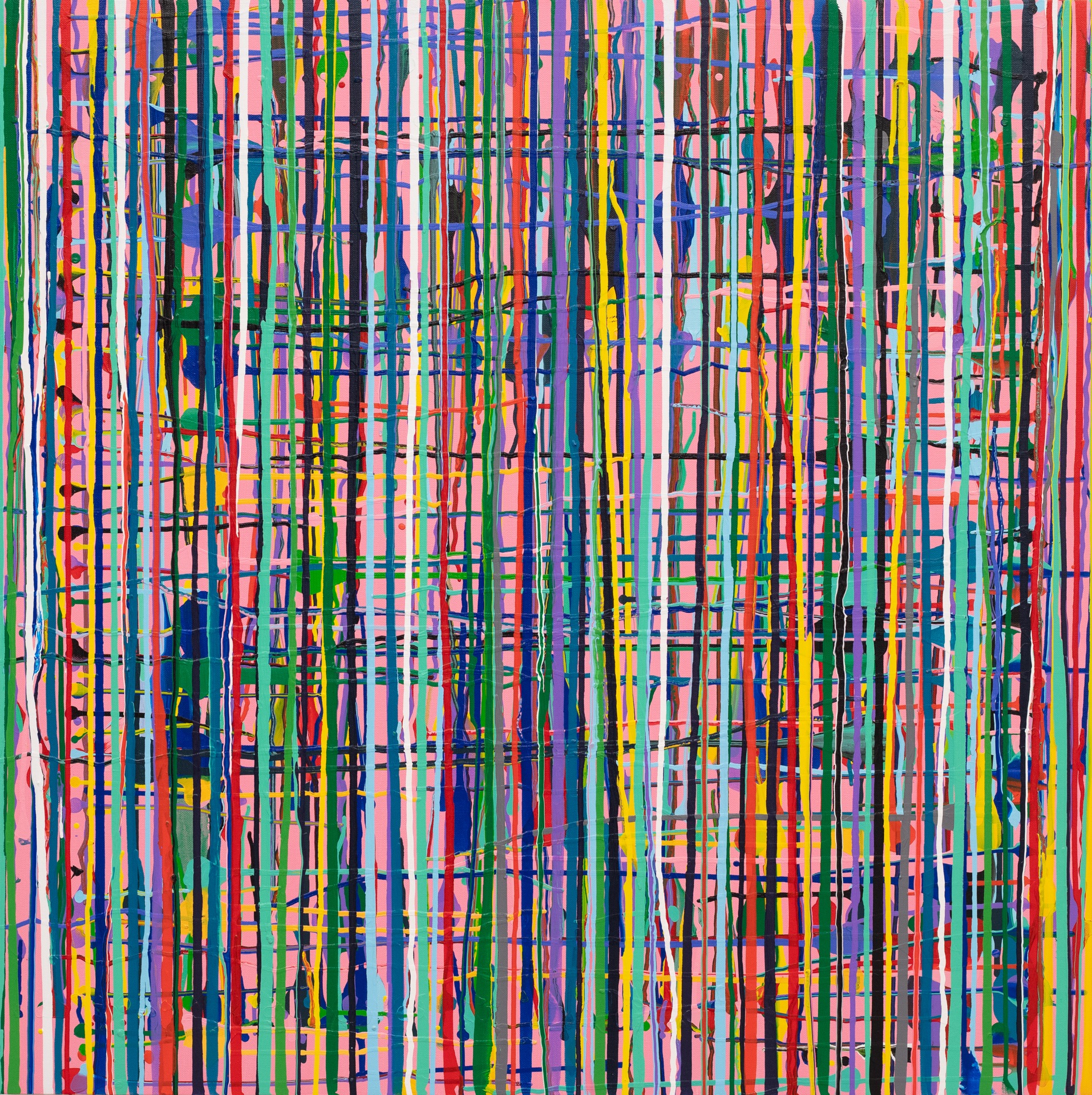
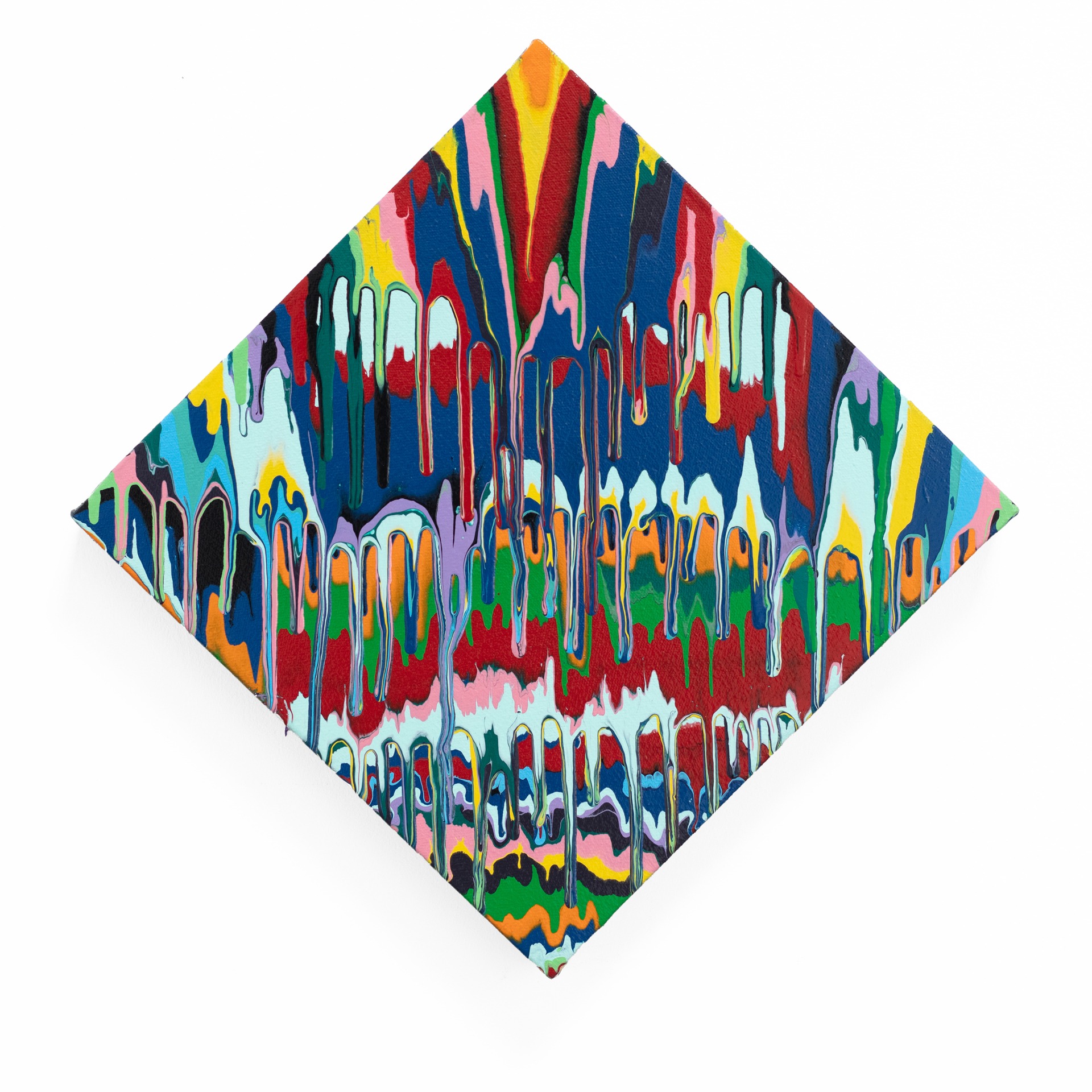
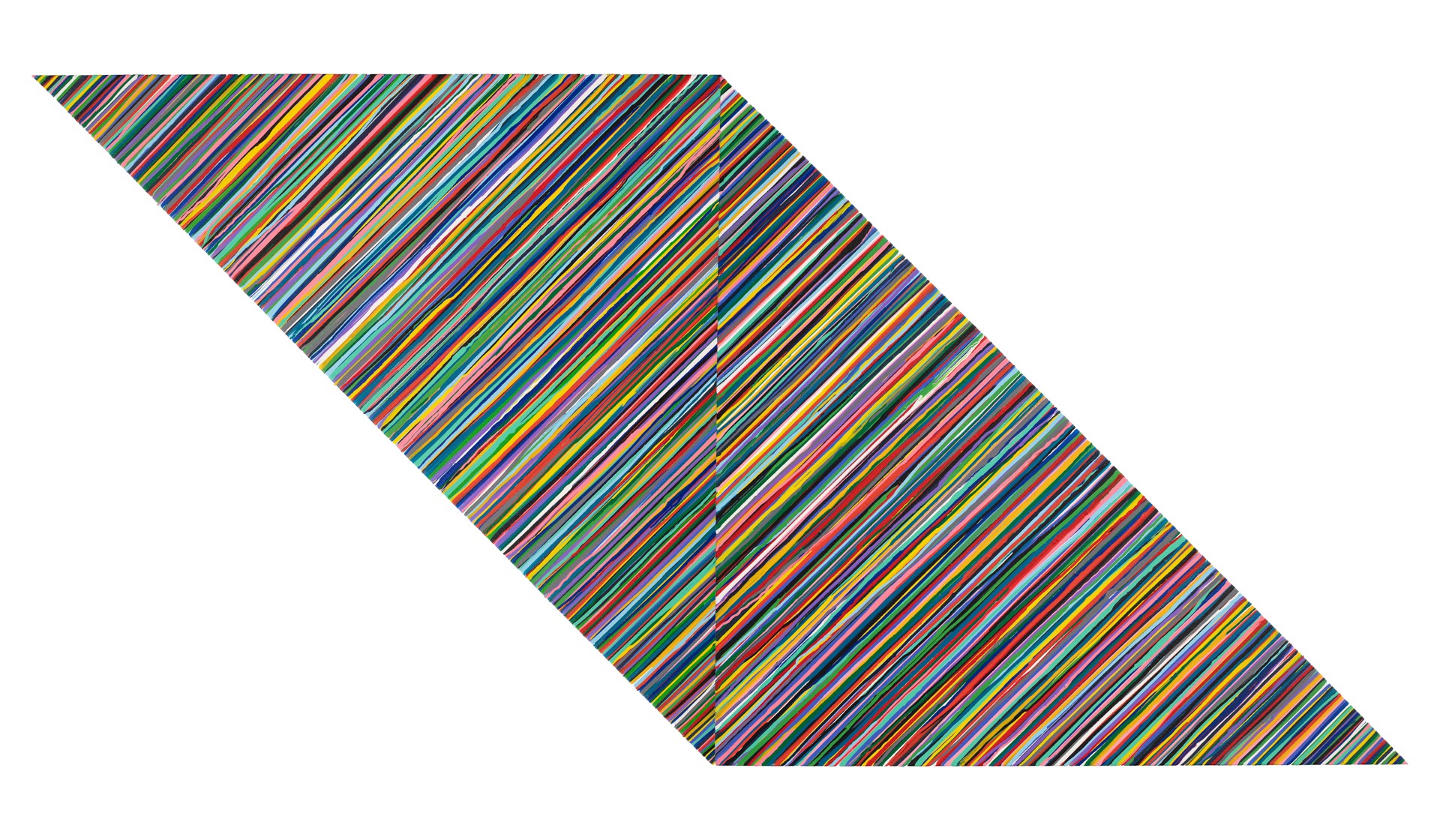
    sum of its parts is photographer and painter MM Yu’s response to an art ecology that operates on constant making. In the present series consisting of reassembled canvases and photographs, she turns to the material surface as her primary apparatus. 

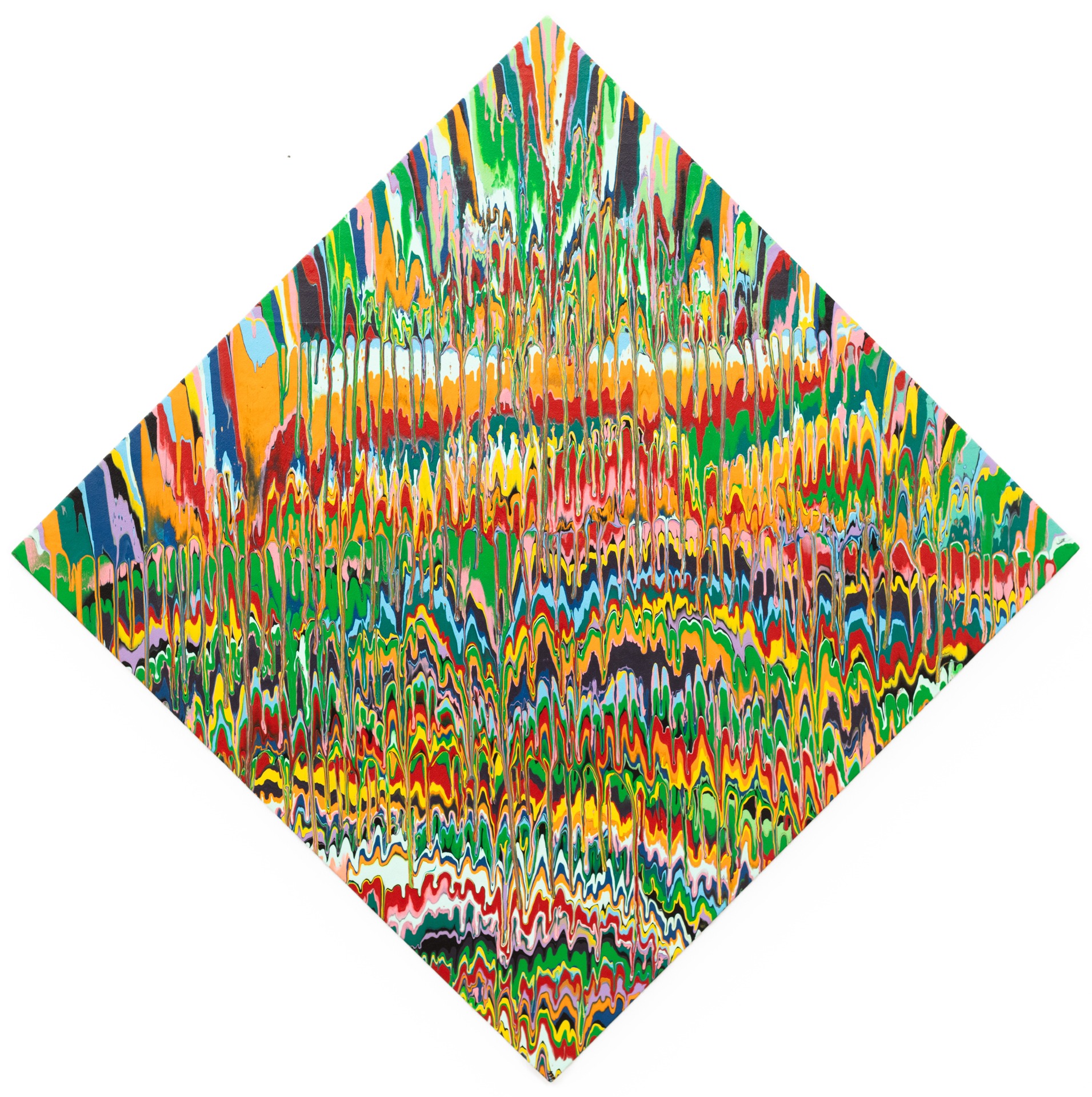
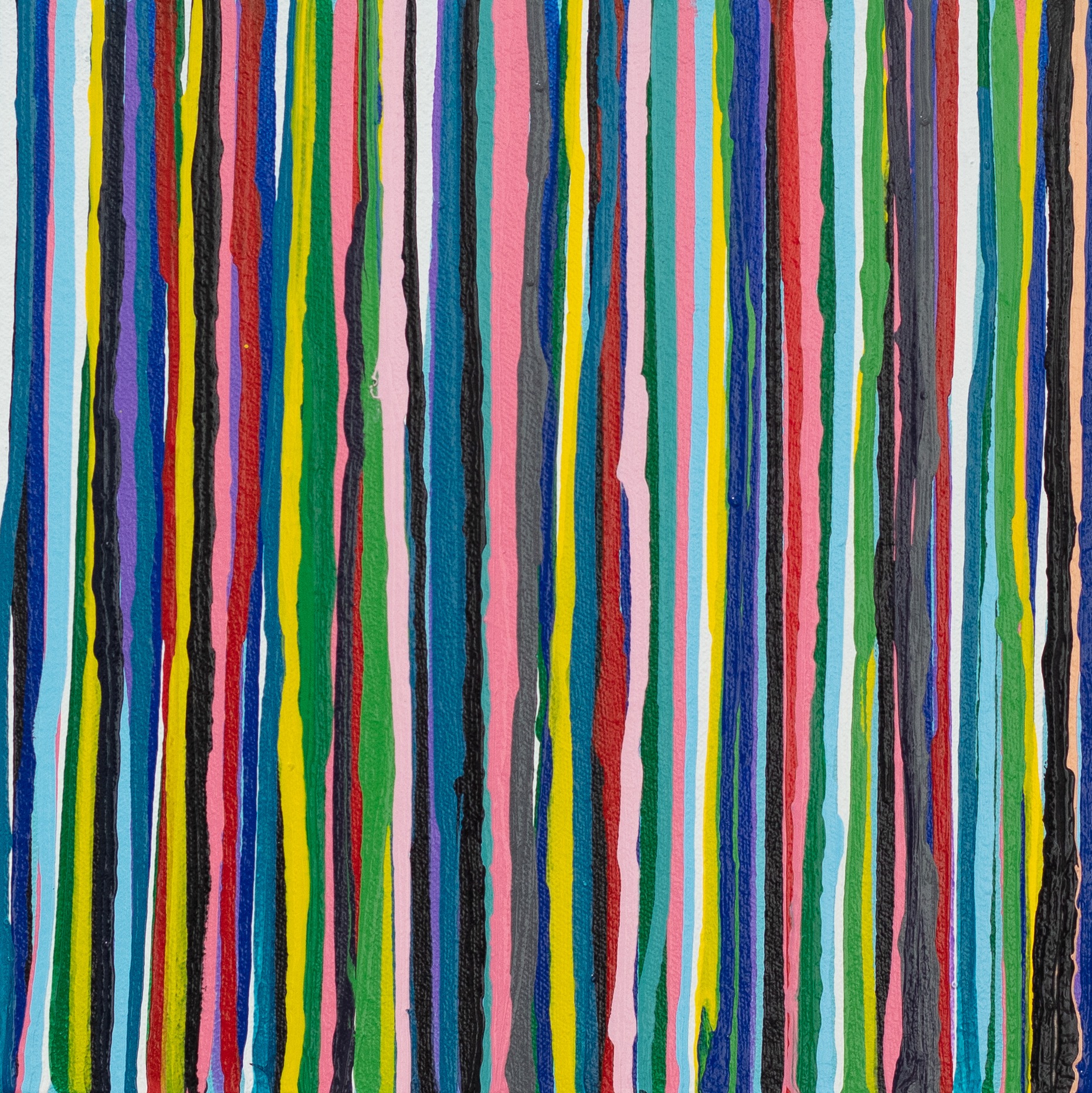
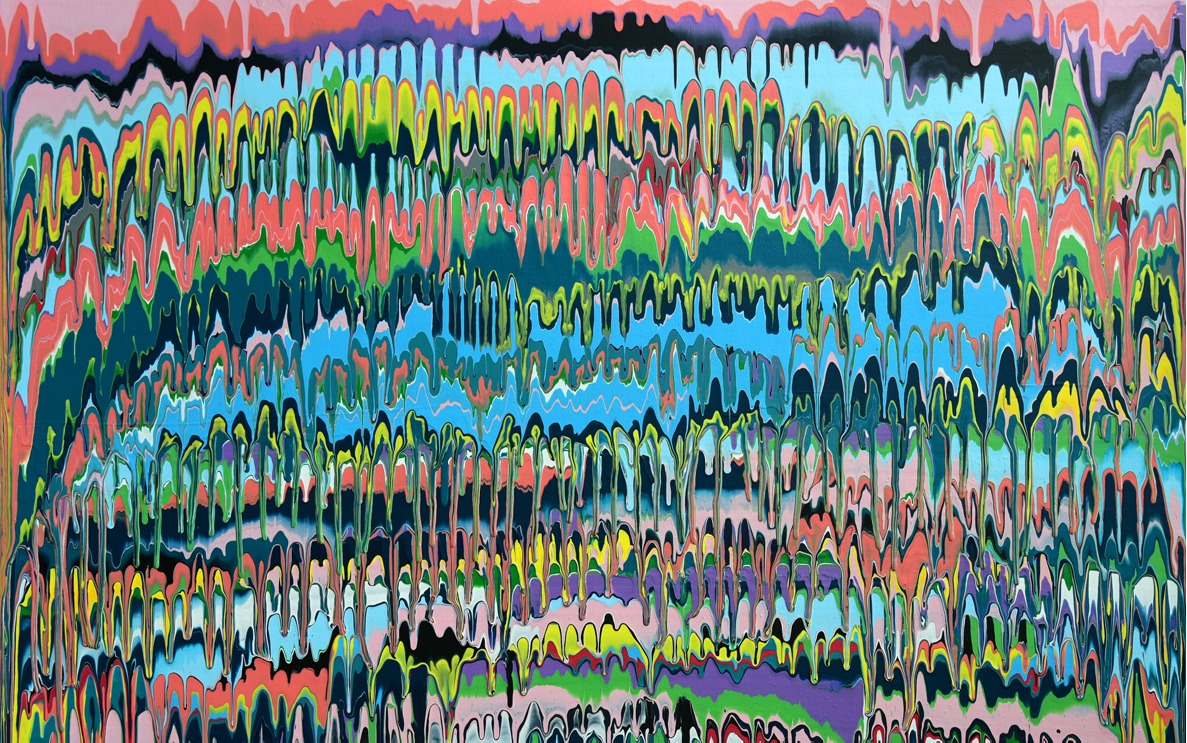
    Through modularity, the paintings continue to employ her dripping technique with pigment while the canvas itself becomes her main device for exploration. She attempts to find new configurations for her works, breaking them into separate components to swap, flip, or recombine, creating new relationships in their form. Consequently, it figures as a manner of circumventing gravity’s constraints. Wet paint is bound to flow downward, so it is only in their aftermath that the artist maneuvers them into twists, obliques, and disjoints.

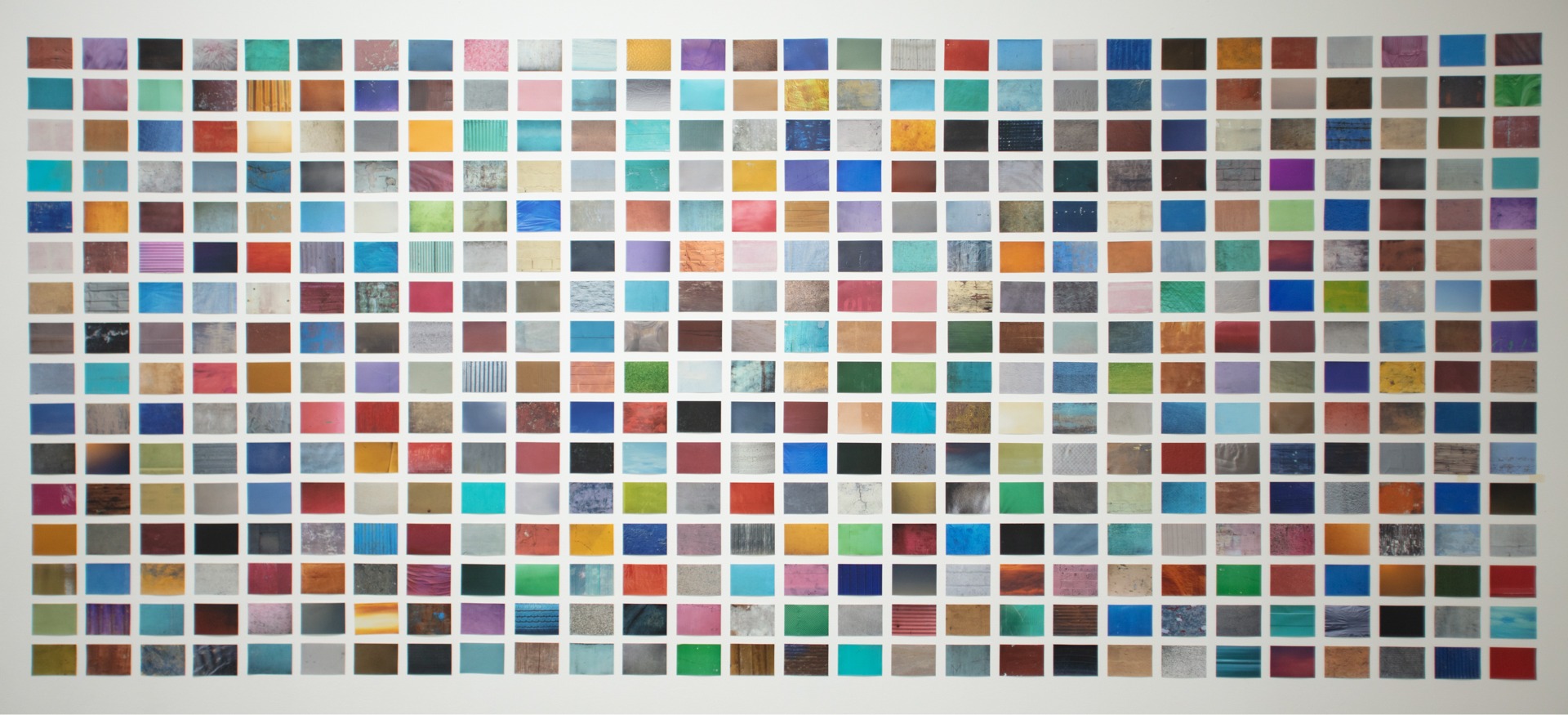
    Paintings largely comprise the exhibition, but the incorporation of photographs notably surfaces parallels between Yu’s painting and photographic practices. “Untitled Pantone,” a collection of over 500 pictures taken from visual elements of urban environments, demonstrates the interface of the two media by serving as mutual references of each other’s color palettes. Meanwhile, in terms of disjuncture, she regards her images as taken through fortuitous encounters with city scenes, while her paintings teeter between chance and calculation through a measured release of pigment into gravity’s indefinite forms. Here we witness the inseparability of the two media from one another—the real and pictorial, incidental and intentional, and photographer and painter collapsing into each other.

    At the same time, both materialize through accumulation and seriality, and here is where modularity surfaces again as a central strategy for both media. Individual components, be they photographs or canvases, form new totalities as they are repeated, amassed, and rearranged. In this process, repetition becomes less a return to the same than a mode to produce new configurations from what is already familiar. From the same constituent elements, various permutations emerge, and Yu continues to make while remaining faithful to the media she has long explored.

    Words by Chesca Santiago


    MM Yu has worked between photography and painting since obtaining her degree in Fine Arts from the University of the Philippines in 2001. Her works in both media tackle the nuances achieved between composition and color as they occupy the frame. Primarily drawn to street photography and documenting the everyday, her photographs evoke the ever-changing cultural texture and topology of Manila as seen through its inhabitants, the city’s infrastructure and its waste product as it archives not only the economy but also the ecology of life in the myriad forms it takes in the city.

    The hybrid and density of MM Yu’s subjects remind us of how objects and signs are not necessarily self-contained but take part in larger systems of interaction. These recorded static scenarios show through their thematic variety the artist’s interest in discovering and valuing the fleeting moment present even in its simplest components. Through her ongoing interest in deciphering the enigma of the unseen landscape of ordinary things, they also force us to rethink what our minds already know and rediscover what our eyes have already seen.

    Yu is a recipient of the Cultural Center of the Philippines 13 Artist Award (2009) Ateneo Art Awards (winner in 2007, shortlisted in 2011/2012). Sovereign Asian Art Prize finalist (2010) and Goethe-Institute-Climate Change workshop grant (2014).

    She received her BFA in Painting from the University of the Philippines and completed residencies with Big Sky Mind, Manila (2003), Common Room Bandung Residency Grant (2007) and Cité Internationale des Arts in Paris, France (2013).

sum of its parts is photographer and painter MM Yu’s response to an art ecology that operates on constant making. In the present series consisting of reassembled canvases and photographs, she turns to the material surface as her primary apparatus. 

Through modularity, the paintings continue to employ her dripping technique with pigment while the canvas itself becomes her main device for exploration. She attempts to find new configurations for her works, breaking them into separate components to swap, flip, or recombine, creating new relationships in their form. Consequently, it figures as a manner of circumventing gravity’s constraints. Wet paint is bound to flow downward, so it is only in their aftermath that the artist maneuvers them into twists, obliques, and disjoints.

Paintings largely comprise the exhibition, but the incorporation of photographs notably surfaces parallels between Yu’s painting and photographic practices. “Untitled Pantone,” a collection of over 500 pictures taken from visual elements of urban environments, demonstrates the interface of the two media by serving as mutual references of each other’s color palettes. Meanwhile, in terms of disjuncture, she regards her images as taken through fortuitous encounters with city scenes, while her paintings teeter between chance and calculation through a measured release of pigment into gravity’s indefinite forms. Here we witness the inseparability of the two media from one another—the real and pictorial, incidental and intentional, and photographer and painter collapsing into each other.

At the same time, both materialize through accumulation and seriality, and here is where modularity surfaces again as a central strategy for both media. Individual components, be they photographs or canvases, form new totalities as they are repeated, amassed, and rearranged. In this process, repetition becomes less a return to the same than a mode to produce new configurations from what is already familiar. From the same constituent elements, various permutations emerge, and Yu continues to make while remaining faithful to the media she has long explored.

Words by Chesca Santiago


MM Yu has worked between photography and painting since obtaining her degree in Fine Arts from the University of the Philippines in 2001. Her works in both media tackle the nuances achieved between composition and color as they occupy the frame. Primarily drawn to street photography and documenting the everyday, her photographs evoke the ever-changing cultural texture and topology of Manila as seen through its inhabitants, the city’s infrastructure and its waste product as it archives not only the economy but also the ecology of life in the myriad forms it takes in the city.

The hybrid and density of MM Yu’s subjects remind us of how objects and signs are not necessarily self-contained but take part in larger systems of interaction. These recorded static scenarios show through their thematic variety the artist’s interest in discovering and valuing the fleeting moment present even in its simplest components. Through her ongoing interest in deciphering the enigma of the unseen landscape of ordinary things, they also force us to rethink what our minds already know and rediscover what our eyes have already seen.

Yu is a recipient of the Cultural Center of the Philippines 13 Artist Award (2009) Ateneo Art Awards (winner in 2007, shortlisted in 2011/2012). Sovereign Asian Art Prize finalist (2010) and Goethe-Institute-Climate Change workshop grant (2014).

She received her BFA in Painting from the University of the Philippines and completed residencies with Big Sky Mind, Manila (2003), Common Room Bandung Residency Grant (2007) and Cité Internationale des Arts in Paris, France (2013).

Works
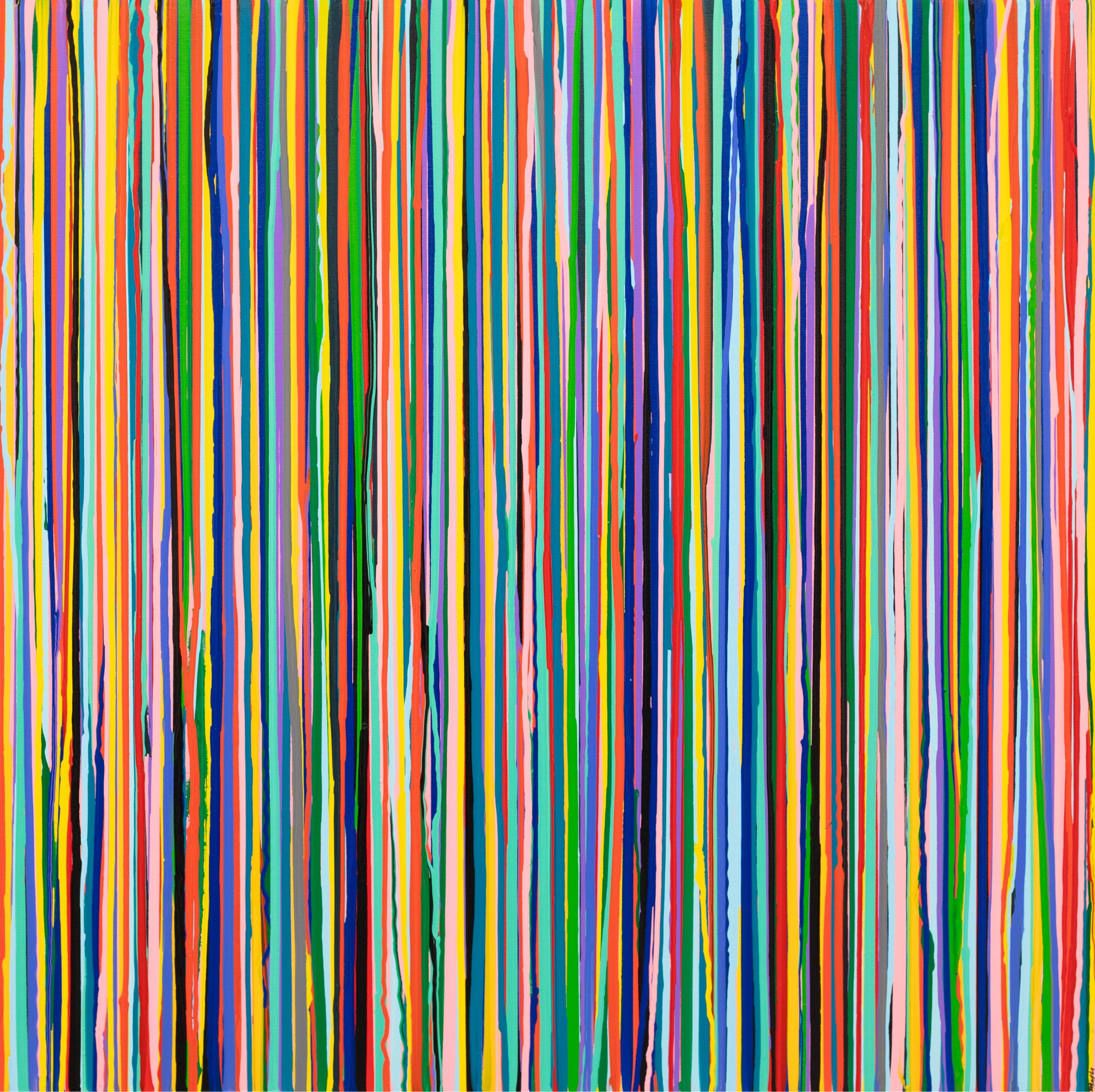
MM Yu
if you could hear a pin drop
2026
17918
2
acrylic on canvas
36.02h x 36.02w x 1.77d in 91.5h x 91.5w x 4.5d cm
-1
0.00
PHP
0
Details
MM Yu
sum of its parts
2026
17920
2
acrylic on canvas
33.94h x 67.80w x 1.77d in 86.2h x 172.2w x 4.5d cm (individual) 68.31h x 136.02w x 1.77d in 173.5h x 345.5w x 4.5d cm (set)
-1
0.00
PHP
0
Details
MM Yu
misplaced alibi
2026
17917
2
acrylic on canvas
36.02h x 36.02w x 1.77d in 91.5h x 91.5w x 4.5d cm
-1
0.00
PHP
0
Details
MM Yu
if you could hear a pin drop
2026
17913
2
acrylic on canvas
7.95h x 60.24w x 1.77d in 20.2h x 153w x 4.5d cm
-1
0.00
PHP
0
Details
MM Yu
untitled pantone
2000 - 2026
17921
2
c-print 448 pcs (installed) open edition
5h x 3.5w in 12.7h x 8.89w cm
-1
0.00
PHP
0
Details
MM Yu
if you could hear a pin drop
2026
17912
2
acrylic on canvas
8.07h x 60.24w x 1.77d in 20.5h x 153w x 4.5d cm
-1
0.00
PHP
0
Details
MM Yu
measures
2026
17910
2
acrylic on canvas
16.93h x 17.13w x 1.57d in 43h x 43.5w x 4d cm
-1
0.00
PHP
0
Details
MM Yu
if you could hear a pin drop
2026
17919
2
acrylic on canvas
33.94h x 67.80w x 1.77d in 86.2h x 172.2w x 4.5d cm (individual) 48.03h x 107.48w x 1.57d in 122h x 273w x 4d cm (set)
-1
0.00
PHP
0
Details
MM Yu
measures
2026
17916
2
acrylic on canvas
50.98h x 50.98w x 1.77d in 129.5h x 129.5w x 4.5d cm
-1
0.00
PHP
0
Details
MM Yu
if you could hear a pin drop
2026
17911
2
acrylic on canvas
12.20h x 12.01w x 1.57d in 31h x 30.5w x 4d cm
-1
0.00
PHP
0
Details
MM Yu
measures
2026
17914
2
acrylic on canvas
72.05h x 8.07w x 1.77d in 183h x 20.5w x 4.5d cm
-1
0.00
PHP
0
Details
MM Yu
measures
2026
17915
2
acrylic on canvas
72.05h x 8.07w x 1.77d in 183h x 20.5w x 4.5d cm
-1
0.00
PHP
0
Details

Installation Views

Artist

PHA+PHN0cm9uZz5TSUxWRVJMRU5TPC9zdHJvbmc+IGlzIGNvbW1pdHRlZCB0byBwcm90ZWN0aW5nIHlvdXIgcHJpdmFjeS4gSW4gY29tcGxpYW5jZSB3aXRoIHRoZSBQaGlsaXBwaW5lIFJlcHVibGljIEFjdCwgTm8uIDEwMTczIGJldHRlciBrbm93biBhcyB0aGUgMjAxMiBEYXRhIFByaXZhY3kgQWN0LCB3ZSBjYW4gb25seSB1c2UgdGhlIGluZm9ybWF0aW9uIHRoYXQgd2Ugb2J0YWluIGFib3V0IHlvdSBsYXdmdWxseS4gV2UgbWF5IGNvbGxlY3QgcGVyc29uYWwgaW5mb3JtYXRpb24gYWJvdXQgeW91IHdoZW4geW91IHNpZ24gdXAgZm9yIG91ciBuZXdzbGV0dGVyIG9yIGNvbnRhY3QgdXMgd2l0aCBhbiBpbnF1aXJ5LjwvcD4KPHA+VGhlIHR5cGUgb2YgaW5mb3JtYXRpb24gd2UgbWF5IGNvbGxlY3QgaW5jbHVkZXMgeW91ciA8c3Ryb25nPk5hbWU8L3N0cm9uZz4sIDxzdHJvbmc+RW1haWw8L3N0cm9uZz4sIGFuZCA8c3Ryb25nPkNvbnRhY3QgTnVtYmVyPC9zdHJvbmc+LjwvcD4KPHA+V2UgbWF5IGNvbGxlY3QgcGF5bWVudCBpbmZvcm1hdGlvbiBmcm9tIHlvdSB0byBmdWxmaWxsIHRyYW5zYWN0aW9ucy4gVG8gcHJvY2VzcyBwYXltZW50cywgd2UgbWF5IGNvbGxlY3QgeW91ciBjcmVkaXQgY2FyZCBhbmQgYmFuayBhY2NvdW50IGRldGFpbHMuIFRoaXMgaW5mb3JtYXRpb24gbWF5IGJlIHNoYXJlZCB3aXRoIHRoaXJkIHBhcnR5IHBheW1lbnQgcHJvY2Vzc2luZyBzZXJ2aWNlcy48L3A+CjxwPlRvIGRlbGl2ZXIgeW91ciBwdXJjaGFzZSwgd2UgbWF5IHByb3ZpZGUgeW91ciBwZXJzb25hbCBpbmZvcm1hdGlvbiB0byB0aGlyZC1wYXJ0eSBsb2dpc3RpY3MgY29tcGFuaWVzIHdobyBhc3Npc3QgdXMgd2l0aCBvdXIgZGVsaXZlcmllcyBhbmQgc2hpcG1lbnRzLjwvcD4KPHA+VGhlIHBlcnNvbmFsIGluZm9ybWF0aW9uIHdoaWNoIHdlIGhvbGQgd2lsbCBiZSBoZWxkIHNlY3VyZWx5IGluIGFjY29yZGFuY2Ugd2l0aCBvdXIgaW50ZXJuYWwgc2VjdXJpdHkgcG9saWN5LiBXZSB3aWxsIG5ldmVyIGNvbGxlY3QgaW5mb3JtYXRpb24gYWJvdXQgeW91IHdpdGhvdXQgeW91ciBleHBsaWNpdCBjb25zZW50LjwvcD4KPHA+VGhlIGluZm9ybWF0aW9uIHdlIHN0b3JlIHdpbGwgYmUgYWNjdXJhdGUgYW5kIHVwIHRvIGRhdGUuIFlvdSBjYW4gY2hlY2sgdGhlIGluZm9ybWF0aW9uIHRoYXQgd2UgaG9sZCBhYm91dCB5b3UgYnkgZW1haWxpbmcgdXMuIElmIHlvdSBmaW5kIHRoYXQgdGhlcmUgYXJlIGFueSBpbmFjY3VyYWNpZXMsIHdlIHdpbGwgZGVsZXRlIG9yIGNvcnJlY3QgaXQgcHJvbXB0bHkuPC9wPgo8cD5XZSBtYXkgdXNlIHRlY2hub2xvZ3kgdG8gdHJhY2sgdGhlIHBhdHRlcm5zIG9mIGJlaGF2aW9yIG9mIHZpc2l0b3JzIHRvIG91ciB3ZWJzaXRlLiBUaGlzIG1heSBpbmNsdWRlIHVzaW5nIGEgImNvb2tpZSIgc3RvcmVkIG9uIHlvdXIgYnJvd3NlciB3aGljaCB5b3UgY2FuIHVzdWFsbHkgbW9kaWZ5IHRocm91Z2ggeW91ciBicm93c2VyIHRvIHByZXZlbnQgdGhpcyBmcm9tIGhhcHBlbmluZy48L3A+CjxwPldlIHdpbGwgcmV0YWluIHlvdXIgcGVyc29uYWwgaW5mb3JtYXRpb24gb25seSB3aGlsZSB3ZSBuZWVkIGl0IGZvciB0aGUgcmVhc29ucyBzdGF0ZWQgYWJvdmUgb3IgdW50aWwgeW91IHJlcXVlc3QgdGhhdCB3ZSBkZWxldGUgaXQgb24gb3VyIHJlY29yZHMuPC9wPgo8cD5JZiB5b3UgaGF2ZSBhbnkgcXVlc3Rpb25zIG9yIGNvbW1lbnRzIGFib3V0IG91ciBwcml2YWN5LCBwbGVhc2UgY29udGFjdCB1cyBhdCA8YSBocmVmPSJtYWlsdG86aW5xdWlyeUBzaWx2ZXJsZW5zZ2FsbGVyaWVzLmNvbSI+aW5xdWlyeUBzaWx2ZXJsZW5zZ2FsbGVyaWVzLmNvbTwvYT48L3A+
R2FpbiBhY2Nlc3MgdG8gZXhjbHVzaXZlIGdhbGxlcnkgaW5mb3JtYXRpb24sIGxhdGVzdCBleGhpYml0aW9ucywgPGJyIC8+CmFuZCBhcnRpc3QgdXBkYXRlcyBieSBzaWduaW5nIHVwIGZvciBvdXIgbmV3c2xldHRlciBiZWxvdy4=