SALON

Various Artists
Silverlens, New York

About

    There is a particular pleasure in rooms where too much is happening. A painting hangs beside a woven mat. A butterfly rests on a capiz shell. A photograph is wrapped in gingham. Nothing quite matches, yet everything seems to belong. Such spaces resist tidy classification, asking us to navigate by instinct rather than hierarchy.

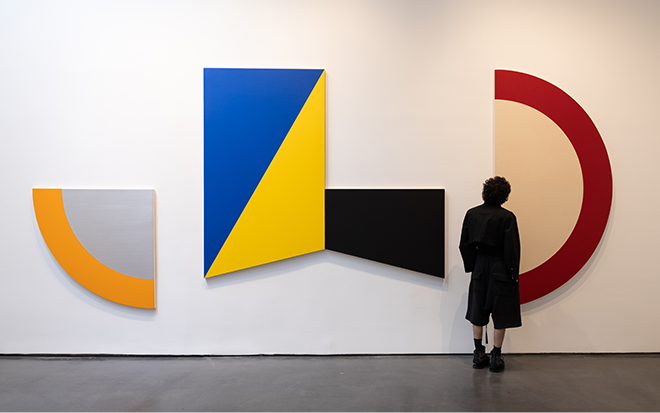
    SALON takes its title from both the salon-style hang and the domestic interior: two modes of display built on proximity, accumulation, and personal taste. Bringing together works by artists who transform familiar materials and everyday forms, the exhibition considers what happens when distinctions between art and decoration, utility and ornament, begin to dissolve. 

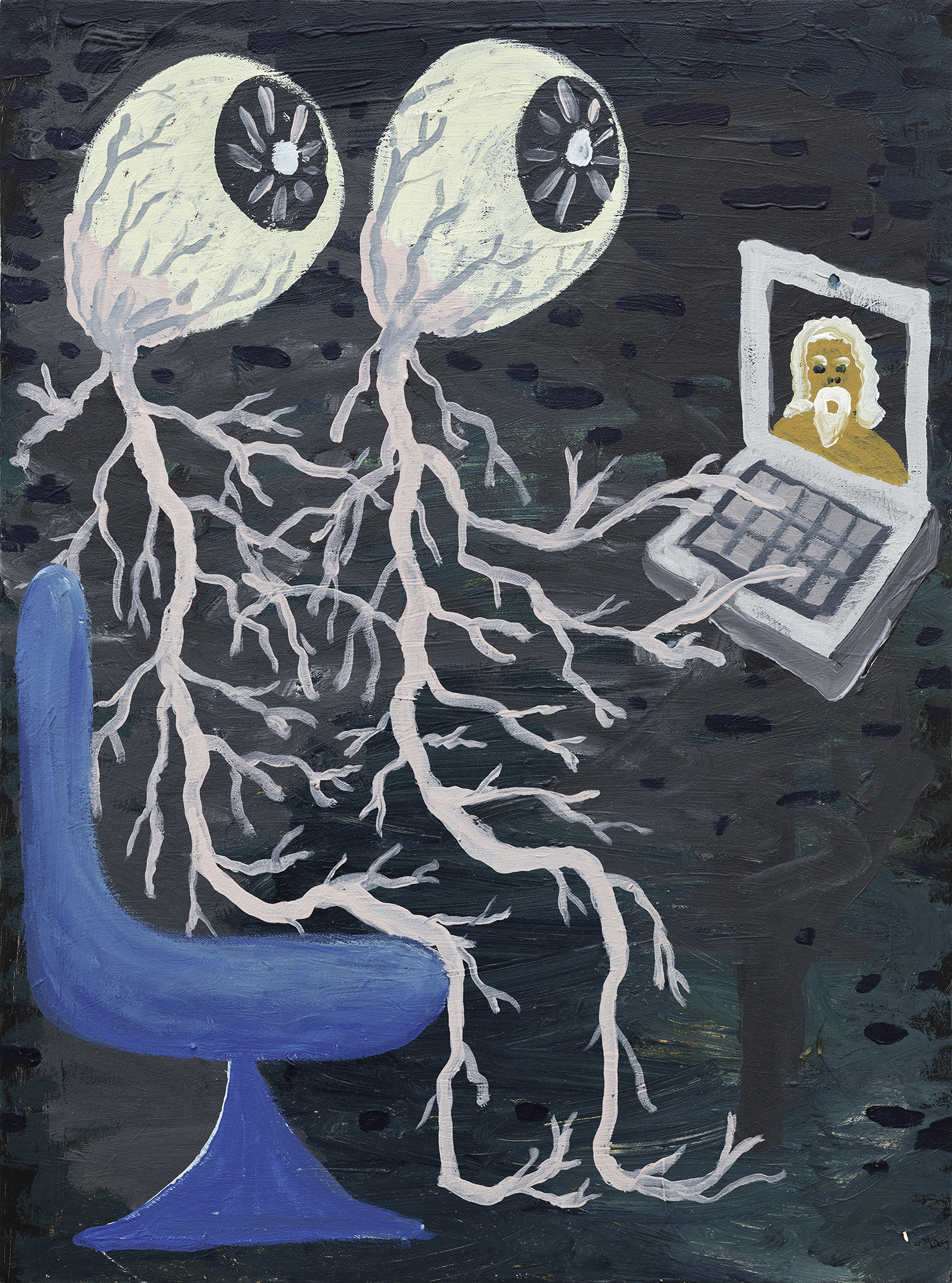
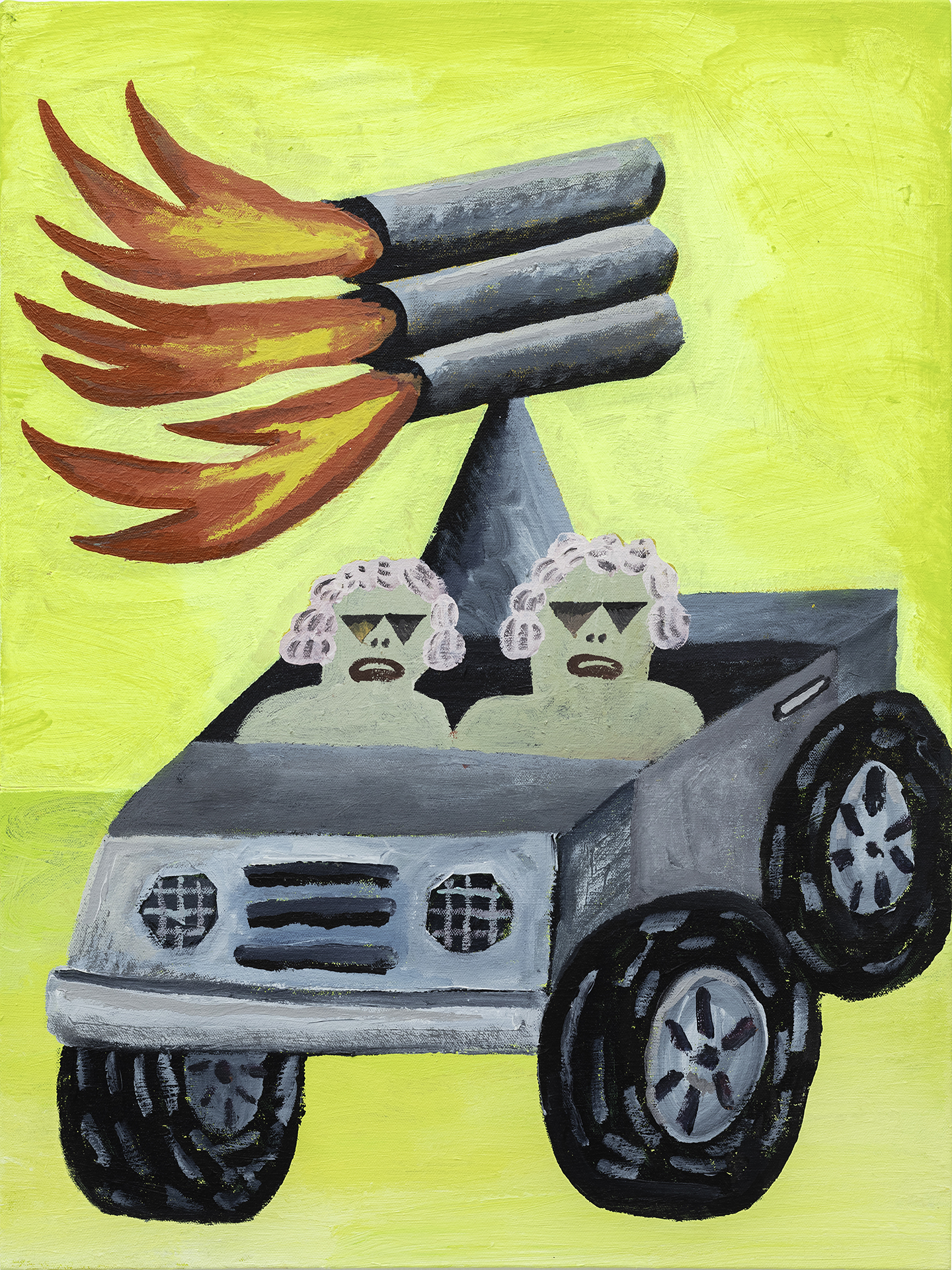
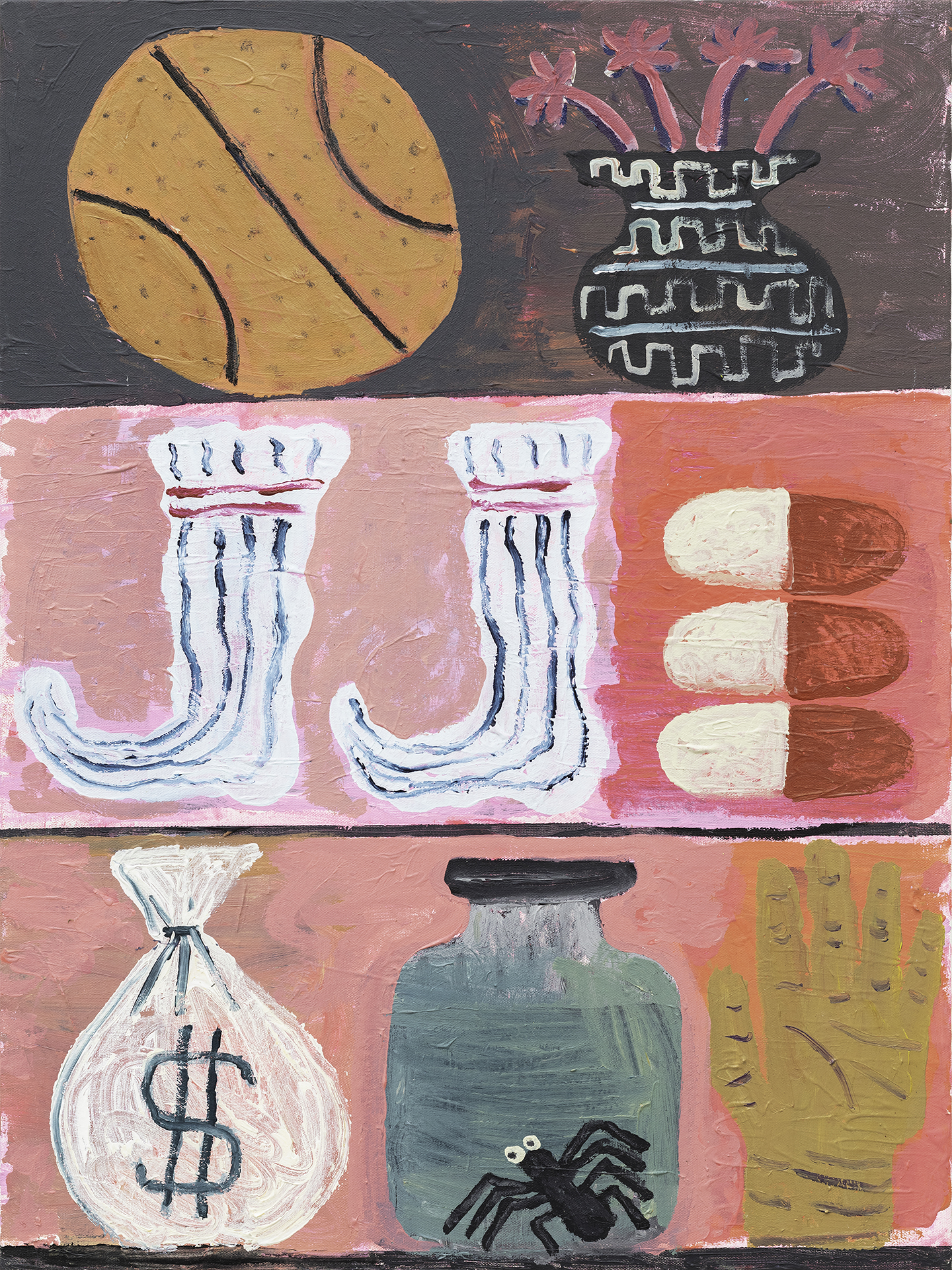
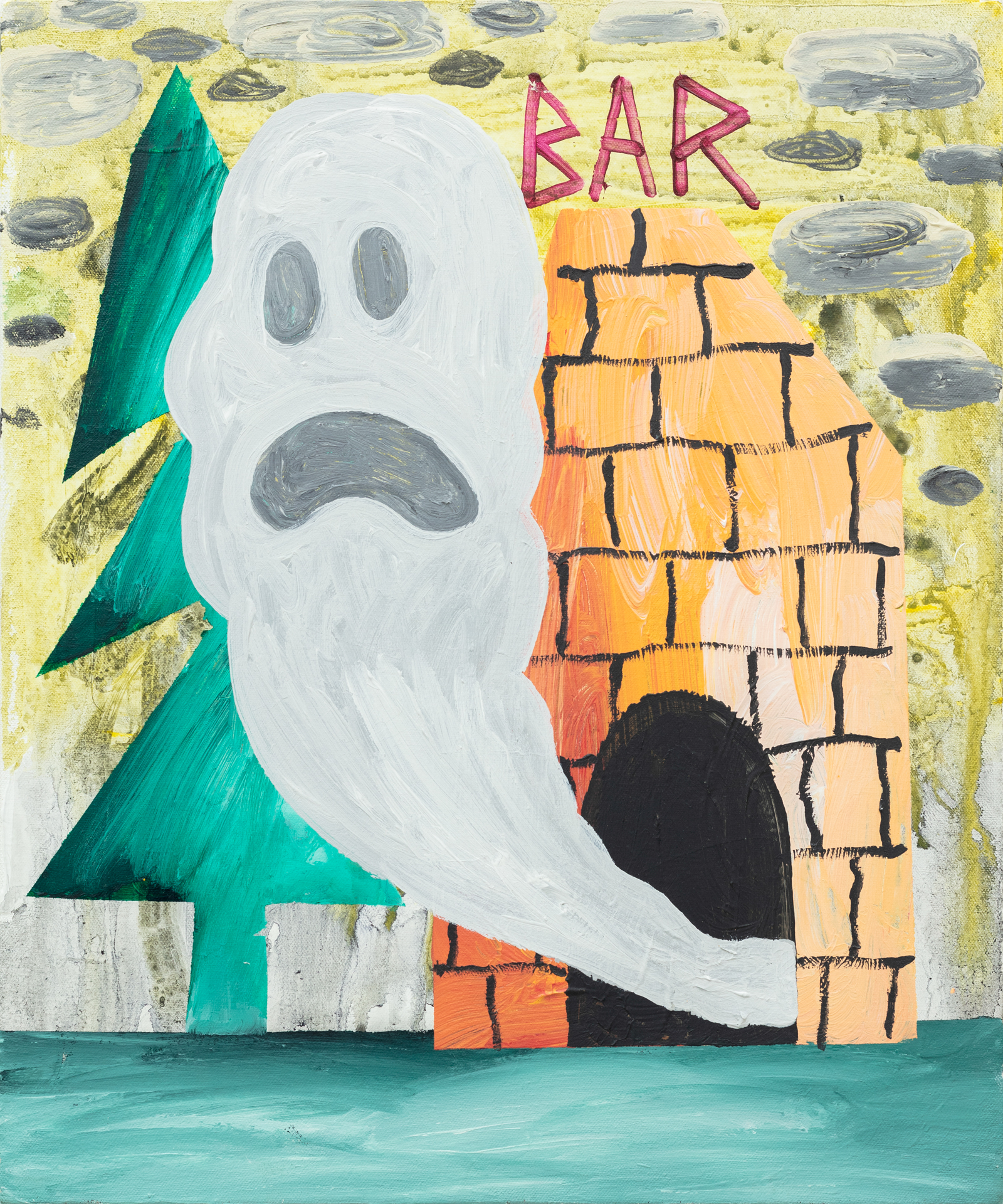
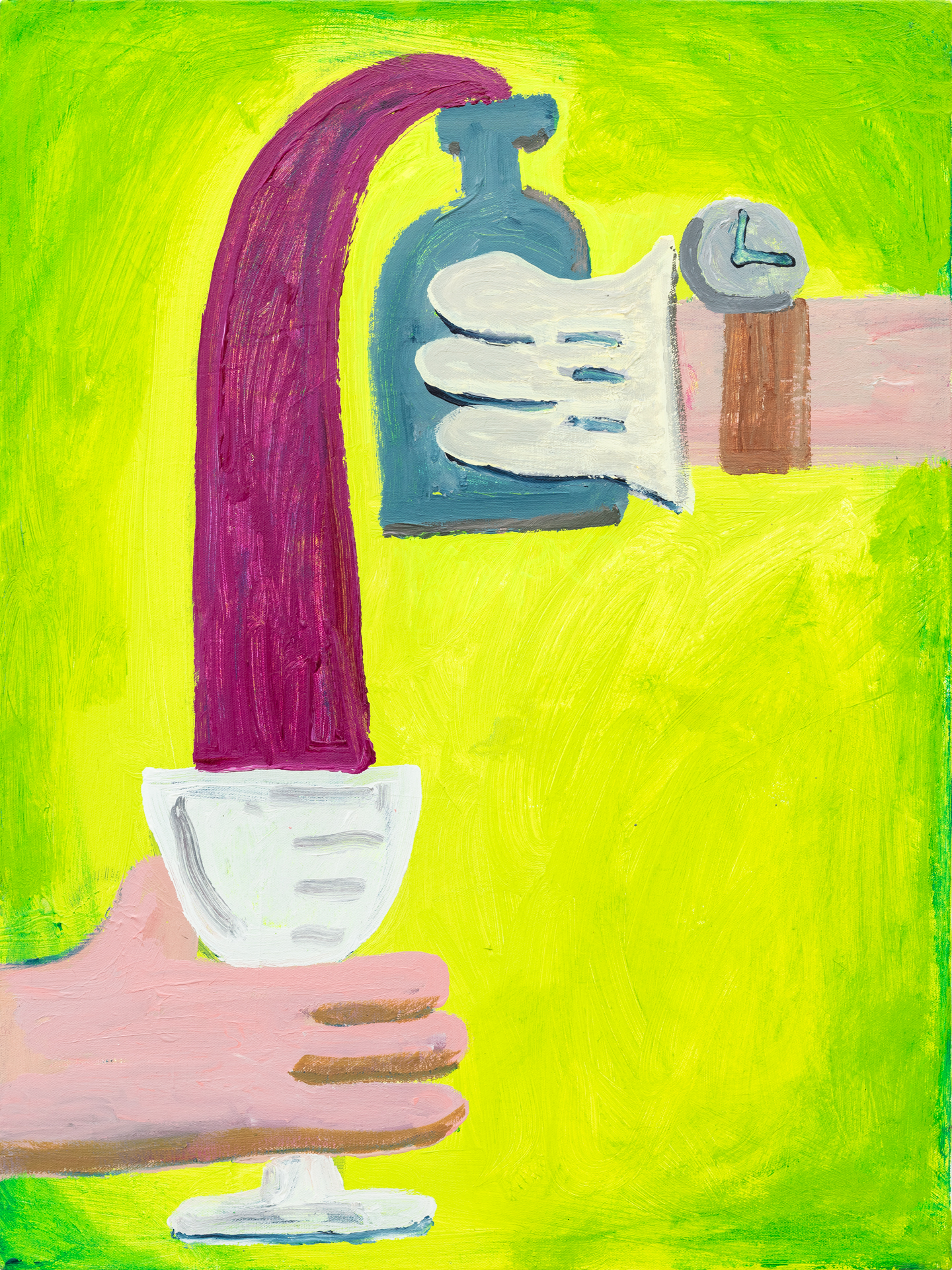
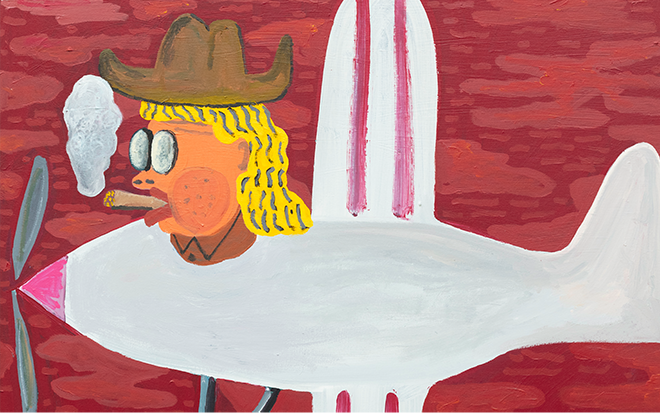
    At the center of the gallery are paintings by Pow Martinez. In Bar Fly, Chest of the Mundane, and Flame Tank (2025), cartoon figures, social archetypes, and fragments of popular culture collide within compositions that treat absurdity as a form of realism. A hand pours wine. A socialite drives a tank. The familiar appears slightly out of register, as if reflecting a world in which cultural references circulate faster than meaning itself.

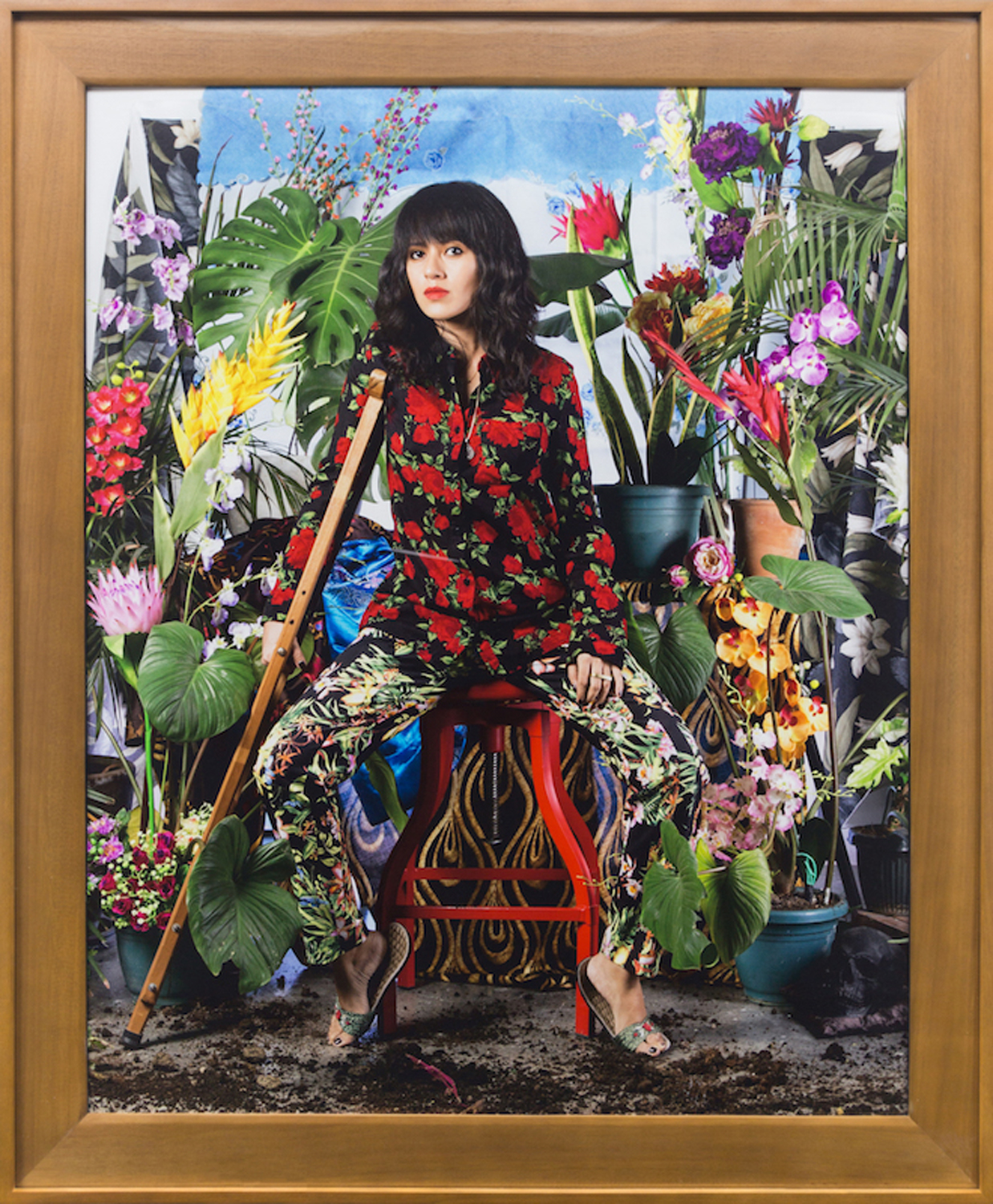
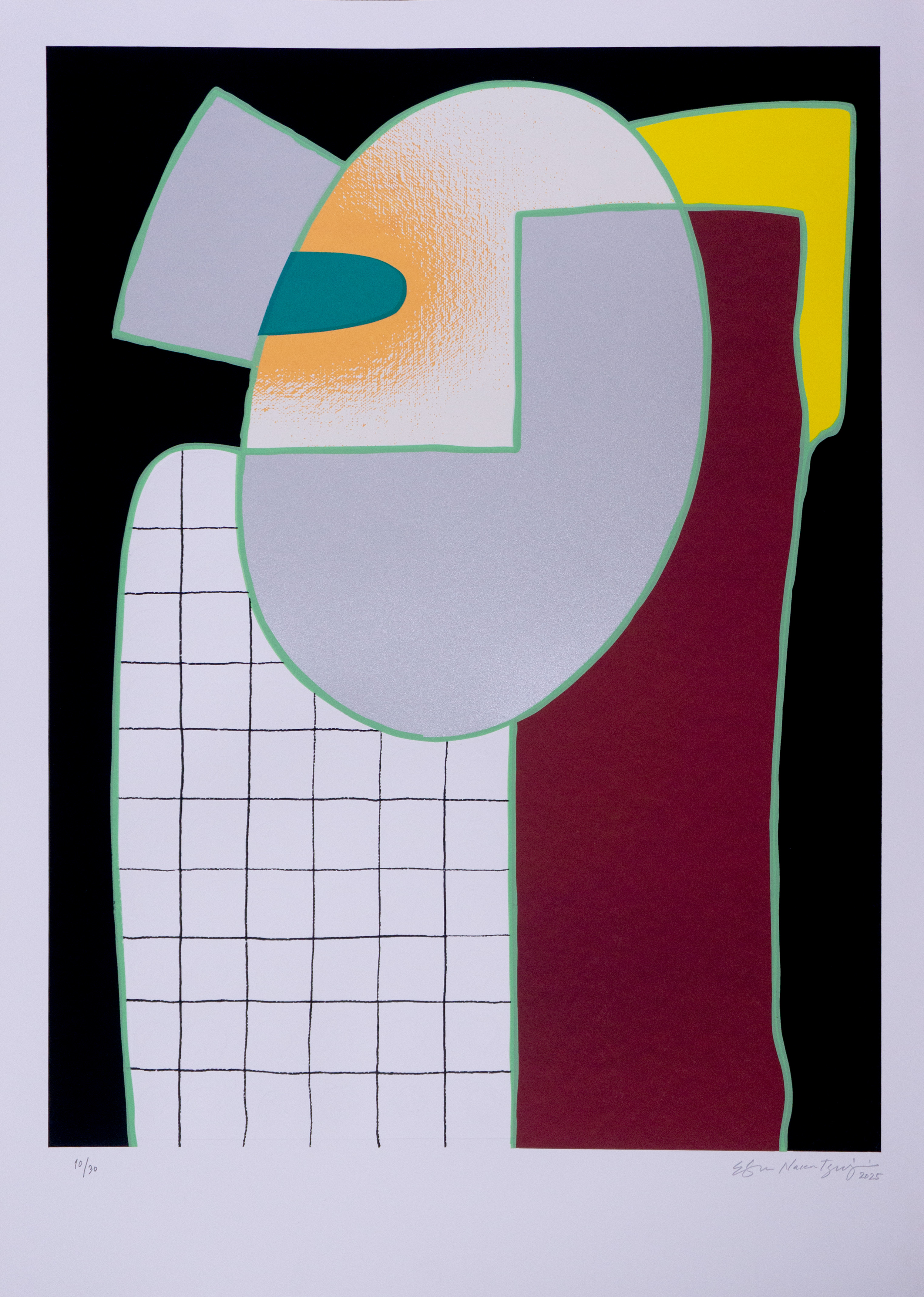
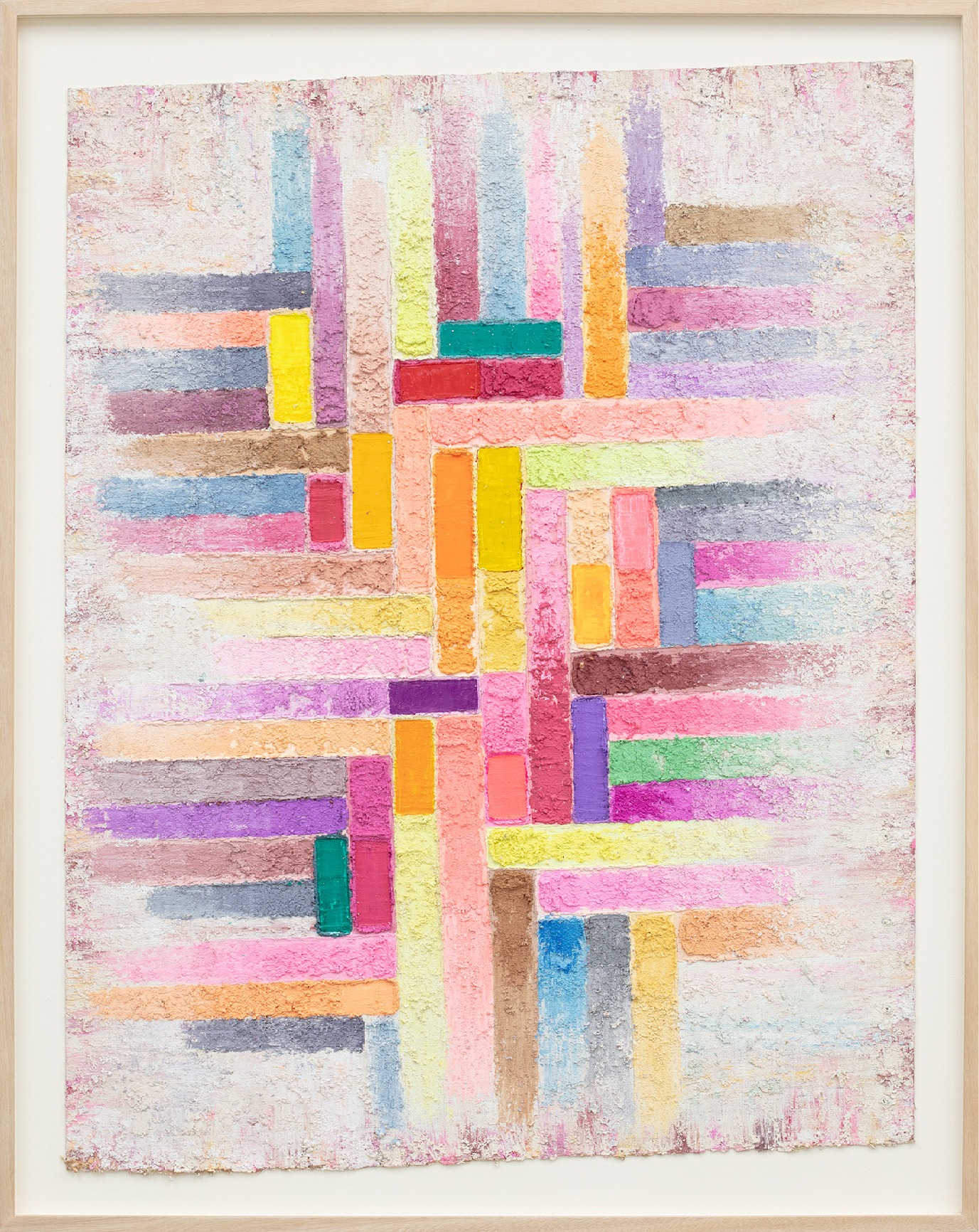
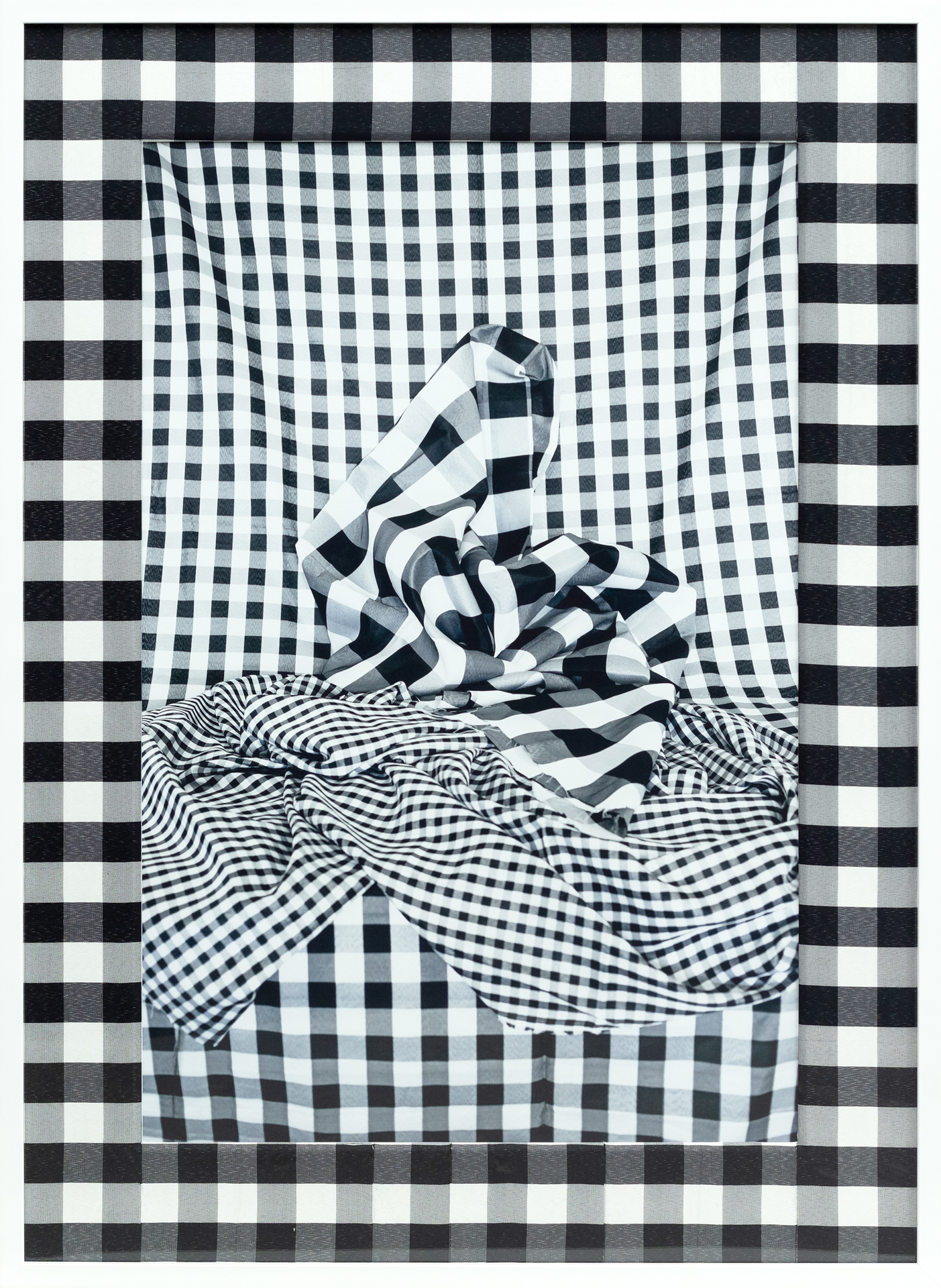
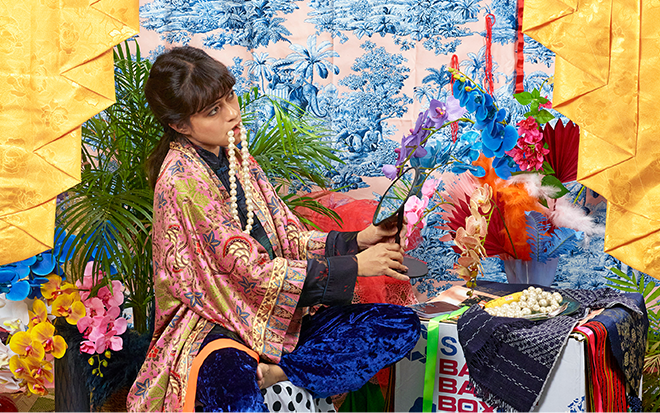
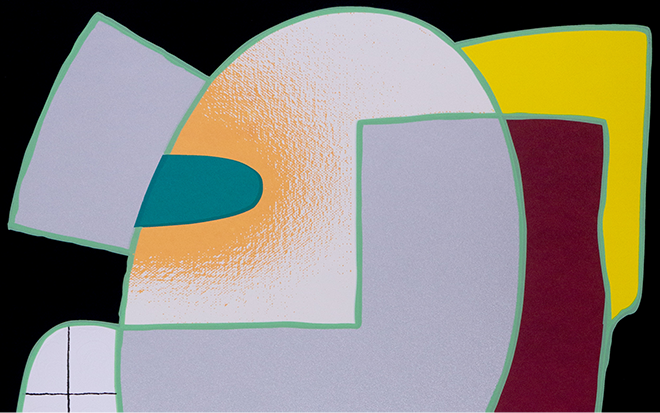
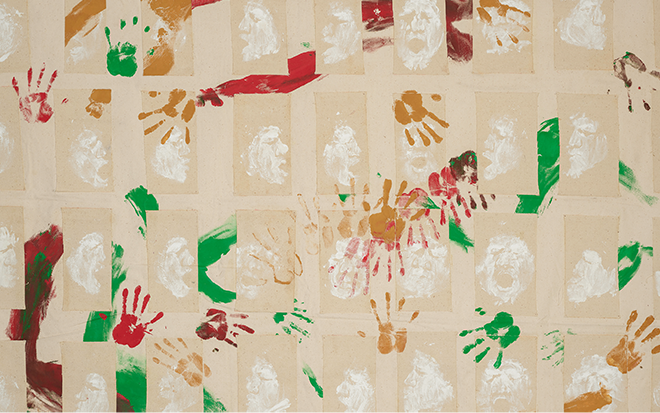
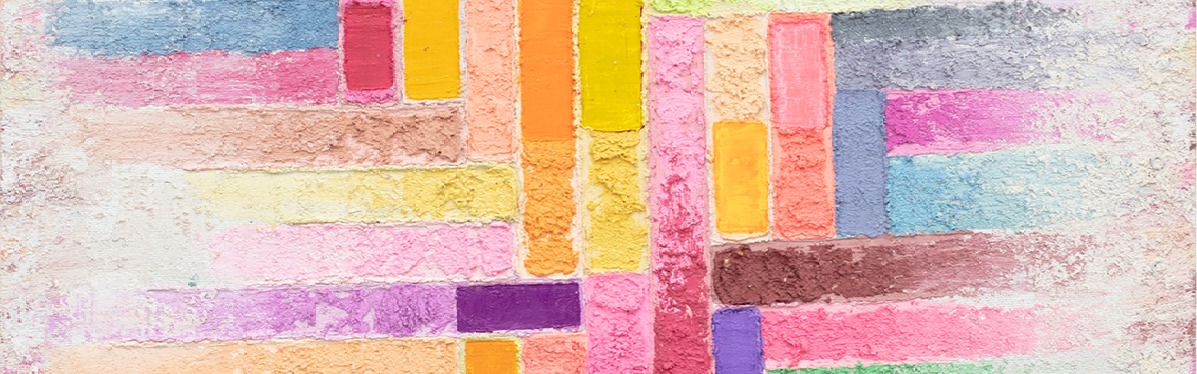
    That sense of transformation continues in Nakatsuji Etsuko’s Untitled (2025), where grids and fragments of anatomy are reduced to their essential forms. Nearby, Wawi Navarroza’s Poleng, 3 Ways (2016) shifts attention away from photography alone and toward the object that contains it. By wrapping an archival print in gingham fabric, Navarroza turns a common pattern into an act of framing, elevating the language of domestic decoration into the realm of display. Mit Jai Inn’s Untitled (2023) similarly layers paint in a quilt like fashion, mimicking the lowland rice paddy’s varied rectilinear plots. In many sects of Buddhism, the rice-field is considered the original merit-field, where seeds offered to fertile ground create abundant harvest.

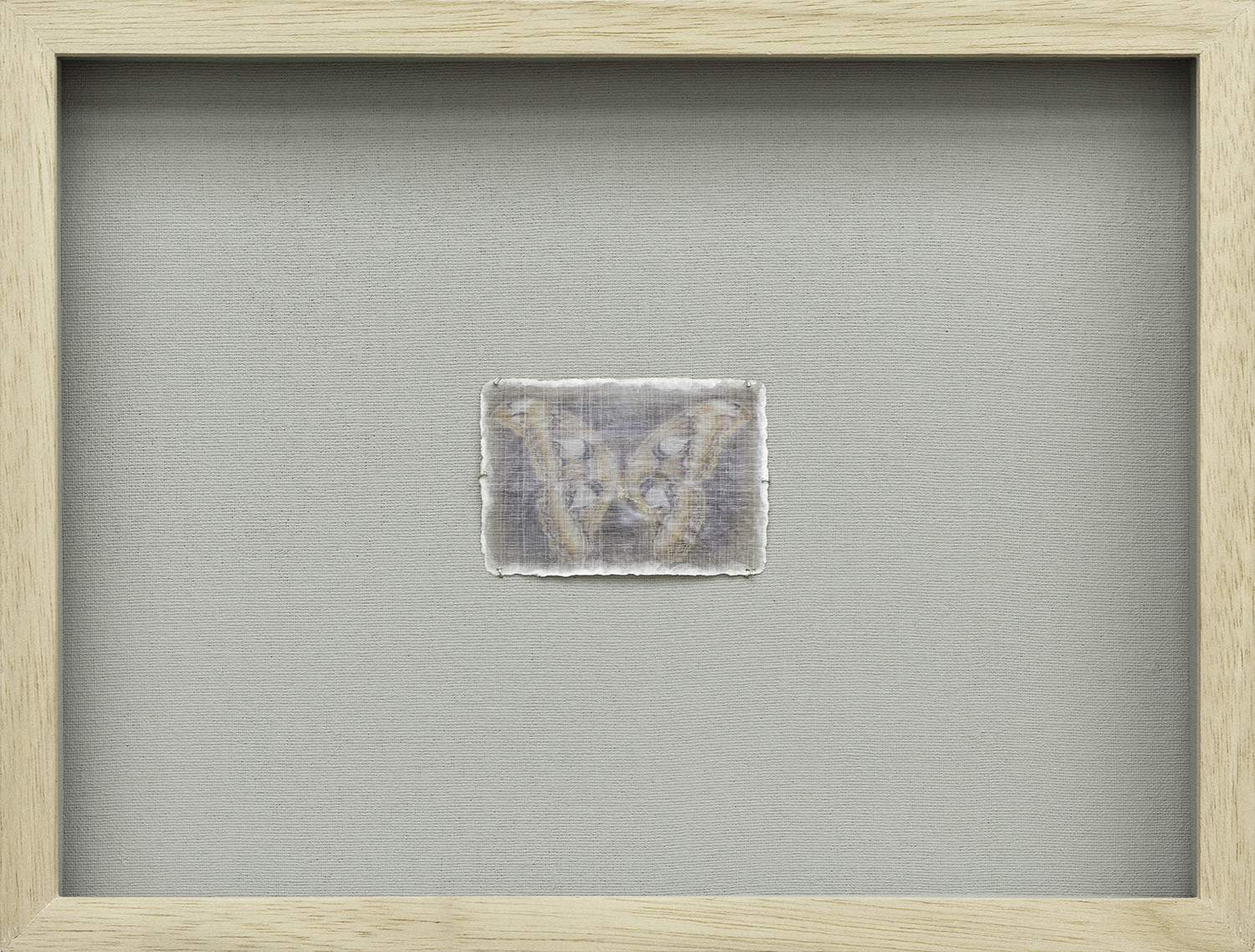
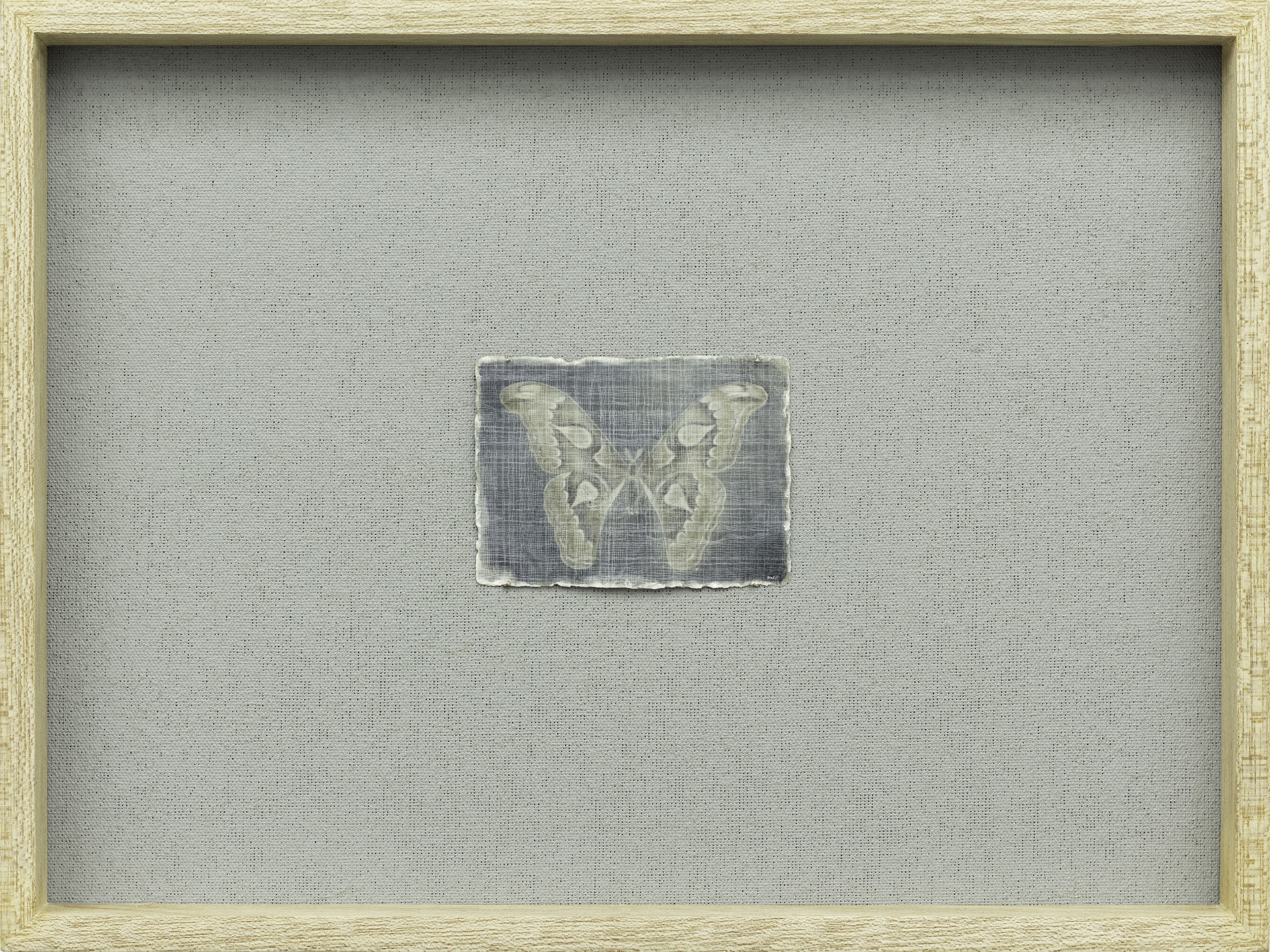
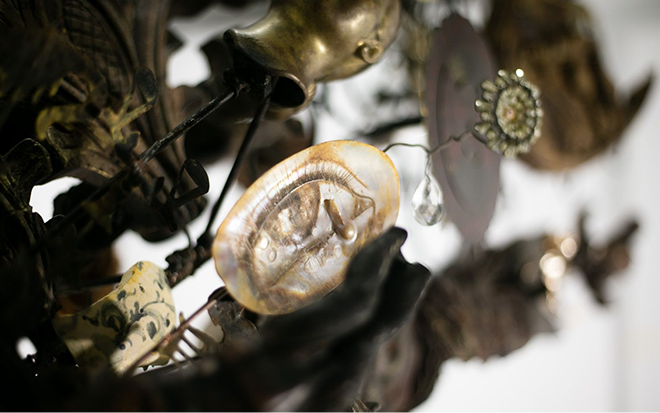
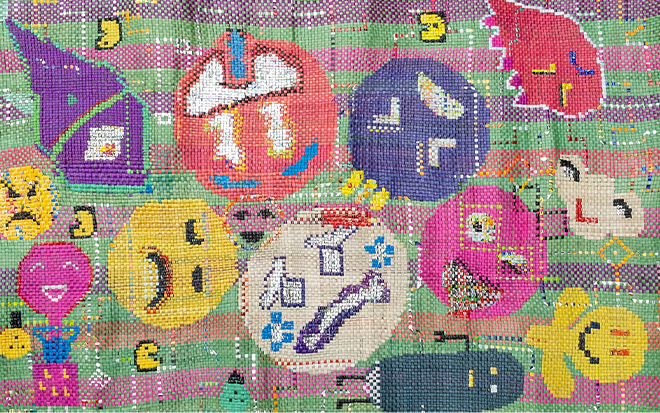
    Elsewhere, artists draw on craft traditions and found materials to complicate ideas of value. Gregory Halili’s Vanishing XIII (2024) and Vanishing XIV (2025) place delicate butterfly illustrations on thinned capiz shells, bringing together natural history, souvenir culture, and memorialization. Yee I-Lann’s Doormatic Glide Refractor (2023), created with the Dusun and Murut weavers of Sabah, adopts the form of a floor mat while transforming a utilitarian object into a field of pattern and visual rhythm. Patricia Perez Eustaquio’s Vertigo V (2024) layers velvet, silk, wool, and cotton across handwoven Inabel cloth, revealing textile as both material and repository of memory.

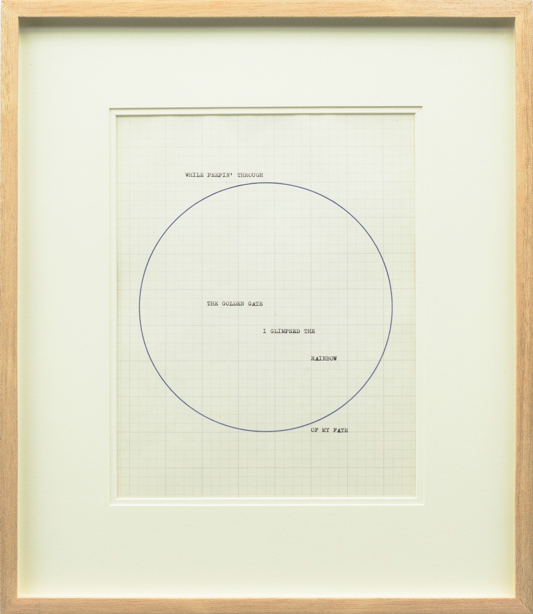
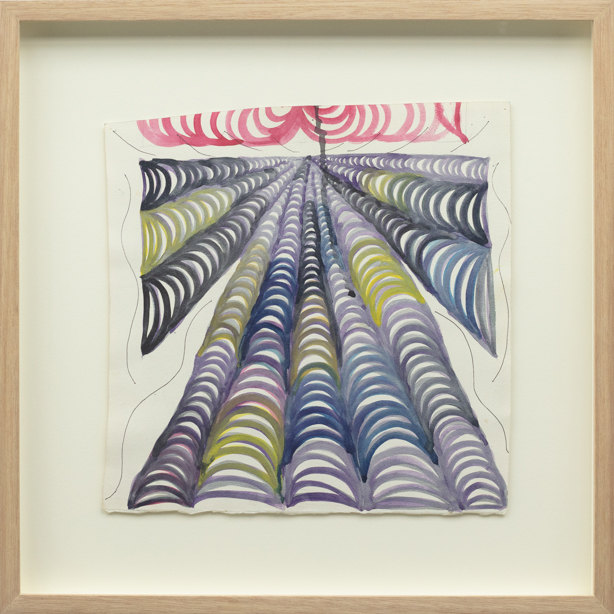
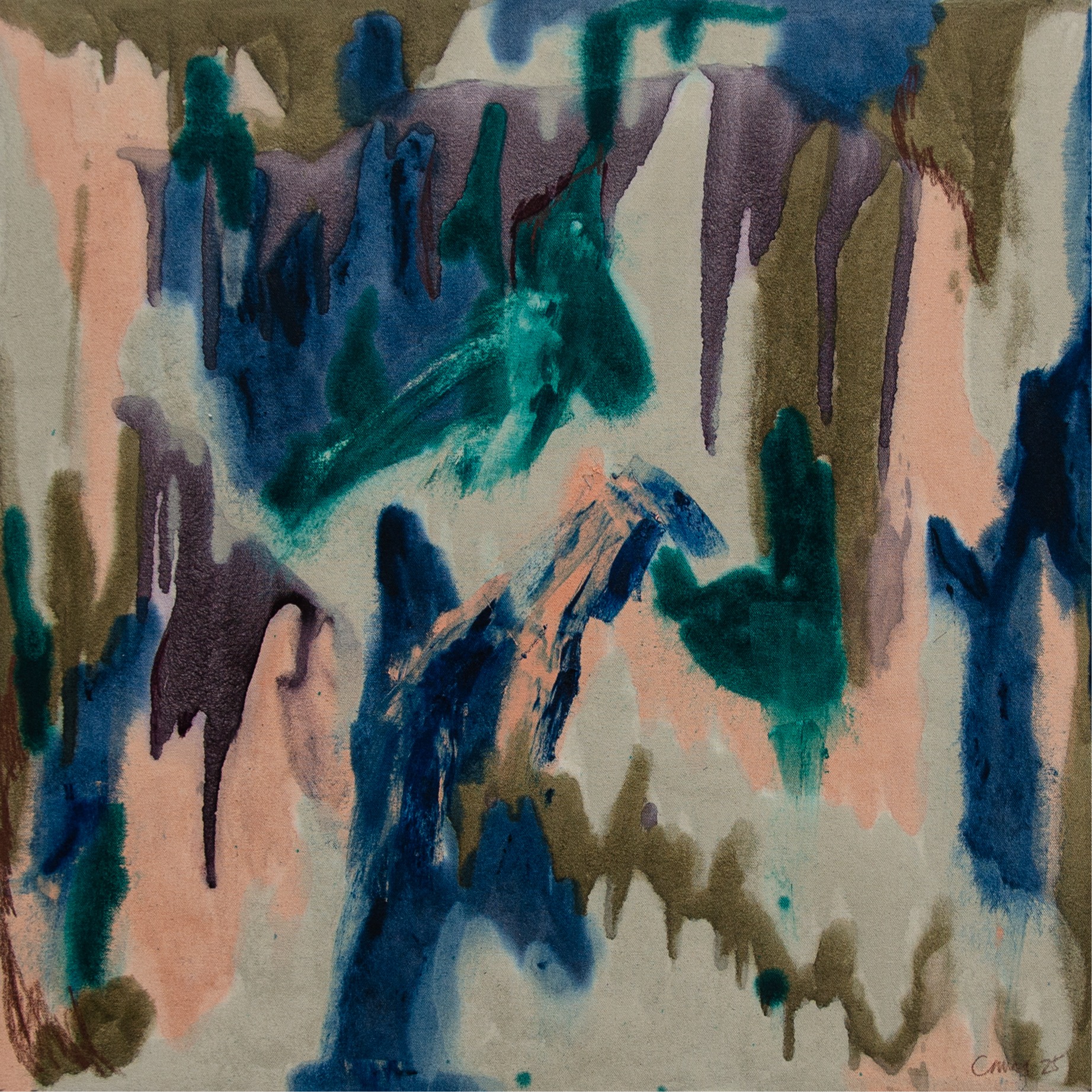
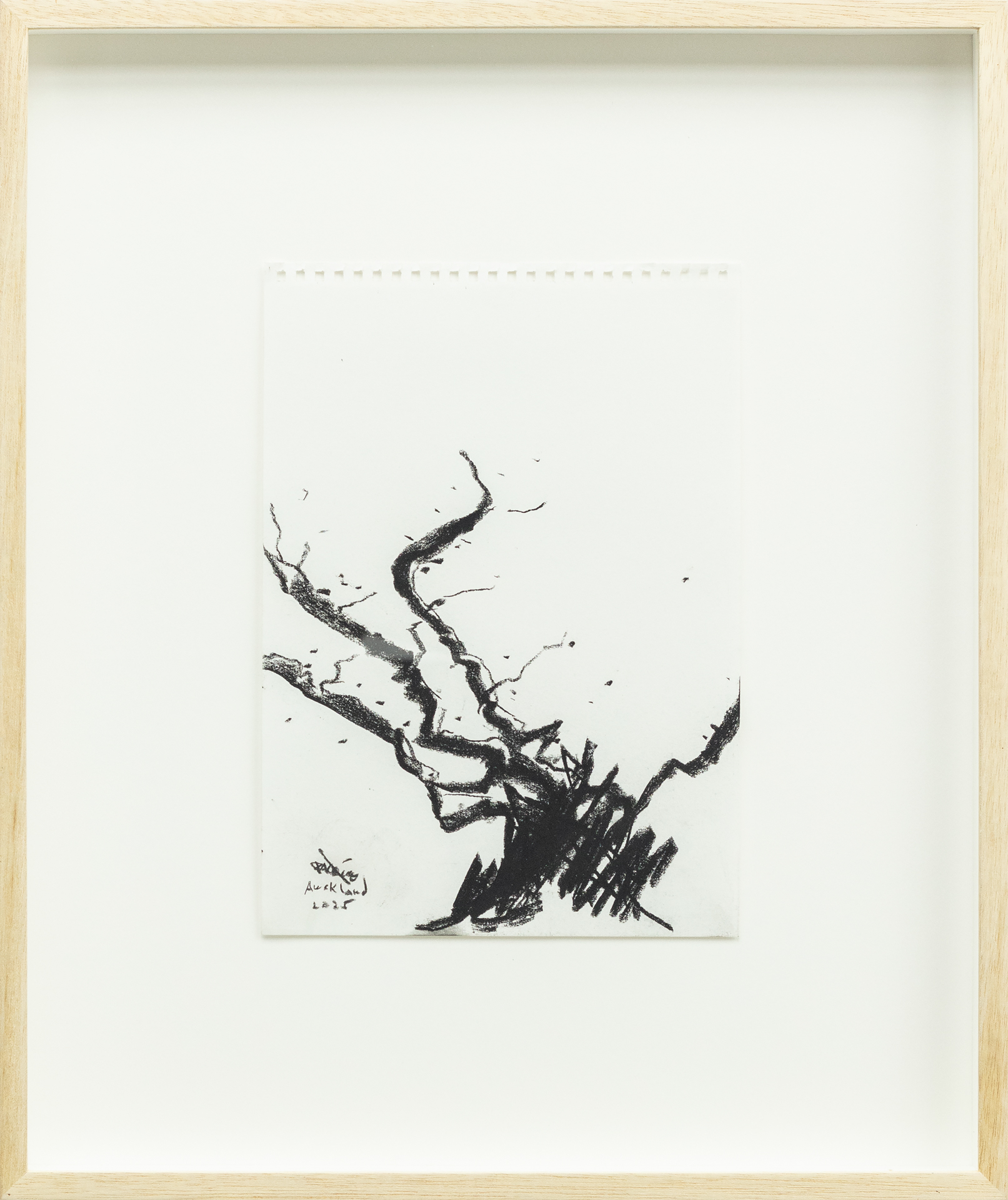
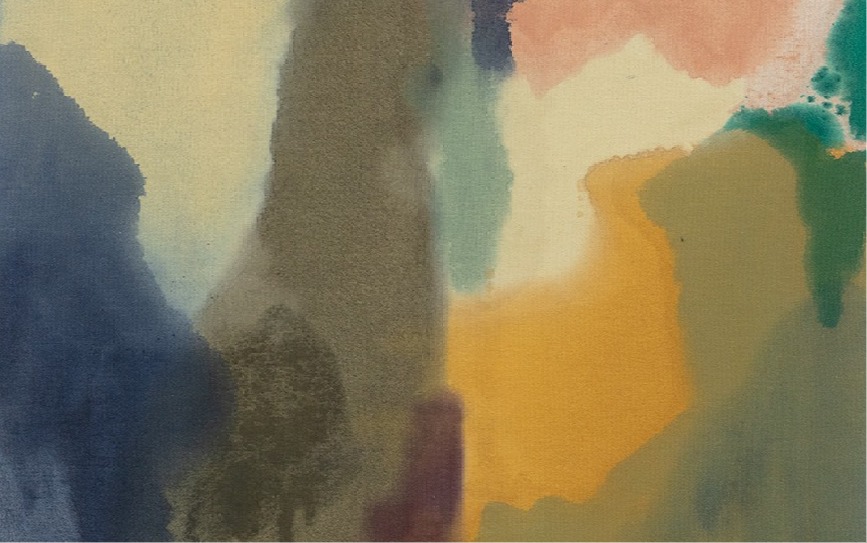
    Carlos Villa, Bernardo Pacquing and Carina Santos all utilize darker, cooler tones to bring a sense of clarity and calm to the array of works. A Vale of Gloom by Santos is a gestural abstraction in navy, teal, olive, and blush, evoking a feeling of melancholy as viewers see each color unify into one feeling. Villa’s Untitled is its near-opposite in temperament, a tightly rhythmic drawing of radiating arcs in ballpoint that fan outward from a single vanishing point, shifting through black, yellow-green, lavender, and pink in a pattern that feels both mathematical and hypnotic. In this drawing specifically, Villa combines his slinky motif into the design of a cape, also a form that reoccurs in Villa's major sculptural and performative works. Pacquing’s Drawing #10 ties them both together in its bold yet gentle strokes, a gnarled, branching form erupts from the left and center, referencing a deciduous tree in Auckland which has purposely lost its leaves to conserve water, he captures the silent beauty existing in its bareness.

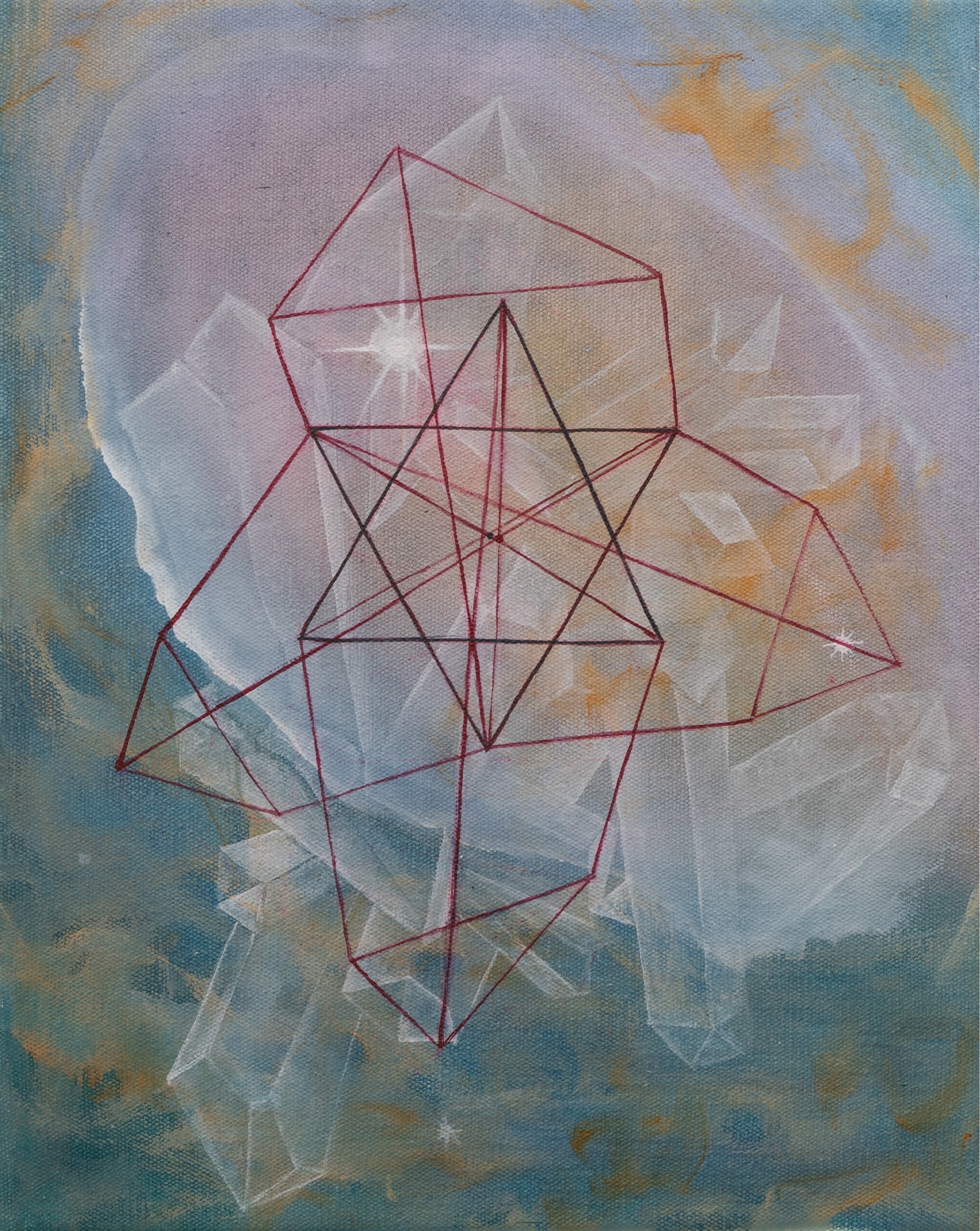
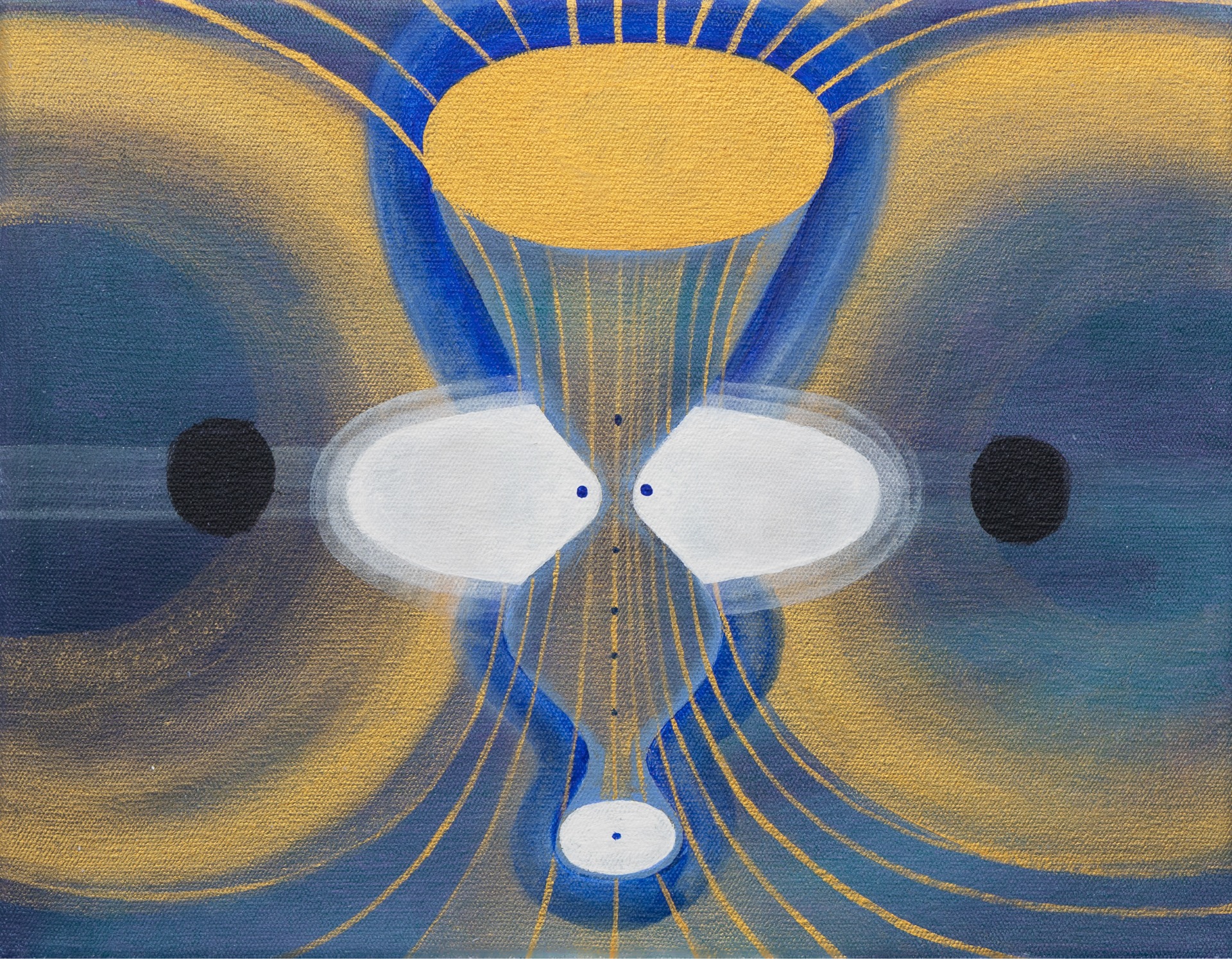
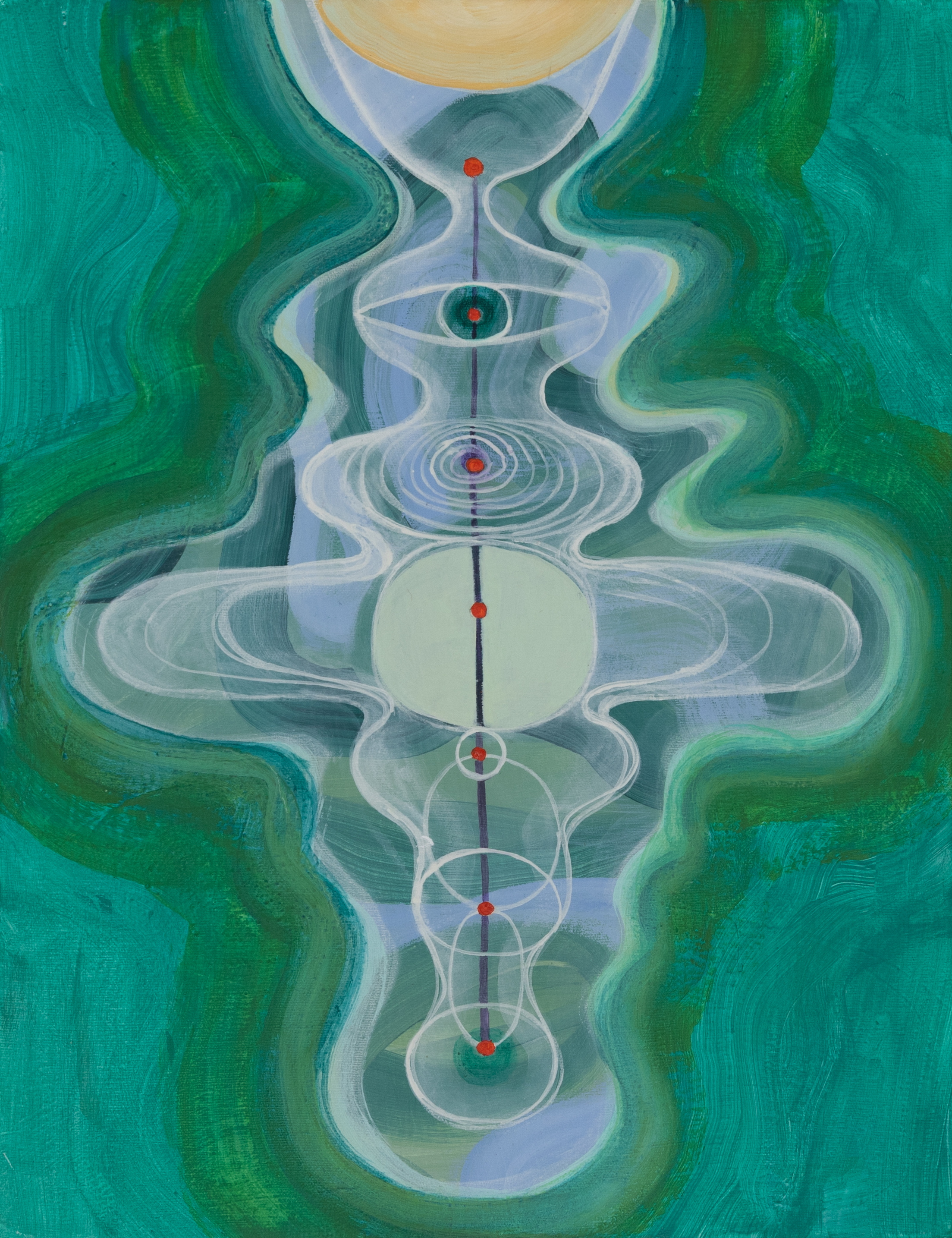
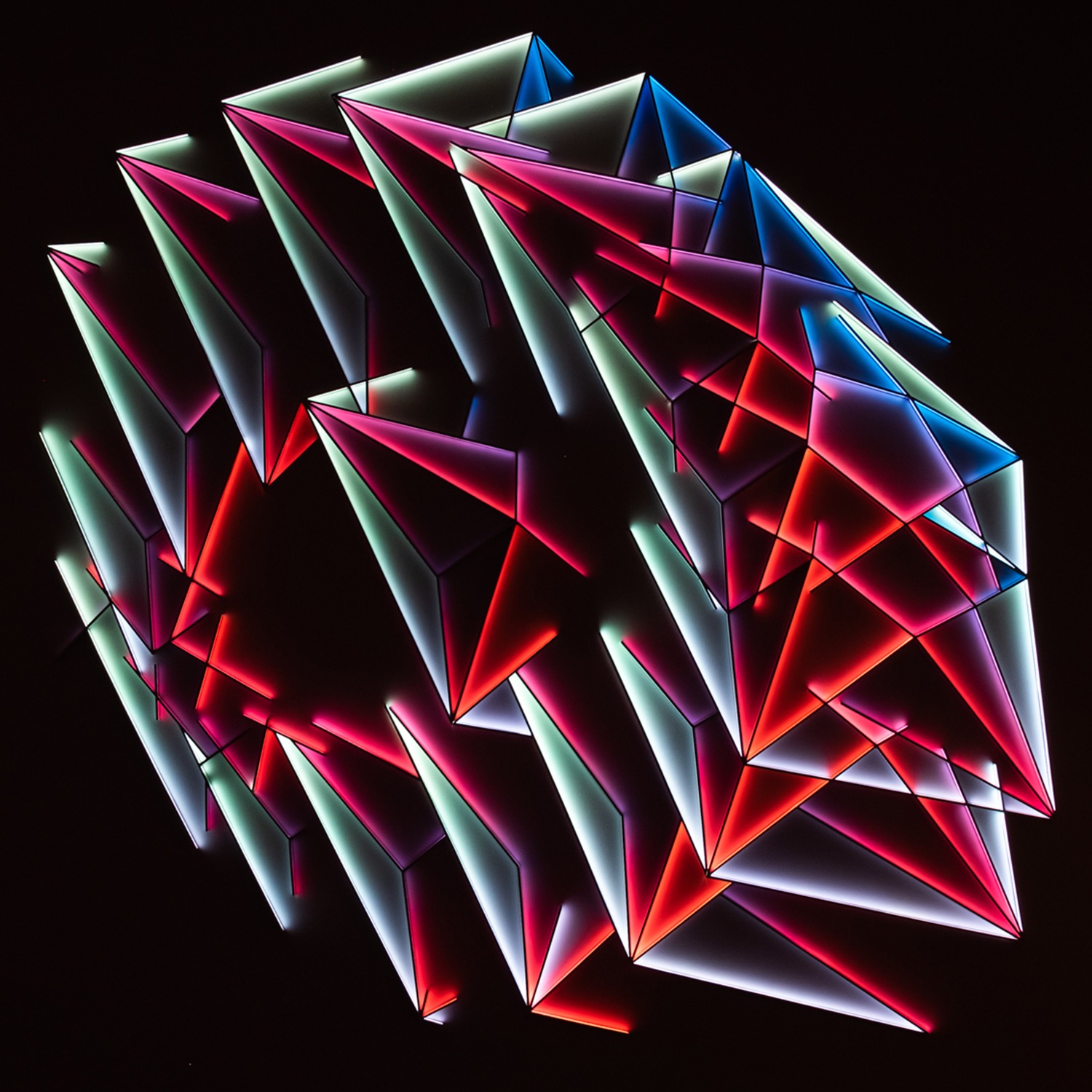
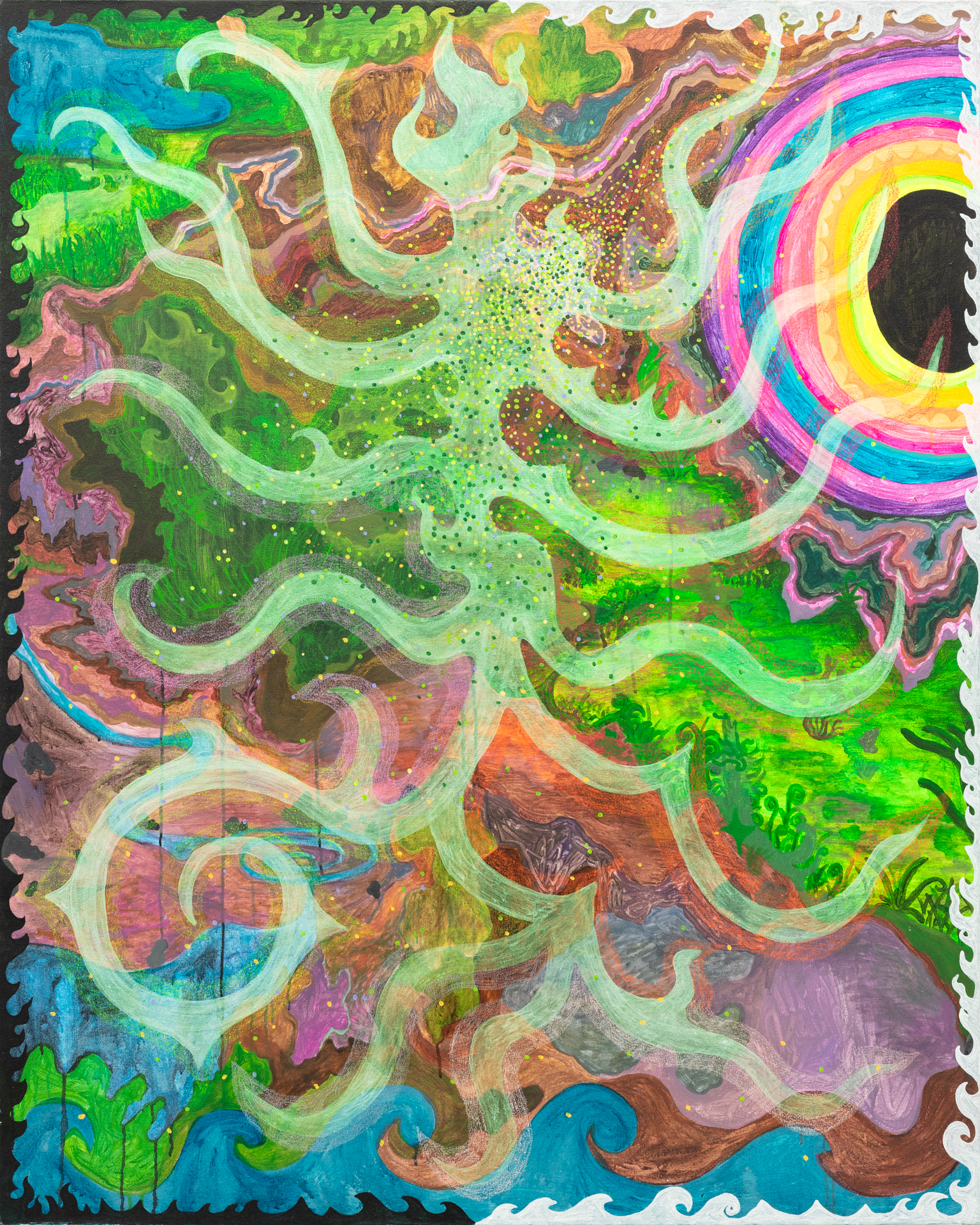
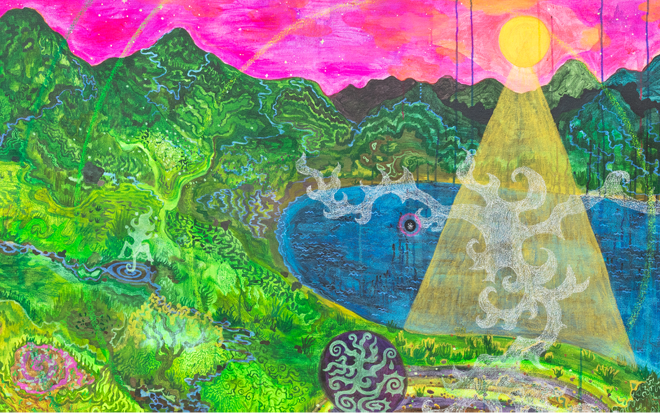
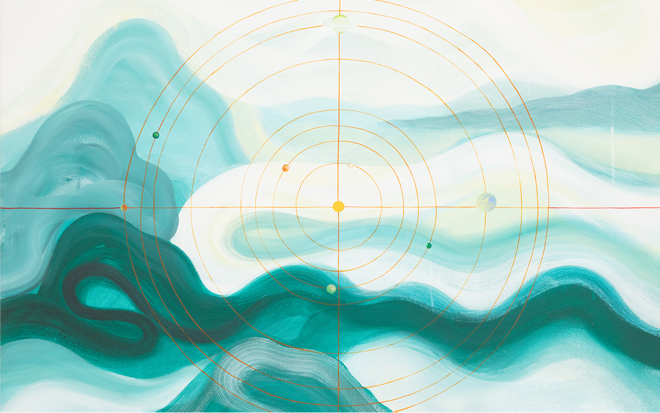
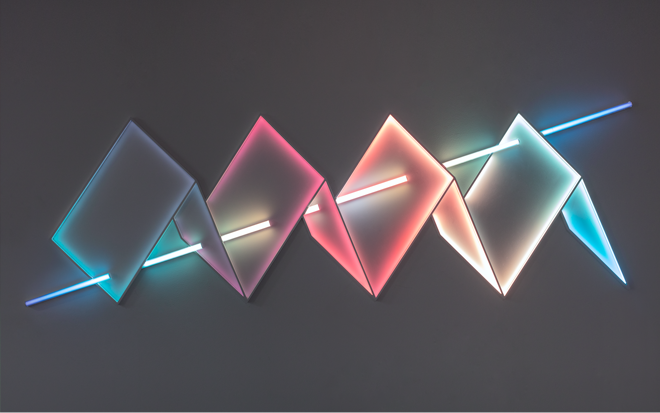
    The exhibition also embraces forms of speculation and invention. Emily Cheng’s Lanterns For Longevity and Suspended For A Moment (2026) borrow from the visual language of diagrams, cosmologies, and imagined architectures. Catalina Africa’s plant/spirit/portal (2024) similarly constructs a world governed by its own internal logic, where landscape and symbolism merge into a single environment. James Clar’s Parol #4 (2026) channels these ideas of structure and navigation through the lens of Filipino parol lanterns—star-shaped holiday lights historically linked to colonial history and the North Star. 

    Perhaps that is the proposition at the heart of SALON. Not that all objects are equal, but that the boundaries separating art from ornament, artifact from souvenir, or masterpiece from curiosity are often less stable than we imagine. Meaning emerges through proximity, association, and attention. Sometimes the most revealing way to look is not through hierarchy, but through accumulation.

    SALON is on view at Silverlens New York from July 9 to August 29, 2026.

    Multi-disciplinary artist Catalina Africa (b. 1988, Manila, Philippines; lives and works in Baler, Philippines) considers shapeshifting to be her primary mode of expression. Working across mediums including painting, sound, sculpture, video, text, and performance, her artworks are invocations to the natural landscape. Resembling spells, songs, love letters, prayers, and maps, her spatial visualization of an environment pays testimony to the Earth’s mysteries and magic. Raised in Manila, the artist now lives and works in Baler, Philippines, along with her husband and child, where she cultivates a devotional practice to Spirit, transmuting Earth song and collaborating with the living land. 

    Emily Cheng’s (b. 1953, New York, USA; lives and works in New York) partial list of exhibitions include solo shows at the Central Art Museum in Hangzhou, Shenzhen Art Museum, Bronx Museum in New York,  Museum of Contemporary Art Taipei, Metropolitan Museum of Manila, Ayala Museum in Manila, the Cincinnati Center for Contemporary Art, Johanniterkirche Feldkirch in Austria, Hanart Gallery and Louis Vuitton Espace in Hong Kong. Her work has also been featured in notable group exhibitions including Shanghai Biennale, MASS MoCA, Guangzhou Triennial at Guangdong Art Museum, Hubei Triennial in Wuhan, Yerba Buena Center for the Arts in San Francisco, The China Institute, National Academy of Design and American Academy of Arts and Letters in New York, Katonah Museum of Art, Hong Kong Arts Centre, and MOCA Shanghai.  She has received numerous awards and fellowships, including those from the New York Foundation for the Arts, the National Endowment for the Arts, the Pollock-Krasner Foundation, and a Yaddo fellowship. She has been the subject of two books, Chasing Clouds, A Decade of Studies, published by Time Zone 8 and Emily Cheng in the Weave of Worlds, Alchemy in Painting published by Archive Books in Berlin.

    James Clar (b. 1979, Wisconsin, USA; lives and works in Manila, Philippines) is a light and media artist interested in new technological production processes and their application to artistic narrative forms. His works utilize the information systems that saturate our daily existence, provoking contemplation on how they shape our understanding of culture and ourselves. By understanding light and the ways we see, his artistic lens explores the modulating effects of perception and narrative dynamics.

    Patricia Perez Eustaquio (b. 1977, Cebu, Philippines; lives and works in Benguet Province, Philippines) is known for works that span different mediums and disciplines—from paintings, drawings, and sculptures, to the fields of fashion, décor, and craft. She reconciles these intermediary forms through her constant exploration of notions that surround the integrity of appearances and the vanity of objects. Images of detritus, carcasses, and decay are embedded into the handiwork of design, craft, and fashion, while merging the disparate qualities of the maligned and marginalized with the celebrated and desired. From her ornately shaped canvases to sculptures shrouded by fabric, their arrival as fragments, shadows, or memories, according to Eustaquio, underline their aspirations, their vanity, this ‘desire to be desired.’ Her wrought objects (ranging from furniture, textile, brass, and glasswork in manufactured environments) demonstrate these contrasting sensibilities and provide commentary on the mutability of perception, as well as on the constructs of desirability and how it influences life and culture.

    Gregory Halili (b. 1975, Manila, Philippines; lives and works in Manila) is an artist specializing in the intricate art of miniatures. He meticulously carves and paints mother-of-pearl shells, creating memento moris that capture contemporary concepts of memory, life, death, and cycles. Recently, he has broadened his practice to include miniature oil paintings. Transforming capiz shells into canvases, he delicately presses them to their most fragile state, nearly reaching the point of breaking. These thinned-down, glass- like pieces, featuring paintings of butterflies and moths on the reverse, offer a reflection on the intricate and fragile state of the environment and the future. After 25 years in the United States, he returned to the Philippines in 2013.

    Yee I-Lann (b. 1971, Kota Kinabalu, Sabah, Malaysia; lives and works in Kota Kinabalu) is a leading contemporary artist recognized for her predominantly photomedia-based practice. With acuity and wit, her digital photo collages delve into the evolving intersection of power, colonialism, and neo-colonialism in Southeast Asia, shedding light on the influence of historical memory in social experiences. Often centering on counter-narratives or ‘histories from below,’ she has recently begun collaborative work with sea-based and land-based communities, as well as indigenous mediums in Sabah, Malaysia.

    Mit Jai Inn (b. 1960, Buak Khang, Thailand; lives and works in Chiang Mai) is a prominent contemporary artist celebrated for his distinctive color-based artworks. Employing palette knives, hands, and fingers, Mit creates vibrant, densely layered pieces that defy conventional boundaries of painting, embodying both manual and optical labor. Rooted in a rigorous physicality, his works serve as a channel for responding to aesthetic, social, and political contexts. His practice reflects a diverse range of histories, from traditional divisions between 'Western' and 'Eastern' painting to Thailand's shifting political landscape. Since returning to Thailand in 1992, Jai Inn has been involved in socially and politically engaged art campaigns. He was a co- founder of three non-institutional initiatives central to Thai art practice and discourse: Chiang Mai Social Installation, the Midnight University and The Land Foundation. In 2015, he founded Cartel Artspace in Bangkok, a gallery that gives free space to artists reflecting on the country and region's political history and current context. In 2017, he co-initiated the independent Bangkok Biennale.

    Pow Martinez (b. 1983, Manila, Philippines; lives and works in Manila) is a Filipino artist known for his expressionistic style of painting, blending bold colors with demonic, mutant-like characters to create compelling canvases. Often resembling a beautiful nightmare, Martinez combines the mundanities of everyday life with elements of pop culture, resulting in darkly humorous works depicting society’s overconsumption. Martinez is a recipient of the 2010 Ateneo Art Award for his exhibition 1 Billion Years at West Gallery, Philippines. He exhibits internationally and has worked with different media, from painting to sound. His recent exhibitions include State of Flux at Silverlens New York; City Prince/sses at Palais de Tokyo in Paris; Art Jakarta 2019 with Silverlens and ROH Projects; 50 Years in Hollywood at Pinto Art Museum in New York; Art Basel Hong Kong 2019 with Silverlens; WXXX, West Gallery, Manila. Martinez has also held a number of solo shows in major galleries in Manila, the most recent of which is Pow Martinez (2024) at Silverlens Manila. Early in 2022, Martinez had his first solo exhibition in Madrid entitled Underground Spiritual Unit at Galeria Yusto/Giner.

    Wawi Navarroza (b. 1979, Manila, Philippines) is a Filipina lens-based artist. Recognized as one of the foremost names in contemporary Southeast Asian art, she is known for her vibrant large format photographic tableaus and self-portraits which allude to the hybridity of identity, photography, and place. Born in Manila, with higher education in the West, and moving between Madrid and Istanbul, Navarroza draws upon her transnational experiences to create in-studio collages using a variety of materials, mise en scène, and herself. Informed by tropicality within the context of post- colonial dialogue and globalization, and conscious of her role as a female artist, Navarroza employs her corporeal form as an artistic medium. Her body of work serves as a testament to the various facets and stages of the women’s narrative, portraying woman as creator.

    Nakatsuji Etsuko began her career working in graphic design while simultaneously pursuing her passion  for art. In the early 1960s, she gained recognition for her unique human-shaped forms, which became a recurring motif in her work. Her creations, often playful yet peculiar,  have appeared in various media, including paintings, sculptures, illustrated books,  printmaking, and stage design. These works invite viewers to reflect on the essence of  humanity and the body as a functional vessel. At the same time, they evoke the limitless  nature of human consciousness, suggesting a boundless capacity that transcends  physical form. 

    Bernardo Pacquing (b. 1967, Tarlac, Philippines; lives and works in Parañaque City, Philippines and Singapore) is an artist broadening the expressive possibilities of abstraction in painting and sculpture. Incorporating diverse found objects that challenge conventional perceptions of aesthetic representation, form, and value, his work displaces the idea of unequivocal forms, introducing possibilities for the coexistence of affirmations and denials. He was twice awarded the Grand Prize for the Art Association of the Philippines Open Art Competition (Painting, Non-Representation) in 1992 and 1999. He is also a recipient of the Cultural Center of the Philippines Thirteen Artists Award in 2000, an award given to exemplary artists in the field of contemporary visual art. Pacquing received a Freeman Fellowship Grant for a residency at the Vermont Studio Center in the United States.

    Carina Santos’ (b. 1988) practice moves within the intersections between arts, letters, and design. She completed her Masters in Theory and Philosophy at the Central Saint Martins, University of the Arts London. Since moving to the UK, Santos has been venturing into a more diverse approach, introducing new media (websites, video, sound) into the overall body of work, with a particular interest in collaboration and communication via the Internet. Santos’ works often present narratives informed by the spaces and landscapes we inhabit and exist. She lives and works between Manila and London.

    Carlos Villa (b. 1936 - d. 2013, San Francisco, USA) was a San Francisco-born visual artist, grass-roots activist, curator, author, and educator for over 40 years at the San Francisco Art Institute, among other Bay Area institutions. In 2022, Villa received the first-ever major museum retrospective dedicated to the work of a Filipino American artist, which toured from the Newark Museum of Art to the San Francisco Art Institute and Asian Art Museum. Villa’s works were also included in the 2011 solo retrospective Manongs, Some Doors and a Bouquet of Crates at the Mission Cultural Center for Latino Arts in San Francisco, and Other Sources: An American Essay, a multidisciplinary, multiethnic exhibition centered around women and artists of color, curated by Villa and presented in conjunction with the 1976 American Bicentennial.

There is a particular pleasure in rooms where too much is happening. A painting hangs beside a woven mat. A butterfly rests on a capiz shell. A photograph is wrapped in gingham. Nothing quite matches, yet everything seems to belong. Such spaces resist tidy classification, asking us to navigate by instinct rather than hierarchy.

SALON takes its title from both the salon-style hang and the domestic interior: two modes of display built on proximity, accumulation, and personal taste. Bringing together works by artists who transform familiar materials and everyday forms, the exhibition considers what happens when distinctions between art and decoration, utility and ornament, begin to dissolve. 

At the center of the gallery are paintings by Pow Martinez. In Bar Fly, Chest of the Mundane, and Flame Tank (2025), cartoon figures, social archetypes, and fragments of popular culture collide within compositions that treat absurdity as a form of realism. A hand pours wine. A socialite drives a tank. The familiar appears slightly out of register, as if reflecting a world in which cultural references circulate faster than meaning itself.

That sense of transformation continues in Nakatsuji Etsuko’s Untitled (2025), where grids and fragments of anatomy are reduced to their essential forms. Nearby, Wawi Navarroza’s Poleng, 3 Ways (2016) shifts attention away from photography alone and toward the object that contains it. By wrapping an archival print in gingham fabric, Navarroza turns a common pattern into an act of framing, elevating the language of domestic decoration into the realm of display. Mit Jai Inn’s Untitled (2023) similarly layers paint in a quilt like fashion, mimicking the lowland rice paddy’s varied rectilinear plots. In many sects of Buddhism, the rice-field is considered the original merit-field, where seeds offered to fertile ground create abundant harvest.

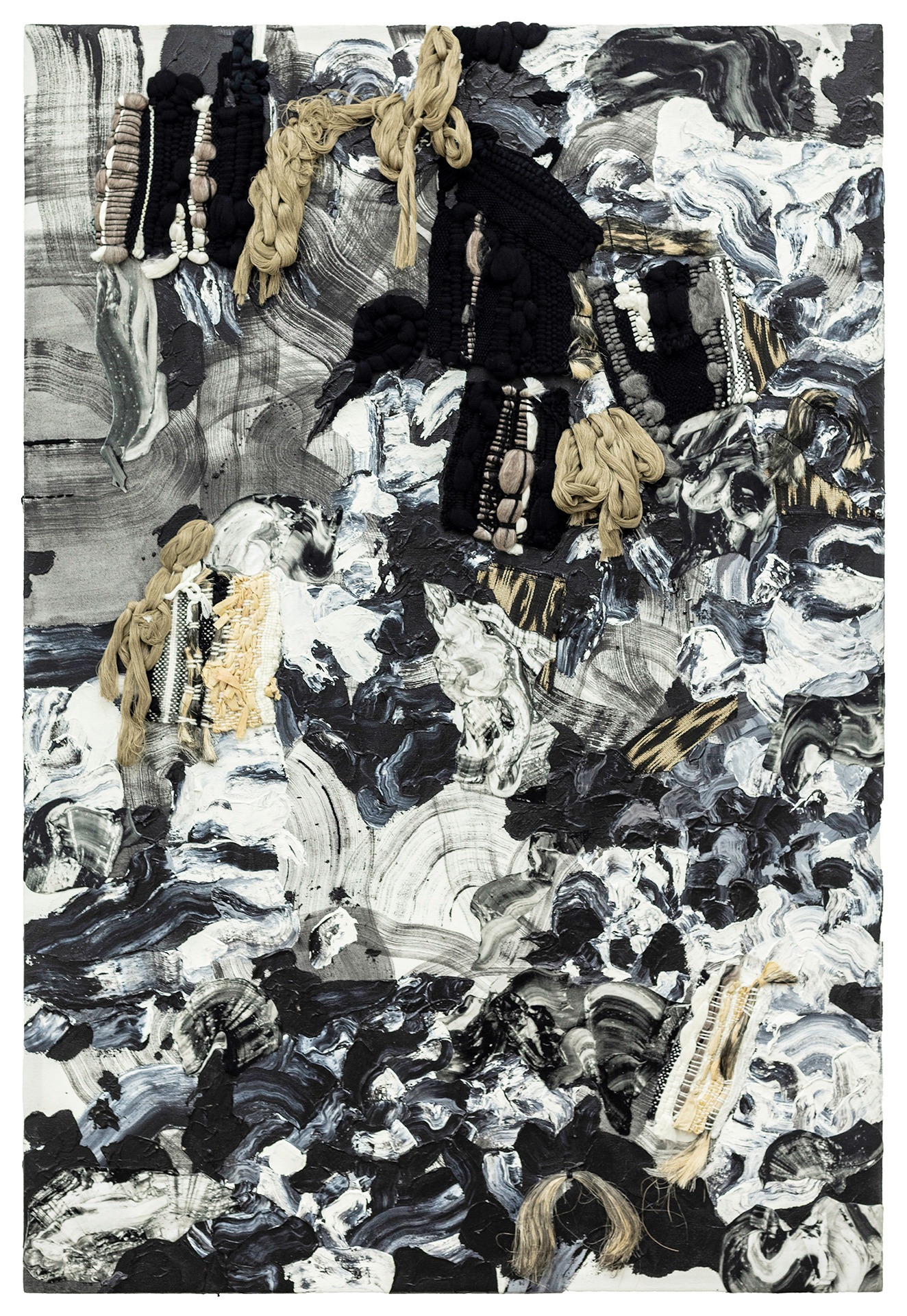
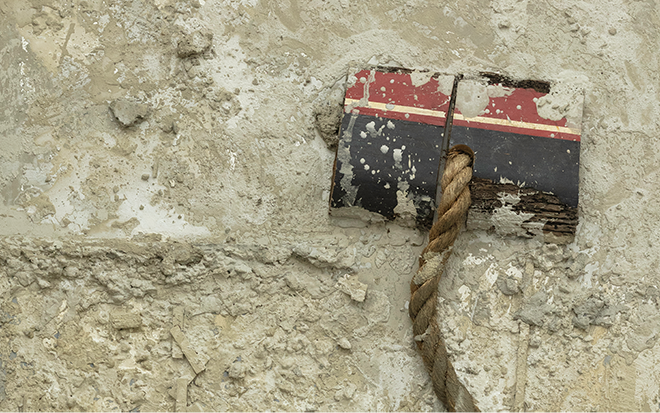
Elsewhere, artists draw on craft traditions and found materials to complicate ideas of value. Gregory Halili’s Vanishing XIII (2024) and Vanishing XIV (2025) place delicate butterfly illustrations on thinned capiz shells, bringing together natural history, souvenir culture, and memorialization. Yee I-Lann’s Doormatic Glide Refractor (2023), created with the Dusun and Murut weavers of Sabah, adopts the form of a floor mat while transforming a utilitarian object into a field of pattern and visual rhythm. Patricia Perez Eustaquio’s Vertigo V (2024) layers velvet, silk, wool, and cotton across handwoven Inabel cloth, revealing textile as both material and repository of memory.

Carlos Villa, Bernardo Pacquing and Carina Santos all utilize darker, cooler tones to bring a sense of clarity and calm to the array of works. A Vale of Gloom by Santos is a gestural abstraction in navy, teal, olive, and blush, evoking a feeling of melancholy as viewers see each color unify into one feeling. Villa’s Untitled is its near-opposite in temperament, a tightly rhythmic drawing of radiating arcs in ballpoint that fan outward from a single vanishing point, shifting through black, yellow-green, lavender, and pink in a pattern that feels both mathematical and hypnotic. In this drawing specifically, Villa combines his slinky motif into the design of a cape, also a form that reoccurs in Villa's major sculptural and performative works. Pacquing’s Drawing #10 ties them both together in its bold yet gentle strokes, a gnarled, branching form erupts from the left and center, referencing a deciduous tree in Auckland which has purposely lost its leaves to conserve water, he captures the silent beauty existing in its bareness.

The exhibition also embraces forms of speculation and invention. Emily Cheng’s Lanterns For Longevity and Suspended For A Moment (2026) borrow from the visual language of diagrams, cosmologies, and imagined architectures. Catalina Africa’s plant/spirit/portal (2024) similarly constructs a world governed by its own internal logic, where landscape and symbolism merge into a single environment. James Clar’s Parol #4 (2026) channels these ideas of structure and navigation through the lens of Filipino parol lanterns—star-shaped holiday lights historically linked to colonial history and the North Star. 

Perhaps that is the proposition at the heart of SALON. Not that all objects are equal, but that the boundaries separating art from ornament, artifact from souvenir, or masterpiece from curiosity are often less stable than we imagine. Meaning emerges through proximity, association, and attention. Sometimes the most revealing way to look is not through hierarchy, but through accumulation.

SALON is on view at Silverlens New York from July 9 to August 29, 2026.

Multi-disciplinary artist Catalina Africa (b. 1988, Manila, Philippines; lives and works in Baler, Philippines) considers shapeshifting to be her primary mode of expression. Working across mediums including painting, sound, sculpture, video, text, and performance, her artworks are invocations to the natural landscape. Resembling spells, songs, love letters, prayers, and maps, her spatial visualization of an environment pays testimony to the Earth’s mysteries and magic. Raised in Manila, the artist now lives and works in Baler, Philippines, along with her husband and child, where she cultivates a devotional practice to Spirit, transmuting Earth song and collaborating with the living land. 

Emily Cheng’s (b. 1953, New York, USA; lives and works in New York) partial list of exhibitions include solo shows at the Central Art Museum in Hangzhou, Shenzhen Art Museum, Bronx Museum in New York,  Museum of Contemporary Art Taipei, Metropolitan Museum of Manila, Ayala Museum in Manila, the Cincinnati Center for Contemporary Art, Johanniterkirche Feldkirch in Austria, Hanart Gallery and Louis Vuitton Espace in Hong Kong. Her work has also been featured in notable group exhibitions including Shanghai Biennale, MASS MoCA, Guangzhou Triennial at Guangdong Art Museum, Hubei Triennial in Wuhan, Yerba Buena Center for the Arts in San Francisco, The China Institute, National Academy of Design and American Academy of Arts and Letters in New York, Katonah Museum of Art, Hong Kong Arts Centre, and MOCA Shanghai.  She has received numerous awards and fellowships, including those from the New York Foundation for the Arts, the National Endowment for the Arts, the Pollock-Krasner Foundation, and a Yaddo fellowship. She has been the subject of two books, Chasing Clouds, A Decade of Studies, published by Time Zone 8 and Emily Cheng in the Weave of Worlds, Alchemy in Painting published by Archive Books in Berlin.

James Clar (b. 1979, Wisconsin, USA; lives and works in Manila, Philippines) is a light and media artist interested in new technological production processes and their application to artistic narrative forms. His works utilize the information systems that saturate our daily existence, provoking contemplation on how they shape our understanding of culture and ourselves. By understanding light and the ways we see, his artistic lens explores the modulating effects of perception and narrative dynamics.

Patricia Perez Eustaquio (b. 1977, Cebu, Philippines; lives and works in Benguet Province, Philippines) is known for works that span different mediums and disciplines—from paintings, drawings, and sculptures, to the fields of fashion, décor, and craft. She reconciles these intermediary forms through her constant exploration of notions that surround the integrity of appearances and the vanity of objects. Images of detritus, carcasses, and decay are embedded into the handiwork of design, craft, and fashion, while merging the disparate qualities of the maligned and marginalized with the celebrated and desired. From her ornately shaped canvases to sculptures shrouded by fabric, their arrival as fragments, shadows, or memories, according to Eustaquio, underline their aspirations, their vanity, this ‘desire to be desired.’ Her wrought objects (ranging from furniture, textile, brass, and glasswork in manufactured environments) demonstrate these contrasting sensibilities and provide commentary on the mutability of perception, as well as on the constructs of desirability and how it influences life and culture.

Gregory Halili (b. 1975, Manila, Philippines; lives and works in Manila) is an artist specializing in the intricate art of miniatures. He meticulously carves and paints mother-of-pearl shells, creating memento moris that capture contemporary concepts of memory, life, death, and cycles. Recently, he has broadened his practice to include miniature oil paintings. Transforming capiz shells into canvases, he delicately presses them to their most fragile state, nearly reaching the point of breaking. These thinned-down, glass- like pieces, featuring paintings of butterflies and moths on the reverse, offer a reflection on the intricate and fragile state of the environment and the future. After 25 years in the United States, he returned to the Philippines in 2013.

Yee I-Lann (b. 1971, Kota Kinabalu, Sabah, Malaysia; lives and works in Kota Kinabalu) is a leading contemporary artist recognized for her predominantly photomedia-based practice. With acuity and wit, her digital photo collages delve into the evolving intersection of power, colonialism, and neo-colonialism in Southeast Asia, shedding light on the influence of historical memory in social experiences. Often centering on counter-narratives or ‘histories from below,’ she has recently begun collaborative work with sea-based and land-based communities, as well as indigenous mediums in Sabah, Malaysia.

Mit Jai Inn (b. 1960, Buak Khang, Thailand; lives and works in Chiang Mai) is a prominent contemporary artist celebrated for his distinctive color-based artworks. Employing palette knives, hands, and fingers, Mit creates vibrant, densely layered pieces that defy conventional boundaries of painting, embodying both manual and optical labor. Rooted in a rigorous physicality, his works serve as a channel for responding to aesthetic, social, and political contexts. His practice reflects a diverse range of histories, from traditional divisions between 'Western' and 'Eastern' painting to Thailand's shifting political landscape. Since returning to Thailand in 1992, Jai Inn has been involved in socially and politically engaged art campaigns. He was a co- founder of three non-institutional initiatives central to Thai art practice and discourse: Chiang Mai Social Installation, the Midnight University and The Land Foundation. In 2015, he founded Cartel Artspace in Bangkok, a gallery that gives free space to artists reflecting on the country and region's political history and current context. In 2017, he co-initiated the independent Bangkok Biennale.

Pow Martinez (b. 1983, Manila, Philippines; lives and works in Manila) is a Filipino artist known for his expressionistic style of painting, blending bold colors with demonic, mutant-like characters to create compelling canvases. Often resembling a beautiful nightmare, Martinez combines the mundanities of everyday life with elements of pop culture, resulting in darkly humorous works depicting society’s overconsumption. Martinez is a recipient of the 2010 Ateneo Art Award for his exhibition 1 Billion Years at West Gallery, Philippines. He exhibits internationally and has worked with different media, from painting to sound. His recent exhibitions include State of Flux at Silverlens New York; City Prince/sses at Palais de Tokyo in Paris; Art Jakarta 2019 with Silverlens and ROH Projects; 50 Years in Hollywood at Pinto Art Museum in New York; Art Basel Hong Kong 2019 with Silverlens; WXXX, West Gallery, Manila. Martinez has also held a number of solo shows in major galleries in Manila, the most recent of which is Pow Martinez (2024) at Silverlens Manila. Early in 2022, Martinez had his first solo exhibition in Madrid entitled Underground Spiritual Unit at Galeria Yusto/Giner.

Wawi Navarroza (b. 1979, Manila, Philippines) is a Filipina lens-based artist. Recognized as one of the foremost names in contemporary Southeast Asian art, she is known for her vibrant large format photographic tableaus and self-portraits which allude to the hybridity of identity, photography, and place. Born in Manila, with higher education in the West, and moving between Madrid and Istanbul, Navarroza draws upon her transnational experiences to create in-studio collages using a variety of materials, mise en scène, and herself. Informed by tropicality within the context of post- colonial dialogue and globalization, and conscious of her role as a female artist, Navarroza employs her corporeal form as an artistic medium. Her body of work serves as a testament to the various facets and stages of the women’s narrative, portraying woman as creator.

Nakatsuji Etsuko began her career working in graphic design while simultaneously pursuing her passion  for art. In the early 1960s, she gained recognition for her unique human-shaped forms, which became a recurring motif in her work. Her creations, often playful yet peculiar,  have appeared in various media, including paintings, sculptures, illustrated books,  printmaking, and stage design. These works invite viewers to reflect on the essence of  humanity and the body as a functional vessel. At the same time, they evoke the limitless  nature of human consciousness, suggesting a boundless capacity that transcends  physical form. 

Bernardo Pacquing (b. 1967, Tarlac, Philippines; lives and works in Parañaque City, Philippines and Singapore) is an artist broadening the expressive possibilities of abstraction in painting and sculpture. Incorporating diverse found objects that challenge conventional perceptions of aesthetic representation, form, and value, his work displaces the idea of unequivocal forms, introducing possibilities for the coexistence of affirmations and denials. He was twice awarded the Grand Prize for the Art Association of the Philippines Open Art Competition (Painting, Non-Representation) in 1992 and 1999. He is also a recipient of the Cultural Center of the Philippines Thirteen Artists Award in 2000, an award given to exemplary artists in the field of contemporary visual art. Pacquing received a Freeman Fellowship Grant for a residency at the Vermont Studio Center in the United States.

Carina Santos’ (b. 1988) practice moves within the intersections between arts, letters, and design. She completed her Masters in Theory and Philosophy at the Central Saint Martins, University of the Arts London. Since moving to the UK, Santos has been venturing into a more diverse approach, introducing new media (websites, video, sound) into the overall body of work, with a particular interest in collaboration and communication via the Internet. Santos’ works often present narratives informed by the spaces and landscapes we inhabit and exist. She lives and works between Manila and London.

Carlos Villa (b. 1936 - d. 2013, San Francisco, USA) was a San Francisco-born visual artist, grass-roots activist, curator, author, and educator for over 40 years at the San Francisco Art Institute, among other Bay Area institutions. In 2022, Villa received the first-ever major museum retrospective dedicated to the work of a Filipino American artist, which toured from the Newark Museum of Art to the San Francisco Art Institute and Asian Art Museum. Villa’s works were also included in the 2011 solo retrospective Manongs, Some Doors and a Bouquet of Crates at the Mission Cultural Center for Latino Arts in San Francisco, and Other Sources: An American Essay, a multidisciplinary, multiethnic exhibition centered around women and artists of color, curated by Villa and presented in conjunction with the 1976 American Bicentennial.

Works

Patricia Perez Eustaquio
Vertigo VI
2024
17674
2
acrylic, printed velvet, abacá (Manila hemp), silk, wool and cotton fibers on handwoven cotton (Inabel)
20h x 18w in 50.8h x 45.7w cm
-1
0.00
PHP
0
Details
Pow Martinez
Flame Tank
2025
17649
2
acrylic on canvas
24h x 18w in 61h x 45.7w cm
-1
0.00
PHP
0
Details
Emily Cheng
Suspended For A Moment
2026
17645
2
flashe on canvas
11h x 14w in 27.9h x 35.6w cm
-1
0.00
PHP
0
Details
Nakatsuji Etsuko
Untitled
2025
17646
2
screen print
39.75h x 28.36w in 100.8h x 72w cm
-1
0.00
PHP
0
(#30/30)
Details
Mit Jai Inn
Untitled
2023
17673
2
oil on canvas
50.38h x 39.38w in 128h x 100w cm (unframed) 57.09h x 45.28w x 1.57d in 145h x 115w x 4d cm (framed)
-1
0.00
PHP
0
Details
Gregory Halili
Vanishing XIII
2024
17655
2
oil on capiz shell
(framed) 9.75h x 12.75w x 1.13d in, 24.5h x 32.5w x 3d cm
-1
0.00
PHP
0
Details
Pow Martinez
Chest of the Mundane
2025
17648
2
acrylic on canvas
24h x 18w in 61h x 45.7w cm
-1
0.00
PHP
0
Details
Emily Cheng
Semmerling5
2016-25
17643
2
acrylic and flashe on canvas
14h x 11w in 35.6h x 27.9w cm
-1
0.00
PHP
0
Details
Carlos Villa
Untitled (cape drawing)
c. 1970s
17652
2
watercolor and ballpoint pen on paper
18.66h x 18.66w x 1.66d in (framed) 47.3w x 47.3w x 4d cm
-1
0.00
PHP
0
Details
Carina Santos
A Vale of Gloom
2025
17640
2
Oil and pigment on canvas
24h x 24w in 61h x 61w cm
-1
0.00
PHP
0
Details
Yee I-Lann
Doormatic Glide Refractor with weaving by: S. Narty Raitom, Zaitun Raitom, Julia Ginasius and Julitah Kulinting
2023
17657
2
split bamboo pus weave with kayu obol (tuber) black natural dye, matt sealant
85.83h x 63.39w in 218h x 161w cm
-1
0.00
PHP
0
Edition of 3 (#3/3)
Details
Gregory Halili
Vanishing XIV
2025
17656
2
oil on capiz shell
9.06h x 12.01w x 0.79d in (framed) 23h x 30.5w x 2d cm
-1
0.00
PHP
0
Details
James Clar
Parol #4 (Kaleidoscope)
2023
17672
2
LEDs, Filters, Aluminum, Laser-cut metal
118.11h x 112.20w in 300.0h x 285.0w cm
0
0.00
PHP
0
Edition 1 of 3 + 1 AP

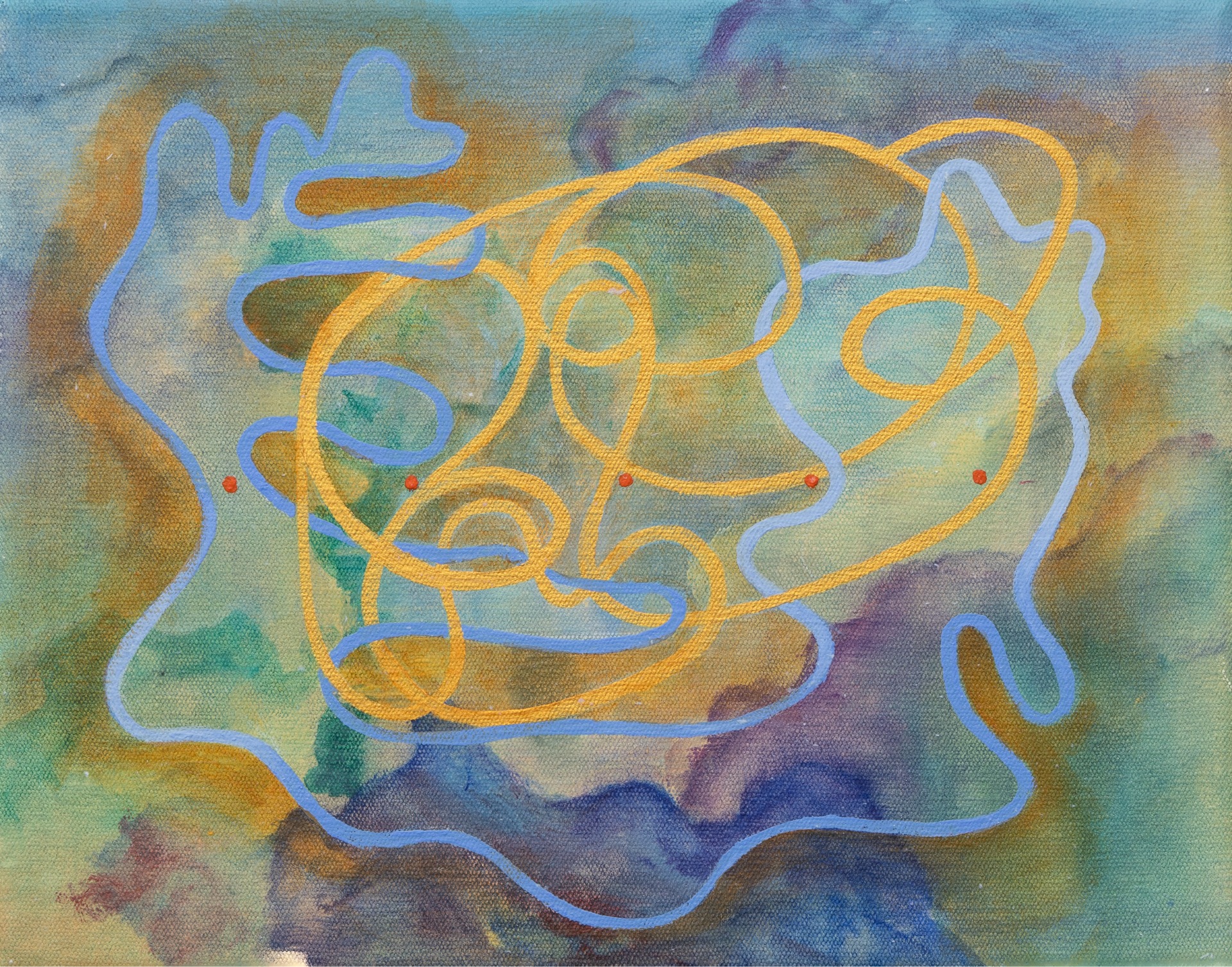
Parol #1 and Parol #4 are light works in the image of Filipino Parol lanterns, star-shaped Christmas lights linked to the nation’s Spanish and American colonial periods. A model of an individual star was built in a 3D rendering software, which became the basis for Parol #1. The resulting work was then photographed using a kaleidoscope lens to create the form of the new, fractalized light structure of Parol #4. Together they are expressions of the individual and the community.
Details
Emily Cheng
Immersion
2026
17644
2
flashe on canvas
11h x 14w in 27.9h x 35.6w cm
-1
0.00
PHP
0
Details
Wawi Navarroza
Poleng, 3 Ways (soft sculpture)
2016
17651
2
archival pigment print, cold-mounted on acid-free aluminum, encased with artistʼs frame: wrapped fabric on double wood frame
38.5h x 28.5w x 2d in 97.8h x 72.4w x 5.1d cm
-1
0.00
PHP
0
Edition of 5 plus 2 AP (#5/5)
Details
Pow Martinez
Bar Fly
2025
17647
2
acrylic on canvas
18h x 15w in 45.7h x 38.1w cm
-1
0.00
PHP
0
Details
Catalina Africa
plant/spirit/portal
2024
17642
2
acrylic on canvas
60h x 48w in 152.4h x 121.92w cm
-1
0.00
PHP
0
Details
Pow Martinez
No Healthy Upstream
2025
17650
2
acrylic on canvas
24h x 18w in 61h x 45.7w cm
-1
0.00
PHP
0
Details
Bernardo Pacquing
Drawing #10
2025
17641
2
charcoal on paper
20.5h x 17.5w in (framed) 52.1h x 44.5w cm
-1
0.00
PHP
0
Details
PHA+PHN0cm9uZz5TSUxWRVJMRU5TPC9zdHJvbmc+IGlzIGNvbW1pdHRlZCB0byBwcm90ZWN0aW5nIHlvdXIgcHJpdmFjeS4gSW4gY29tcGxpYW5jZSB3aXRoIHRoZSBQaGlsaXBwaW5lIFJlcHVibGljIEFjdCwgTm8uIDEwMTczIGJldHRlciBrbm93biBhcyB0aGUgMjAxMiBEYXRhIFByaXZhY3kgQWN0LCB3ZSBjYW4gb25seSB1c2UgdGhlIGluZm9ybWF0aW9uIHRoYXQgd2Ugb2J0YWluIGFib3V0IHlvdSBsYXdmdWxseS4gV2UgbWF5IGNvbGxlY3QgcGVyc29uYWwgaW5mb3JtYXRpb24gYWJvdXQgeW91IHdoZW4geW91IHNpZ24gdXAgZm9yIG91ciBuZXdzbGV0dGVyIG9yIGNvbnRhY3QgdXMgd2l0aCBhbiBpbnF1aXJ5LjwvcD4KPHA+VGhlIHR5cGUgb2YgaW5mb3JtYXRpb24gd2UgbWF5IGNvbGxlY3QgaW5jbHVkZXMgeW91ciA8c3Ryb25nPk5hbWU8L3N0cm9uZz4sIDxzdHJvbmc+RW1haWw8L3N0cm9uZz4sIGFuZCA8c3Ryb25nPkNvbnRhY3QgTnVtYmVyPC9zdHJvbmc+LjwvcD4KPHA+V2UgbWF5IGNvbGxlY3QgcGF5bWVudCBpbmZvcm1hdGlvbiBmcm9tIHlvdSB0byBmdWxmaWxsIHRyYW5zYWN0aW9ucy4gVG8gcHJvY2VzcyBwYXltZW50cywgd2UgbWF5IGNvbGxlY3QgeW91ciBjcmVkaXQgY2FyZCBhbmQgYmFuayBhY2NvdW50IGRldGFpbHMuIFRoaXMgaW5mb3JtYXRpb24gbWF5IGJlIHNoYXJlZCB3aXRoIHRoaXJkIHBhcnR5IHBheW1lbnQgcHJvY2Vzc2luZyBzZXJ2aWNlcy48L3A+CjxwPlRvIGRlbGl2ZXIgeW91ciBwdXJjaGFzZSwgd2UgbWF5IHByb3ZpZGUgeW91ciBwZXJzb25hbCBpbmZvcm1hdGlvbiB0byB0aGlyZC1wYXJ0eSBsb2dpc3RpY3MgY29tcGFuaWVzIHdobyBhc3Npc3QgdXMgd2l0aCBvdXIgZGVsaXZlcmllcyBhbmQgc2hpcG1lbnRzLjwvcD4KPHA+VGhlIHBlcnNvbmFsIGluZm9ybWF0aW9uIHdoaWNoIHdlIGhvbGQgd2lsbCBiZSBoZWxkIHNlY3VyZWx5IGluIGFjY29yZGFuY2Ugd2l0aCBvdXIgaW50ZXJuYWwgc2VjdXJpdHkgcG9saWN5LiBXZSB3aWxsIG5ldmVyIGNvbGxlY3QgaW5mb3JtYXRpb24gYWJvdXQgeW91IHdpdGhvdXQgeW91ciBleHBsaWNpdCBjb25zZW50LjwvcD4KPHA+VGhlIGluZm9ybWF0aW9uIHdlIHN0b3JlIHdpbGwgYmUgYWNjdXJhdGUgYW5kIHVwIHRvIGRhdGUuIFlvdSBjYW4gY2hlY2sgdGhlIGluZm9ybWF0aW9uIHRoYXQgd2UgaG9sZCBhYm91dCB5b3UgYnkgZW1haWxpbmcgdXMuIElmIHlvdSBmaW5kIHRoYXQgdGhlcmUgYXJlIGFueSBpbmFjY3VyYWNpZXMsIHdlIHdpbGwgZGVsZXRlIG9yIGNvcnJlY3QgaXQgcHJvbXB0bHkuPC9wPgo8cD5XZSBtYXkgdXNlIHRlY2hub2xvZ3kgdG8gdHJhY2sgdGhlIHBhdHRlcm5zIG9mIGJlaGF2aW9yIG9mIHZpc2l0b3JzIHRvIG91ciB3ZWJzaXRlLiBUaGlzIG1heSBpbmNsdWRlIHVzaW5nIGEgImNvb2tpZSIgc3RvcmVkIG9uIHlvdXIgYnJvd3NlciB3aGljaCB5b3UgY2FuIHVzdWFsbHkgbW9kaWZ5IHRocm91Z2ggeW91ciBicm93c2VyIHRvIHByZXZlbnQgdGhpcyBmcm9tIGhhcHBlbmluZy48L3A+CjxwPldlIHdpbGwgcmV0YWluIHlvdXIgcGVyc29uYWwgaW5mb3JtYXRpb24gb25seSB3aGlsZSB3ZSBuZWVkIGl0IGZvciB0aGUgcmVhc29ucyBzdGF0ZWQgYWJvdmUgb3IgdW50aWwgeW91IHJlcXVlc3QgdGhhdCB3ZSBkZWxldGUgaXQgb24gb3VyIHJlY29yZHMuPC9wPgo8cD5JZiB5b3UgaGF2ZSBhbnkgcXVlc3Rpb25zIG9yIGNvbW1lbnRzIGFib3V0IG91ciBwcml2YWN5LCBwbGVhc2UgY29udGFjdCB1cyBhdCA8YSBocmVmPSJtYWlsdG86aW5xdWlyeUBzaWx2ZXJsZW5zZ2FsbGVyaWVzLmNvbSI+aW5xdWlyeUBzaWx2ZXJsZW5zZ2FsbGVyaWVzLmNvbTwvYT48L3A+
R2FpbiBhY2Nlc3MgdG8gZXhjbHVzaXZlIGdhbGxlcnkgaW5mb3JtYXRpb24sIGxhdGVzdCBleGhpYml0aW9ucywgPGJyIC8+CmFuZCBhcnRpc3QgdXBkYXRlcyBieSBzaWduaW5nIHVwIGZvciBvdXIgbmV3c2xldHRlciBiZWxvdy4=